June 2021 in “Dermatologic Surgery” Tissue-engineered grafts can help regenerate hair follicles.
 1 citations
,
November 2014 in “Elsevier eBooks”
1 citations
,
November 2014 in “Elsevier eBooks” Future research should focus on making bioengineered skin that completely restores all skin functions.
 29 citations
,
March 2016 in “Cell cycle/Cell cycle (Georgetown, Tex. Online)”
29 citations
,
March 2016 in “Cell cycle/Cell cycle (Georgetown, Tex. Online)” Isoproterenol helps hair follicle stem cells turn into beating heart muscle cells.
83 citations
,
October 2016 in “Stem Cells and Development” Epidermal growth factor helps hair stem cells grow by activating specific cell pathways.
March 1996 in “The American Journal of Cosmetic Surgery” The technique offers natural-looking hair transplants with minimal bleeding.
 6 citations
,
July 2019 in “Experimental Dermatology”
6 citations
,
July 2019 in “Experimental Dermatology” Skin can produce blood cells, often due to disease, which might lead to new treatments for skin and blood conditions.
3 citations
,
April 2017 in “Zahedan Journal of Research in Medical Sciences” Almost all kidney transplant patients had complications from immunosuppressive therapy, with excessive hair growth being the most common.
3 citations
,
May 2013 in “International journal of molecular sciences” Epidermal stem cells show promise for treating orthopedic injuries and diseases.
 March 2026 in “IP Indian Journal of Conservative and Endodontics”
 PRP shows promise for regenerating dental tissues.
May 2023 in “Zenodo (CERN European Organization for Nuclear Research)” 39 citations
,
August 2017 in “Annual Review of Genetics” Understanding tissue regeneration in animals can improve regenerative medicine.
 8 citations
,
May 2019 in “Indian Journal of Plastic Surgery/Indian journal of plastic surgery”
8 citations
,
May 2019 in “Indian Journal of Plastic Surgery/Indian journal of plastic surgery” Plasma is better than Ringer's lactate for hair graft survival and growth after transplantation.
5 citations
,
July 2023 in “World Journal of Stem Cells” The hydrogel promotes better wound healing by creating a fetal-like environment.
4 citations
,
May 2009 in “Wound Repair and Regeneration” Genetically modified cells can regenerate skin and hair in rats.
January 2023 in “Advanced Biology” DNA methylation changes affect gene expression during esophageal healing with silk grafts in rats.
 16 citations
,
April 2009 in “Dermatologic Surgery”
16 citations
,
April 2009 in “Dermatologic Surgery” The place where hair is transplanted can change its growth rate and length but not its thickness.
4 citations
,
September 2012 in “Transplant international” Graft rejection in a hand transplant may trigger hair loss due to autoimmune responses.
 116 citations
,
August 2010 in “Nature”
116 citations
,
August 2010 in “Nature” Scientists turned rat thymus cells into stem cells that can help repair skin and hair.
11 citations
,
March 2016 in “Cell cycle/Cell cycle (Georgetown, Tex. Online)” Old hair follicles grew better when moved to a young environment.
 2 citations
,
May 2018 in “International Society of Hair Restoration Surgery”
2 citations
,
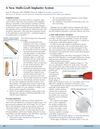
May 2018 in “International Society of Hair Restoration Surgery” The new system makes hair transplants faster and more precise.
 September 2023 in “Nature Communications”
 Immune cells are essential for skin regeneration using biomaterial scaffolds.
 5 citations
,
December 2011 in “Canadian Journal of Plastic Surgery”
5 citations
,
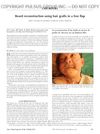
December 2011 in “Canadian Journal of Plastic Surgery” Hair grafts can successfully reconstruct a beard on reconstructed jaw skin, improving appearance and patient satisfaction.
20 citations
,
December 2019 in “International Journal of Molecular Sciences” HB-EGF boosts the hair growth ability of stem cells, making it a potential hair loss treatment.
 April 2024 in “Research Square (Research Square)”
 MSC-protein helps regenerate gum tissue and bone.
 1 citations
,
January 2024 in “Advances in Engineering Technology Research”
1 citations
,
January 2024 in “Advances in Engineering Technology Research” Bone marrow stem cells from Guizhou miniature pigs can grow well and become different cell types, useful for tissue engineering.
 5 citations
,
January 2001 in “Hair transplant forum international”
5 citations
,
January 2001 in “Hair transplant forum international” Different hair transplant methods affect how many hair grafts survive.
 August 2015 in “MOJ proteomics & bioinformatics”
 ePUKs could be valuable for regenerative medicine due to their wound healing abilities.

Erythropoietin overexpression disrupts hair growth and fat formation in mice.
June 2023 in “Zenodo (CERN European Organization for Nuclear Research)”