 44 citations
,
July 2016 in “Stem Cells Translational Medicine”
44 citations
,
July 2016 in “Stem Cells Translational Medicine” Scientists discovered that certain stem cells from mice and humans can be used to grow new hair follicles and skin glands when treated with a special mixture.
14 citations
,
May 2008 in “Journal of Visualized Experiments” Mouse epidermal neural crest stem cells can become various cell types and are easily obtained from hair follicles.
Transplanting beard hair into a scalp wound after hair transplant surgery improves scar appearance and hair keeps its normal traits.
 April 2025 in “Journal of Cosmetic and Laser Therapy”
 QR678 Neo® improves hair transplant success and hair regrowth.
Low IRES/Cap translation is linked to higher stem cell potential.
 15 citations
,
February 2011 in “Journal of Tissue Engineering and Regenerative Medicine”
15 citations
,
February 2011 in “Journal of Tissue Engineering and Regenerative Medicine” The best method for transplanting skin cells to regenerate hair follicles is the Hemi-vascularized sandwich method, as it produces more mature follicles and promotes hair growth.
3 citations
,
August 2025 in “Advanced Therapeutics” Engineered cytokines show promise for improving tissue healing and safety in regenerative medicine.
 77 citations
,
April 1999 in “Dermatologic Clinics”
77 citations
,
April 1999 in “Dermatologic Clinics” The document concludes that follicular unit transplantation offers more natural results and better graft survival than older hair transplant methods.
October 2022 in “Hair Transplantation” Beard hair can be effectively used for hair transplants when scalp hair is insufficient.
January 2006 in “Chinese Journal of Aesthetic Medicine” The new artificial derma is better for skin regeneration and biocompatibility.
 January 2018 in “Online Publication Service of Würzburg University (Würzburg University)”
 EpiLife® media and younger donor age improve artificial skin model quality.
April 2017 in “The journal of investigative dermatology/Journal of investigative dermatology” Human hair follicles can be used to create heart muscle cells.
 December 2019 in “Medicina estética/Medicina estética”
 PRP may help improve hair transplant results.
 December 2019 in “Medicina estética/Medicina estética”
 PRP may help improve hair transplant results.
11 citations
,
February 2019 in “Stem cells international” Skin-derived stem cells grow faster and are easier to obtain than hair follicle stem cells, but both can become various cell types.
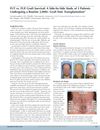 13 citations
,
September 2018 in “Hair transplant forum international”
13 citations
,
September 2018 in “Hair transplant forum international” FUE and FUT hair transplants have similar success rates, with FUE slightly better.
 131 citations
,
November 1998 in “The journal of investigative dermatology/Journal of investigative dermatology”
131 citations
,
November 1998 in “The journal of investigative dermatology/Journal of investigative dermatology” Skin grafts on mice can cause an immune response leading to hair loss, useful for studying human hair loss conditions.
March 2026 in “Materials Today Bio” The new cryo-MAP technique enables rapid and successful hair growth by transplanting hair follicle organoids.
 10 citations
,
January 2004 in “Dermatologic Surgery”
10 citations
,
January 2004 in “Dermatologic Surgery” Storing hair follicles in special buffers with added protective substances can increase hair growth and reduce cell death.
4 citations
,
October 2018 in “JAMA Dermatology” Ruxolitinib may help treat hair loss and symptoms in patients with chronic graft-versus-host disease.
 December 2023 in “Clinical, cosmetic and investigational dermatology”
 The new hair transplant technique is fast, effective, and satisfying for patients with different hair types.
 November 1998 in “Hair transplant forum international”
 The document's conclusion cannot be provided because the content is not accessible.
 5 citations
,
May 2004 in “Dermatologic Surgery”
5 citations
,
May 2004 in “Dermatologic Surgery” A hair restoration technique was introduced that mixes different types of hair groupings to reduce procedure time, limit damage, and potentially increase hair density, suggesting more hair can be transplanted than previously thought.
 September 2002 in “Dermatologic Surgery”
 The recipient site can affect the growth and survival of transplanted hair but not its thickness.
January 2026 in “Materialia” Porcine ADM scaffold helps hair growth in mice.
 November 2022 in “The journal of investigative dermatology/Journal of investigative dermatology”
 YAP1 is important for skin regeneration and may affect skin disorder treatments.
27 citations
,
October 2020 in “Biomedicine & Pharmacotherapy” Hair follicle stem cells help skin heal and grow better.
 3 citations
,
April 2021 in “Biomolecules & Therapeutics”
3 citations
,
April 2021 in “Biomolecules & Therapeutics” The protein ER71/ETV2 helps regrow hair after chemotherapy by improving the growth of new blood vessels.
 1 citations
,
January 1985 in “Facial Plastic Surgery”
1 citations
,
January 1985 in “Facial Plastic Surgery” The document recommends careful planning and techniques for successful punch hair grafting in hair restoration.
13 citations
,
July 2020 in “Stem Cell Research & Therapy” Young donor, early passage stem cells have the highest stemness.