3 citations
,
September 2023 in “PeerJ Computer Science” A new method accurately measures college students' mental health by considering time perception and clustering techniques.
 8 citations
,
May 2021 in “Bioengineering & translational medicine”
8 citations
,
May 2021 in “Bioengineering & translational medicine” Hair growth environment recreated with challenges; stem cells make successful skin organoids.
 July 2026 in “International Journal of Stem Cells”
 Genetically engineered mouse models help identify key pathways and targets for melanoma treatment.
May 2025 in “Nonlinear Analysis Real World Applications” Reducing CD8+ T cell growth can stabilize alopecia areata.
 April 2026 in “Zenodo (CERN European Organization for Nuclear Research)”
 DHT increases scalp heat, causing hair loss.
January 2009 in “The Chinese Journal of Modern Applied Pharmacy” The Potts-Guy model best predicts skin permeability for the tested drugs.
 8 citations
,
January 2019 in “Experimental Dermatology”
8 citations
,
January 2019 in “Experimental Dermatology” The 3D skin model is better for hair growth research and testing treatments.
 1 citations
,
January 2022 in “Electronic Imaging”
1 citations
,
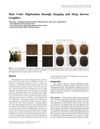
January 2022 in “Electronic Imaging” A new method accurately captures and renders hair color for virtual reality and hair dye use.
5 citations
,
September 2024 in “International Journal of Molecular Sciences” 3D bioprinted lung cancer models in a mouse-like structure offer a better way to study radiation effects without using live animals.
January 2016 in “eScholarship (California Digital Library)” HBCs in the olfactory epithelium can self-renew or differentiate into other cell types, with specific patterns during regeneration.
June 2026 in “Zenodo (CERN European Organization for Nuclear Research)” ScalpViT accurately diagnoses similar-looking scalp diseases with 94.3% accuracy.
June 2026 in “Zenodo (CERN European Organization for Nuclear Research)” ScalpViT accurately diagnoses similar scalp diseases with 94.3% accuracy.
July 2026 in “Frontiers in Bioengineering and Biotechnology” A combination of advanced human-relevant models and new technologies is needed to improve wound healing research.
 November 2022 in “bioRxiv (Cold Spring Harbor Laboratory)”
 Using deep learning to predict gene expression from images could help assess colorectal cancer metastasis.
92 citations
,
March 2010 in “Gerontology” Deer antler regeneration offers insights for human limb regeneration and scar reduction.
 867 citations
,
November 2020 in “Nature Communications”
867 citations
,
November 2020 in “Nature Communications” Collider bias can distort our understanding of COVID-19 risk and severity.
 January 2025 in “Dermatology Practical & Conceptual”
 A new genetic model may improve treatment and diagnosis for certain inherited skin diseases.
January 2026 in “Wound Repair and Regeneration” Skin organoids are improving research but need better blood supply, nerve function, and immune system integration.
 17 citations
,
June 2018 in “Frontiers in Physiology”
17 citations
,
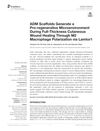
June 2018 in “Frontiers in Physiology” ADM scaffolds help skin heal by promoting a healing-type immune response.
42 citations
,
June 2016 in “Developmental Biology” 21 citations
,
April 2021 in “Biofabrication” The study created a skin model with realistic blood vessels that improves skin grafts and testing for drug delivery.
 August 2024 in “Current Protocols”
 The C3H/HeJ mouse model is useful for studying and testing treatments for alopecia areata.
 April 2026 in “Zenodo (CERN European Organization for Nuclear Research)”
 DHT increases scalp heat, causing hair loss.
 77 citations
,
April 2004 in “Gene expression patterns”
77 citations
,
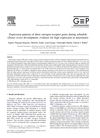
April 2004 in “Gene expression patterns” The three estrogen receptor genes are highly expressed in zebrafish neuromasts during development.
January 2026 in “Cellular and Molecular Bioengineering” A 3D model of Dupuytren’s disease was developed for better drug testing.
 September 2019 in “Journal of Investigative Dermatology”
 Scientists used stem cells to create a model of the skin disease Epidermolysis Bullosa simplex, which helped them understand its molecular mechanisms and could aid in finding treatments.
13 citations
,
June 2014 in “Molecular therapy” The lentiviral array can monitor and predict gene activity during stem cell differentiation.
 August 2019 in “bioRxiv (Cold Spring Harbor Laboratory)”
 The model successfully predicted new uses for existing drugs, like using certain hormonal and heart medications for respiratory and Parkinson's diseases, and a cancer drug for diabetes.
 September 2011 in “Clinical Biochemistry”
 The demineralized bone matrix scaffold is better for cell attachment than the mineralized bone allograft.

Sensory neuron and Merkel-cell changes in the skin happen independently during normal skin maintenance.