 1 citations
,
January 2016 in “Elsevier eBooks”
1 citations
,
January 2016 in “Elsevier eBooks” The document concludes that identifying the specific cells where skin cancers begin is important for creating better prevention, detection, and treatment methods.
28 citations
,
February 2007 in “Cancer Research” Blocking certain proteins in mouse skin can reduce and shrink skin tumors.
 April 2017 in “Journal of Investigative Dermatology”
 The protein CTCF is essential for skin development, maintaining hair follicles, and preventing inflammation.
January 2024 in “Medicinska istrazivanja” Timely treatment of EPDS can reduce scarring.
23 citations
,
May 2019 in “Stem cell research & therapy” iPSC-derived stem cells on a special membrane can help repair full-thickness skin defects.
January 2024 in “Frontiers research topics” Comprehensive genetic testing and international collaboration are crucial for better understanding and managing Ehlers-Danlos syndromes.
 25 citations
,
October 2018 in “Journal of The American Academy of Dermatology”
25 citations
,
October 2018 in “Journal of The American Academy of Dermatology” Erosive pustular dermatosis of the scalp is a type of skin inflammation often confused with other conditions, requiring continuous treatment.
11 citations
,
March 2023 in “Stem Cell Research & Therapy” Epidermal stem cells improve skin graft survival by promoting early blood vessel formation.
32 citations
,
August 2016 in “Science Signaling” Alopecia areata patients show unique protein activity patterns, suggesting imbalanced signaling pathways.
 April 2023 in “bioRxiv (Cold Spring Harbor Laboratory)”
 Sweat gland development involves two unique skin cell programs and a temporary skin environment.
 13 citations
,
September 2019 in “Clinical, Cosmetic and Investigational Dermatology”
13 citations
,
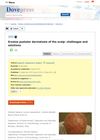
September 2019 in “Clinical, Cosmetic and Investigational Dermatology” Early treatment of EPDS can improve outcomes and reduce recurrence risk.
October 2025 in “Cell Death and Disease” CD271 is crucial for maintaining healthy skin and preventing inflammation.
1 citations
,
March 2023 in “Pharmaceutics” PBMCsec can help reduce and improve thick skin scars.
 February 2022 in “Research Square (Research Square)”
 High TSPEAR levels in colorectal cancer predict worse outcomes.
 May 2026 in “Zenodo (CERN European Organization for Nuclear Research)”
 Hidradenitis suppurativa tunnels have different microenvironments, suggesting targeted treatments could be more effective.
Deleting Smad4 and PTEN genes in mice causes rapid, invasive forestomach cancer.
 4 citations
,
January 2021 in “Journal of Clinical Medical Research”
4 citations
,
January 2021 in “Journal of Clinical Medical Research” c-Kit is important for heart regeneration and cancer development.
 May 2024 in “Animal genetics”
 A cat's poor wound healing was linked to a genetic deletion in the COL5A1 gene.
 November 2023 in “Journal of Dermatological Science”
 Cells that move well may improve hair loss treatments by entering hair follicles.
2 citations
,
January 2014 in “Journal of Cytology & Histology” Rapamycin and anti-EGFR antibody reduce LAM/TSC cell migration and blood vessel growth in the uterus.
October 2025 in “Journal of Investigative Dermatology” Hair follicle dermal stem cells help control hair growth timing by regulating signals at the hair germ–dermal papilla interface.
November 2020 in “UNC Libraries” Seven new genetic risk areas for prostate cancer were found.
 April 2018 in “Journal of Investigative Dermatology”
 The conclusion introduces a new way to classify skin cysts using their shape and genetic markers.
 April 2018 in “Journal of Investigative Dermatology”
 CENPV, a new partner of CYLD, helps regulate ciliary acetylated tubulin and is overexpressed in certain skin tumors.
 April 2019 in “Journal of Investigative Dermatology”
 The search scheme SMRI is faster and more secure for retrieving encrypted data from the cloud.
January 2013 in “Seoul National University Open Repository (Seoul National University)” Epidermal growth factor helps hair regrow after chemotherapy.
42 citations
,
October 2006 in “Theriogenology” Porcine skin cells are useful for studying wound healing and cancer.
 May 2026 in “Mendeley Data”
 Hair follicle stem cells and their exosomes help repair nerve injuries.
 January 2026 in “Mendeley Data”
 Hair follicle stem cells and their exosomes help repair nerve injuries.
14 citations
,
May 2022 in “Stem cell reports” The study created hair-bearing skin models that lack a key protein for skin layer attachment, limiting their use for certain skin disease research.