 May 2024 in “International Seven Journal of Multidisciplinary”
 More research is needed to better understand and treat Fibrosing Frontal Alopecia.
 April 2024 in “Indian Scientific Journal Of Research In Engineering And Management”
 PCOS affects many women and requires early detection and symptom management.
 April 2024 in “Cognizance journal”
 The alexandrite laser effectively reduces unwanted hair by about 75%.
 April 2024 in “Cell death and disease”
 Long COVID causes various long-term health issues and needs better awareness and treatment.

Iron deficiency anemia can cause itching, which often improves with iron supplements.
 March 2024 in “World Journal Of Advanced Research and Reviews”
 Educators who survived COVID-19 faced physical, psychological, and social challenges but overcame them with resilience and support, highlighting the need for schools to provide better health and psychological care.

The article suggests that patients with Frontal Fibrosing Alopecia may have more contact allergies, but it doesn't prove that allergies cause the condition.

Dutasteride is more effective and better tolerated than finasteride for hair loss treatment.
 January 2024 in “International Journal of Biology Sciences”
 Targeted interventions based on gender, education, and age can improve COVID-19 healthcare responses.
 January 2024 in “International Journal of Applied Research”
 COVID-19 may cause hair loss, especially in young adults.
 January 2024 in “Applied Mathematics and Nonlinear Sciences”
 The model helps understand alopecia areata and suggests better treatment strategies.
 December 2023 in “LA Referencia (Red Federada de Repositorios Institucionales de Publicaciones Científicas)”
 Both photobiomodulation and low-frequency treatments effectively reduce body measurements.
 November 2023 in “Martor”
 People still turn to witchcraft for help with modern problems despite technological advances.
 November 2023 in “Advances and Applications in Statistics”
 AI can effectively predict COVID-19 mortality risk using patient data.
 October 2023 in “International Journal For Multidisciplinary Research”
 Women with PCOS face many health risks, but exercise, a healthy diet, and weight management can help.
 October 2023 in “Clinical medicine and medical research”
 Thyroid function may influence hair loss after COVID-19.
 September 2023 in “Mağallaẗ baġdād li-l-ʿulūm”
 Microbial communities in Duku plant roots vary between wet and dry habitats, affecting plant health.
 September 2023 in “JP Journal of Biostatistics”
 The random forest model effectively helps diagnose COVID-19 using key factors like age and symptoms.
 June 2023 in “Journal of Ayurvedic and herbal medicine”
 Pumpkin seeds may improve health due to their rich nutrients and potential to treat various conditions.
 June 2023 in “Historical records of Australian science/Historical Records of Australian Science”
 George Ernest Rogers was a notable scientist who made important discoveries about hair and wool proteins.
 June 2023 in “SPIRE - Sciences Po Institutional REpository”
 Extracellular vesicles and androgen receptors may help identify prostate cancer resistance and reduce SARS-CoV-2 infection.

COVID-19 can cause skin problems and affect dermatology treatments, with recommendations for skin care and cautious use of certain drugs.

Acne is linked to vitamin B12 deficiency.

Transgender patients face more barriers to oral healthcare, leading to poorer oral health and quality of life.
 March 2023 in “Journal of clinical review & case reports”
 Frontal Fibrosing Alopecia mainly affects postmenopausal Mexican women, requiring early detection to prevent permanent hair loss.
 March 2023 in “Seminars in reproductive medicine”
 PCOS often leads to sleep problems, especially obstructive sleep apnea, affecting overall health.
 February 2023 in “Journal of clinical medicine research”
 Zinc acetate hydrate may help reduce fatigue and hair loss in post-COVID-19 patients.
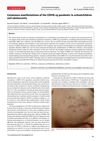 January 2023 in “Acta dermatovenerologica Alpina, Pannonica et Adriatica (Tiskana izd.)”
 The article concludes that schoolchildren and adolescents experienced various skin issues during the COVID-19 pandemic, including acne from masks and other skin reactions from the virus and vaccines.
 January 2023 in “Journal of men's health”
 Higher dihydrotestosterone may be linked to more inflammation in COVID-19 patients with low testosterone.

There is no cure for myotonic dystrophy type 1, so treatment focuses on managing symptoms and complications.