 8 citations
,
October 2020 in “Pharmaceutics”
8 citations
,
October 2020 in “Pharmaceutics” Dutasteride-loaded nanoparticles coated with Lauric Acid-Chitosan show promise for treating hair loss due to their controlled release, low toxicity, and potential to stimulate hair growth.
 26 citations
,
July 2016 in “The journal of investigative dermatology/Journal of investigative dermatology”
26 citations
,
July 2016 in “The journal of investigative dermatology/Journal of investigative dermatology” The protein Par3 is crucial for healthy skin, affecting the skin barrier, cell differentiation, and stem cell maintenance.
 17 citations
,
October 2016 in “Artificial Cells Nanomedicine and Biotechnology”
17 citations
,
October 2016 in “Artificial Cells Nanomedicine and Biotechnology” Using tiny fat particles to deliver arginine to hair follicles could be a new way to treat hair loss.
 7 citations
,
September 2024 in “Applied Microbiology and Biotechnology”
7 citations
,
September 2024 in “Applied Microbiology and Biotechnology” Malassezia furfur lipids improve skin health at pH 6.
 1039 citations
,
February 2009 in “Nature Reviews Molecular Cell Biology”
1039 citations
,
February 2009 in “Nature Reviews Molecular Cell Biology” Skin stem cells are crucial for maintaining and repairing the skin and hair, using a complex mix of signals to do so.
 134 citations
,
January 2011 in “Development”
134 citations
,
January 2011 in “Development” Adam10 enzyme is crucial for healthy skin and proper Notch signaling.
 59 citations
,
October 2012 in “Pharmaceutical Research”
59 citations
,
October 2012 in “Pharmaceutical Research” Squalene-based carriers improve delivery of a treatment to hair follicles for alopecia areata.
 50 citations
,
September 2014 in “Stem cell reports”
50 citations
,
September 2014 in “Stem cell reports” BLIMP1 is essential for skin maintenance but not for defining sebaceous gland progenitors.
 42 citations
,
October 2011 in “Seminars in Cell & Developmental Biology”
42 citations
,
October 2011 in “Seminars in Cell & Developmental Biology” Eph/ephrin signaling is important for skin cell behavior and could be targeted to treat skin diseases.
 28 citations
,
November 2020 in “Journal of Controlled Release”
28 citations
,
November 2020 in “Journal of Controlled Release” A new hair loss treatment uses tiny needles to deliver a drug-loaded lipid carrier, promoting hair growth more effectively than current treatments.
 26 citations
,
March 2014 in “International journal of pharmaceutics”
26 citations
,
March 2014 in “International journal of pharmaceutics” Researchers created a skin treatment that could effectively deliver medication into hair follicles.
 24 citations
,
July 2018 in “Stem cells”
24 citations
,
July 2018 in “Stem cells” Runx1 controls fat-related genes important for normal and cancer cell growth, affecting skin and hair cell behavior.
 21 citations
,
December 2016 in “European journal of pharmaceutics and biopharmaceutics”
21 citations
,
December 2016 in “European journal of pharmaceutics and biopharmaceutics” Nano-sized lipid particles increase dexamethasone's skin penetration and create a reservoir in the skin layers.
 18 citations
,
June 2017 in “Proceedings of the National Academy of Sciences of the United States of America”
18 citations
,
June 2017 in “Proceedings of the National Academy of Sciences of the United States of America” A gene called Gk5 controls lipid production in the skin and affects hair growth.
 14 citations
,
May 2013 in “American Journal of Physiology-endocrinology and Metabolism”
14 citations
,
May 2013 in “American Journal of Physiology-endocrinology and Metabolism” Removing myelin protein zero-like 3 in mice leads to better metabolism and resistance to obesity.
 10 citations
,
March 2022 in “Communications biology”
10 citations
,
March 2022 in “Communications biology” A new non-invasive method can analyze skin mRNA to understand skin diseases better.
 9 citations
,
May 2012 in “PLOS ONE”
9 citations
,
May 2012 in “PLOS ONE” ILK is essential for skin development, pigmentation, and healing.
 8 citations
,
September 2023 in “Advanced Pharmaceutical Bulletin”
8 citations
,
September 2023 in “Advanced Pharmaceutical Bulletin” Chitosan-coated spironolactone nano carriers effectively treat acne without side effects.
 4 citations
,
March 2017 in “Development”
4 citations
,
March 2017 in “Development” Estrogen is important for keeping adult mouse nipple skin healthy by controlling certain cell signals.
 4 citations
,
March 2012 in “Annals of oncology”
4 citations
,
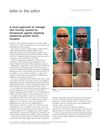
March 2012 in “Annals of oncology” New treatment with green tea polyphenols and nicotinamide improves skin problems from cancer therapy.
 1 citations
,
January 2026 in “Frontiers in Bioengineering and Biotechnology”
1 citations
,
January 2026 in “Frontiers in Bioengineering and Biotechnology” Ionizable lipid nanoparticles are the best for delivering gene-editing therapies.
 1 citations
,
January 2019 in “Elsevier eBooks”
1 citations
,
January 2019 in “Elsevier eBooks” New scaffold materials help heal severe skin wounds and improve skin regeneration.
 June 2026 in “Discover Nano”
 Lipid nanocarriers could effectively promote hair regrowth with fewer side effects.
 February 2026 in “Clinical Cosmetic and Investigational Dermatology”
 Low humidity changes skin gene expression, but emollients can help manage these changes.
 March 2023 in “Scientific reports”
 Hair growth-related cells need the enzyme SCD1 to help maintain the area that supports hair growth.
 April 2017 in “Journal of Investigative Dermatology”
 Researchers created a skin graft that senses blood glucose and could treat diabetes using CRISPR-edited stem cells.
 January 2014 in “Durham e-Theses (Durham University)”
 Notch1 helps skin heal by attracting cells that aid repair.
 140 citations
,
April 2004 in “The journal of investigative dermatology/Journal of investigative dermatology”
140 citations
,
April 2004 in “The journal of investigative dermatology/Journal of investigative dermatology” The enzyme 25 Hydroxyvitamin D 1 α-Hydroxylase is essential for healthy skin and recovery after skin damage.
 83 citations
,
May 2013 in “International Journal of Molecular Sciences”
83 citations
,
May 2013 in “International Journal of Molecular Sciences” Skin development in mammals is controlled by key proteins and signals from underlying cells, involving stem cells for maintenance and repair.
 82 citations
,
May 2009 in “Development”
82 citations
,
May 2009 in “Development” EGF and KGF signalling prevent hair follicle formation and promote skin cell development in mice.