212 citations
,
January 2017 in “Mediators of Inflammation” Stem cells show promise in speeding up wound healing and tissue regeneration.
57 citations
,
May 2016 in “Matrix Biology” Laminin α5 is essential for skin communication and health.
3 citations
,
April 2019 in “Stem cells international” Markers CRABP1, Nestin, and Ephrin B2 are present in skin cancer environments and may influence their development.
48 citations
,
March 2020 in “Stem Cell Research & Therapy” Using a collagen sponge scaffold helps stem cells become more like skin cells.
January 2025 in “Health engineering.” Combining stem cells and organoids could improve skin regeneration treatments.
 86 citations
,
October 2017 in “Clinics in Dermatology”
86 citations
,
October 2017 in “Clinics in Dermatology” Older adults have a high rate of skin cancers like basal cell carcinoma and melanoma, mainly due to UV exposure and age.
85 citations
,
June 2017 in “Journal of Investigative Dermatology” Blimp1 is crucial for hair follicle growth and skin health.
36 citations
,
September 1996 in “PubMed” DP and DS cells are different from DF cells in structure and function.
 15 citations
,
July 2004 in “Journal of morphology”
15 citations
,
July 2004 in “Journal of morphology” Monotreme hair structure and protein distribution are similar to other mammals, but their inner root sheath cornifies differently, suggesting a unique evolution from reptile skin.
7 citations
,
July 2024 in “Current Issues in Molecular Biology” Understanding skin stem cells and their regulation is key to improving skin healing and treating disorders.
 1 citations
,
April 2025 in “Pediatria i Medycyna Rodzinna”
1 citations
,
April 2025 in “Pediatria i Medycyna Rodzinna” Restoring EDA and WNT pathways early may help improve skin, hair, and teeth issues in hypohidrotic ectodermal dysplasia.
 1 citations
,
February 2017 in “The American journal of dermatopathology/American journal of dermatopathology”
1 citations
,
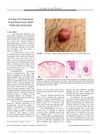
February 2017 in “The American journal of dermatopathology/American journal of dermatopathology” A man with a skin nodule was diagnosed with a rare skin condition called cutaneous focal mucinosis, which can be confused with other skin cancers.
February 2026 in “ACS Biomaterials Science & Engineering” Human stem cells can help grow hair for regenerative medicine.
 April 2024 in “The Journal of experimental medicine/The journal of experimental medicine”
 Treg cells help repair and regenerate tissues by interacting with local cells.
59 citations
,
October 2017 in “Proceedings of the National Academy of Sciences” ZIP10 is crucial for skin development and maintaining healthy skin.
 26 citations
,
June 2019 in “The journal of investigative dermatology/Journal of investigative dermatology”
26 citations
,
June 2019 in “The journal of investigative dermatology/Journal of investigative dermatology” Regenerative therapies show promise for treating vitiligo and alopecia areata.
9 citations
,
October 2024 in “Heliyon” Exosomes show promise for healing diabetic foot ulcers.
 8 citations
,
April 2009 in “International journal of oncology”
8 citations
,
April 2009 in “International journal of oncology” Hair follicle cells resist turning into skin cells.
1 citations
,
January 2025 in “Advances in Wound Care” Dermal sheath cells help heal wounds by showing both skin and connective tissue traits.
 November 2025 in “Frontiers in Immunology”
 Immune cells are crucial for normal skin development and their dysfunction can cause skin disorders.
45 citations
,
August 1992 in “PubMed” The rat vibrissa follicle can quickly remodel its basement membrane during hair growth, affecting cell signaling and activity.
30 citations
,
June 1993 in “The Journal of Cell Biology” The oncoprotein causes abnormal hair growth without increasing skin cancer risk.
 11 citations
,
January 2015 in “Skin pharmacology and physiology”
11 citations
,
January 2015 in “Skin pharmacology and physiology” Eating collagen peptides may help with skin and hair growth.
7 citations
,
May 2022 in “Frontiers in Cell and Developmental Biology” Epigenetic and metabolic changes affect stem cell function and aging in skin.
1 citations
,
November 2022 in “Journal of Investigative Dermatology” ALRN-6924 may prevent hair loss caused by chemotherapy.
 101 citations
,
August 2010 in “PLoS ONE”
101 citations
,
August 2010 in “PLoS ONE” Selenoproteins are crucial for healthy skin and hair.
 5 citations
,
October 2016 in “Experimental Dermatology”
5 citations
,
October 2016 in “Experimental Dermatology” Activin A is important for creating new hair follicles.
 January 2006 in “Carl von Ossiezky University of Oldenburg”
 Unpigmented keratinocytes absorb substances faster, while melanocytes bind more strongly to melanin.
 176 citations
,
January 2003 in “Journal of Investigative Dermatology”
176 citations
,
January 2003 in “Journal of Investigative Dermatology” Bone Morphogenetic Proteins (BMPs) help control skin health, hair growth, and color, and could potentially be used to treat skin and hair disorders.
 June 2023 in “SPIRE - Sciences Po Institutional REpository”
 Extracellular vesicles and androgen receptors may help identify prostate cancer resistance and reduce SARS-CoV-2 infection.