 September 2025 in “BULLETIN OF STOMATOLOGY AND MAXILLOFACIAL SURGERY”
 Better supportive care is needed to manage chemotherapy side effects.
 June 2025 in “International Journal of Clinical Medical Research”
 Healthcare professionals need better training and systems for drug interaction reporting, injectable vitamin B12 helps tingling, oral helps numbness, probiotics may help ulcerative colitis, and more research is needed on Post-Finasteride Syndrome.
 June 2025 in “Animal Bioscience”
 miRNA-24 affects goat coat color by controlling proteins involved in pigment production.
 July 2023 in “bioRxiv (Cold Spring Harbor Laboratory)”
 The mesenchyme can start hair growth, but the exact signal that causes this is still unknown.
 January 2023 in “International journal of advances in scientific research and engineering”
 Anthocyanins from fruits and vegetables may help prevent and treat colorectal cancer safely.
 April 2020 in “Research Square (Research Square)”
 Exosomes from stem cells help wounds heal faster by affecting specific cell signals.
 January 2018 in “Stem cells in clinical applications”
 Exosomes show promise for tissue repair and regeneration with advantages over traditional cell therapies.
 January 2012 in “Methods in pharmacology and toxicology”
 TRPV3 could be a target for treating pain, skin disorders, and hair problems, but more research is needed to create effective drugs.
 290 citations
,
December 2017 in “Journal of The American Academy of Dermatology”
290 citations
,
December 2017 in “Journal of The American Academy of Dermatology” Alopecia areata is an autoimmune condition causing hair loss, influenced by genetics, stress, and diet, and may be prevented by a high soy oil diet.
 228 citations
,
January 2021 in “Journal of Neuroimmune Pharmacology”
228 citations
,
January 2021 in “Journal of Neuroimmune Pharmacology” Men have more severe COVID-19 outcomes than women.
 120 citations
,
November 2014 in “Biological Reviews”
120 citations
,
November 2014 in “Biological Reviews” The telogen phase of hair growth is active and important for preparing hair follicles for regeneration, not just a resting stage.
 46 citations
,
September 2013 in “PLOS ONE”
46 citations
,
September 2013 in “PLOS ONE” Thyrotropin-Releasing Hormone helps heal wounds in frog and human skin.
 43 citations
,
February 2020 in “Clinica chimica acta”
43 citations
,
February 2020 in “Clinica chimica acta” Nano-sized plant-based chemicals could improve cervical cancer treatment by being more effective and causing fewer side effects than current methods.
 40 citations
,
July 2015 in “Journal of Cellular Biochemistry”
40 citations
,
July 2015 in “Journal of Cellular Biochemistry” Cysteine helps maintain keratin production in skin cells even when iron is low.
 35 citations
,
October 2017 in “Signal Transduction and Targeted Therapy”
35 citations
,
October 2017 in “Signal Transduction and Targeted Therapy” Fibromodulin treatment helps reduce scarring and improves wound healing by making it more like fetal healing.
 11 citations
,
September 2012 in “Journal of Nanjing Medical University”
11 citations
,
September 2012 in “Journal of Nanjing Medical University” Cyclosporine A was found to increase hair growth in mouse whisker follicles.
 7 citations
,
September 2017 in “Scientific Reports”
7 citations
,
September 2017 in “Scientific Reports” Mice with too much sPLA₂-IIA have hair loss and poor wound healing due to abnormal hair growth and stem cell depletion.
 3 citations
,
February 2022 in “Frontiers in cell and developmental biology”
3 citations
,
February 2022 in “Frontiers in cell and developmental biology” A specific RNA molecule, circCOL1A1, affects the growth and quality of goat hair by interacting with miR-149-5p and influencing cell growth pathways.
 3 citations
,
November 2011 in “European Journal of Dermatology”
3 citations
,
November 2011 in “European Journal of Dermatology” 4-O-methylhonokiol from Magnolia officinalis significantly promotes hair growth.
 July 2025 in “Scientific Reports”
 Dermal papilla cell-conditioned medium can help reduce skin aging caused by oxidative stress.
 April 2025 in “Journal of the Association for Research in Otolaryngology”
 NM2 and RLC phosphorylation are essential for normal inner ear hair cell function.
 November 2024 in “Journal of Translational Internal Medicine”
 Exosomes from stem cells help hair regrowth by activating a specific signaling pathway.
 June 2022 in “Research Square (Research Square)”
 Hair follicle stem cells can help heal intestinal injuries in rats.
 October 2012 in “Humana Press eBooks”
 Grape seed extract is good for skin care, with antioxidant, anti-inflammatory, and anti-cancer effects.
 178 citations
,
May 2006 in “Developmental Dynamics”
178 citations
,
May 2006 in “Developmental Dynamics” Jumonji genes are important for development and their mutations can cause abnormalities, especially in the heart and brain.
 143 citations
,
September 2008 in “Experimental gerontology”
143 citations
,
September 2008 in “Experimental gerontology” Skin aging is due to impaired stem cell mobilization or fewer responsive stem cells.
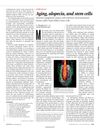 42 citations
,
February 2016 in “Science”
42 citations
,
February 2016 in “Science” The document concludes that both internal stem cell factors and external influences like the environment and hormones affect hair loss and aging, with potential treatments focusing on these areas.
 31 citations
,
April 2016 in “Nature communications”
31 citations
,
April 2016 in “Nature communications” Certain signals are important for reducing specific chemical markers on hair follicle stem cells during rest periods, which is necessary for healthy hair growth.
 28 citations
,
March 2017 in “Endocrinology”
28 citations
,
March 2017 in “Endocrinology” Removing vitamin D and calcium receptors in mice skin cells slows down skin wound healing.
 16 citations
,
January 2016 in “Annals of Dermatology”
16 citations
,
January 2016 in “Annals of Dermatology” Green tea component EGCG may help prevent hair loss by changing microRNA levels in certain scalp cells.