 23 citations
,
March 2010 in “Medical hypotheses”
23 citations
,
March 2010 in “Medical hypotheses” Merkel cells may have roles in sensing magnetic fields, creating fingerprints, Reiki energy healing, passing on environmental information to offspring, and influencing hair shape.
Understanding hair follicle interactions can help treat male pattern baldness.
 7 citations
,
January 2001 in “PharmacoEconomics”
7 citations
,
January 2001 in “PharmacoEconomics” The article concludes that a balance is needed between individual healthcare needs and societal resources when it comes to lifestyle drugs, with a call for compassionate policy application.
5 citations
,
July 2024 in “Journal of Market Access & Health Policy” Insurance coverage for scalp cooling will make it more accessible to all chemotherapy patients.
 4 citations
,
January 2022 in “Sustainable development goals series (Print)”
4 citations
,
January 2022 in “Sustainable development goals series (Print)” Combining new technologies and practices can improve food systems to meet global sustainability goals.
1 citations
,
July 2025 in “International Journal of Women’s Dermatology” Women's minoxidil products cost more and are less effective than men's.
July 2026 in “Frontiers in Public Health” Cranial prosthesis coverage for medical hair loss is inconsistent worldwide, needing standardization for better access.
June 2026 in “Journal of Integrated Science and Technology” PMOS requires a comprehensive, long-term approach beyond just ovarian symptoms.
December 2025 in “Journal of health economics and outcomes research” Alopecia areata in Saudi Arabia is costly, mainly due to lost productivity and drug costs.

Technology can improve sexual dysfunction in chronic disease patients but faces challenges like cost and accessibility.
June 2024 in “British Journal of Dermatology” NHS wig provision needs improvement for fair access and better support for alopecia patients.
 October 2023 in “Skin health and disease”
 Alopecia areata costs individuals about 3% of their income, with women, Asians, those with lower income, and more severe symptoms spending more.
 October 2023 in “International journal of women’s dermatology”
 Hair camouflage methods like wigs and extensions can help Black women with alopecia feel better but may also damage hair if not used carefully.
October 2023 in “Journal of the European Academy of Dermatology and Venereology” Integrating lived experiences into health frameworks is crucial for addressing skin diseases and mental health effectively.
January 2012 in “ProQuest LLC eBooks” Changes in early neurosteroid levels can affect adult learning and anxiety.
13 citations
,
November 2017 in “Neurotoxicity research/Neurotoxicity resarch” Sodium metabisulfite increases sodium channel activity, leading to higher cell excitability and potential damage.
 3 citations
,
January 2023 in “American journal of physiology. Cell physiology”
3 citations
,
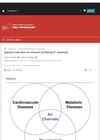
January 2023 in “American journal of physiology. Cell physiology” Inward rectifier potassium channels are important in many body functions and diseases, and could be potential drug targets.
 5 citations
,
June 2012 in “QJM: An International Journal of Medicine”
5 citations
,
June 2012 in “QJM: An International Journal of Medicine” The lecture concluded that drugs for human enhancement are here to stay and called for their responsible development and fair access.
 November 2025 in “Scientific Reports”
 AI improves accuracy and consistency in diagnosing male pattern hair loss.
5 citations
,
April 2024 in “JAAD International” AI can accurately measure hair loss severity in alopecia areata.
 51 citations
,
April 2021 in “JAMA network open”
51 citations
,
April 2021 in “JAMA network open” The AI tool helped primary care doctors and nurse practitioners diagnose skin conditions more accurately.
April 2026 in “International Journal of Engineering Research and Science & Technology” The new AI system accurately diagnoses hair disorders and offers personalized treatment recommendations.
2 citations
,
March 2024 in “JAAD Case Reports” AI can help track and improve hair loss treatment outcomes.
March 2026 in “Pediatric Dermatology” Generative AI tools can accurately score alopecia areata, reducing subjectivity in evaluations.
March 2026 in “Journal of Investigative Dermatology” Generative AI tools like GPT-4o can effectively automate SALT scoring for alopecia areata, matching clinician accuracy.
 March 2026 in “Aesthetic Plastic Surgery”
 AI is revolutionizing non-surgical cosmetic procedures by improving personalization, safety, and access.
February 2024 in “arXiv (Cornell University)” Adjusting AI training data for skin condition distribution improves accuracy across different clinical settings.
 February 2026 in “Dermatology and Therapy”
 AI can improve hair disorder diagnosis and treatment but can't replace doctors yet.
December 2025 in “Skin Appendage Disorders” Patients found AI helpful for alopecia diagnosis but want it to support, not replace, doctors.
 June 2023 in “Journal of Cosmetic Dermatology”
 AI and AR are improving cosmetic dermatology but face challenges like data quality and ethical concerns.