1 citations
,
January 2026 in “JAMA Network Open” Asian women with breast cancer experience the highest rates of long-term hair loss and related distress after chemotherapy.
December 2024 in “IntechOpen eBooks” Drug repurposing speeds up development, cuts costs, and uses known safe drugs, but faces challenges like regulations and patents.
 June 2026 in “Frontiers in Medicine”
 Hair-loss trials have increased, but need more diverse participants and standardized measures.
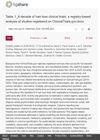
More hair-loss studies are needed with standardized outcomes and diverse participants.
January 2026 in “Journal of Clinical Medicine” Robotic technology in plastic surgery shows promise but needs more research and cost reduction for wider use.
9 citations
,
October 2024 in “Heliyon” Exosomes show promise for healing diabetic foot ulcers.
 6 citations
,
April 2022 in “Biomedicine & pharmacotherapy”
6 citations
,
April 2022 in “Biomedicine & pharmacotherapy” Using three different drugs together may better treat eye diseases like glaucoma and macular degeneration.
 September 2024 in “arXiv (Cornell University)”
 Fine-tuned BERT models are better than LLMs for detecting bias in medical data.
 13 citations
,
March 2023 in “Cureus”
13 citations
,
March 2023 in “Cureus” Transgender individuals face insurance barriers to gender-affirming surgery, needing policy reforms for better access.
 1 citations
,
June 2025 in “Journal of Materials Science Materials in Medicine”
1 citations
,
June 2025 in “Journal of Materials Science Materials in Medicine” AgVO₃-HAp/GO@PCL scaffolds improve wound healing and tissue regeneration effectively.
Testosterone therapy can safely and effectively treat symptoms like low libido and fatigue in women, especially after menopause.
 March 2026 in “American Journal of Clinical Dermatology”
 Dermatologists should respect Muslim patients' cultural and religious practices for better care.
 November 2025 in “Frontiers in Endocrinology”
 Apigenin and ellagic acid may help manage PCOS symptoms.
 25 citations
,
September 2006 in “Birth Defects Research”
25 citations
,
September 2006 in “Birth Defects Research” Different processes create patterns in skin and things like hair and feathers.
 9 citations
,
April 2016 in “Cutaneous and ocular toxicology”
9 citations
,
April 2016 in “Cutaneous and ocular toxicology” Alpha Lipoic Acid helps protect skin from smoking damage.
October 2025 in “Journal of Neurophysiology” BK and Kv4.2 channels help Merkel cells in rat whiskers sense touch.
February 2026 in “Archives of Dermatological Research” January 2026 in “International Journal of Molecular Sciences” Topical peptides may offer safer, effective pain relief and healing for wounds.
8 citations
,
May 2025 in “Pharmaceuticals” In 2024, the FDA approved 27 innovative small-molecule drugs, with many offering significant treatment improvements.
2 citations
,
November 2025 in “Pharmaceutics” Cell-mediated drug delivery systems improve skin disease treatment by using living cells for precise, prolonged, and less toxic therapy.
2 citations
,
May 2025 in “Frontiers in Epidemiology” Standardized definitions and better methods are needed to accurately estimate long COVID-19 prevalence.
 1 citations
,
October 2022 in “Current Dermatology Reports”
1 citations
,
October 2022 in “Current Dermatology Reports” COVID-19 and vaccines cause various skin reactions and highlight the need for dermatologists in managing these issues and addressing vaccine distribution disparities.
 April 2025 in “International Journal of Molecular Sciences”
 New treatments for hair loss show promise with advanced therapies and better targeting.
 June 2026 in “Bulletin of Mathematical Biology”
 AGA causes more uncertainty in hair growth duration, while AA leads to a shorter, predictable growth phase.
A hat with sensors can measure scalp moisture well, helping with hair care.
April 2026 in “Journal of the European Academy of Dermatology and Venereology” Africa needs its own dermatology guidelines to address unique skin challenges and improve care.
 September 2021 in “Physiology News”
 The report recommends a government-wide action plan to increase diversity in the STEM workforce over the next decade.
April 2026 in “Clinical and Experimental Dermatology” Alopecia areata causes significant emotional distress, requiring treatments that focus on mental health and social support, not just hair regrowth.

Migrant and minority communities face higher rates of alopecia due to genetic, environmental, and cultural factors, needing better healthcare access and culturally aware treatments.
 38 citations
,
November 2000 in “Hastings Center Report”
38 citations
,
November 2000 in “Hastings Center Report” The document suggests medicine should integrate biological and cultural factors and focus on holistic, equitable care.