 April 2017 in “Australasian Journal of Dermatology”
 Most patients with Lichen planopilaris improved with acitretin, but treatments often didn't work well; preventing infection in skin surgery is important, and bupivacaine might be a better anesthetic.
 January 2017 in “Journal of Cosmetics, Dermatological Sciences and Applications”
 Chinese women's hair gets thinner and grayer with age, and scalp conditions change, especially after 40.
 April 2016 in “Journal of The American Academy of Dermatology”
 The study found that Temporal Triangular Alopecia often starts in early childhood, mainly affects the left side of the scalp, and has no effective treatment except surgery.
April 2016 in “Journal of the American Academy of Dermatology” Treatment improved some symptoms but not all.
 April 2016 in “Journal of The American Academy of Dermatology”
 The study found that Temporal Triangular Alopecia often starts in early childhood, while Folliculitis Decalvans is characterized by tufted hairs and redness around hair follicles.
 January 2016 in “Skin appendage disorders”
 The document discusses various nail and hair disorders and their treatments.
 January 2015 in “Hair transplant forum international”
 Up to 10% of hair loss patients might have early signs of a condition called Lichen Planopilaris.
 February 2013 in “Journal of the American Academy of Dermatology”
 A woman's hair loss looked like a different condition due to her hairstyle, and treatment stopped further hair loss but didn't regrow hair.
 April 2012 in “Informa Healthcare eBooks”
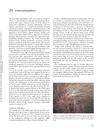
 Lichen planopilaris is a rare, chronic condition causing hair loss, mainly in middle-aged women, and early treatment is important to prevent permanent baldness.
January 2011 in “National Medical Frontiers of China” Elderly SLE patients show fewer typical symptoms and more hormonal side effects.
 October 2009 in “Reactions Weekly”
 A woman developed lupus after taking hydroxyurea for two years.
 February 2009 in “Journal of The American Academy of Dermatology”
 Pulsed dye laser treatment was effective for a skin condition resistant to other treatments.
March 2004 in “Journal of the American Academy of Dermatology” Middle-aged women with cicatricial alopecia/lichen planopilaris responded well to treatments like ketoconazole shampoo and steroids.
January 1994 in “Medical Entomology and Zoology” Electron microscopy helps understand skin structure and diseases.
 January 1993 in “Side effects of drugs annual”
 Natural products like propolis are causing more skin allergies, and certain skin treatments and medications have various side effects and risks.
 January 1983 in “Journal of The American Academy of Dermatology”
 The document suggests improvements for a hair and scalp disease book and recommends a two-volume skin surgery reference for dermatologists.
 January 1983 in “Journal of The American Academy of Dermatology”
 The book is a valuable resource for understanding hair and scalp problems but could be updated with more information on certain conditions.
Oral contraceptives can affect skin and hair, improve acne, but may cause pigmentation, dermatitis, and other conditions.
 April 1940 in “Archives of dermatology”
 Diagnosing and treating skin conditions is challenging, especially when drug reactions mimic other diseases.
 June 1930 in “Archives of dermatology”
 Dermatological conditions are complex, and treatments have mixed results.
2 citations
,
July 2015 in “Journal of Dr. YSR University of Health Sciences.” A young woman with skin issues and weight loss improved after treating her pancreatitis and using skin treatments.
 January 2021 in “Springer eBooks”
 Different rheumatological diseases can cause specific skin problems.
 243 citations
,
September 2016 in “Dermatology and Therapy”
243 citations
,
September 2016 in “Dermatology and Therapy” Dermoscopy is a useful tool for identifying features of skin conditions, but more research is needed to define its role in dermatology.
 208 citations
,
July 2001 in “Journal of The American Academy of Dermatology”
208 citations
,
July 2001 in “Journal of The American Academy of Dermatology” Pregnancy can cause various skin changes and diseases, with PUPPP being the most common skin condition specific to pregnancy.
 178 citations
,
December 2011 in “Journal of Dermatological Case Reports”
178 citations
,
December 2011 in “Journal of Dermatological Case Reports” Trichoscopy is a useful tool for diagnosing different hair and scalp diseases by their unique visual features.
 170 citations
,
December 2009 in “Histopathology”
170 citations
,
December 2009 in “Histopathology” The conclusion is that accurate diagnosis of different types of hair loss requires good teamwork between skin doctors and lab experts.
 141 citations
,
March 2011 in “Journal of Dermatology”
141 citations
,
March 2011 in “Journal of Dermatology” Eczema and fungal infections are the most common skin problems in Japan, with different age groups and genders affected by various conditions.
 122 citations
,
April 1995 in “Journal of Cutaneous Pathology”
122 citations
,
April 1995 in “Journal of Cutaneous Pathology” The document describes how to tell different types of non-scarring hair loss apart by looking at hair and scalp tissue under a microscope.
114 citations
,
October 2017 in “American journal of clinical dermatology” Adequate vitamin D is crucial for skin health and should be considered in dermatology.
 96 citations
,
January 2013 in “International Journal of Trichology”
96 citations
,
January 2013 in “International Journal of Trichology” Trichoscopy is a useful, non-invasive way to diagnose different types of hair loss.