January 2007 in “Edward Elgar eBooks” TSPO might help treat anxiety and depression.
15 citations
,
July 2020 in “Applied Sciences” PRS injections can improve knee function and reduce pain for up to a year.
 2 citations
,
June 2020 in “Research Square (Research Square)”
2 citations
,
June 2020 in “Research Square (Research Square)” A prostate cancer drug can lower the levels of a protein that the coronavirus uses to enter lung cells.
 18 citations
,
April 2021 in “PLOS ONE”
18 citations
,
April 2021 in “PLOS ONE” The review concluded that reporting on PRP therapy is often incomplete, leading to uncertainty about its effectiveness.
2 citations
,
January 2023 in “Uro” UHP-sCESr is as effective as HESr for treating BPH symptoms.
RXR and RAR proteins in skin may help with cell growth, hair growth, and gland function.
 April 2019 in “Journal of Investigative Dermatology”
 Non-coding RNA boosts retinoic acid production and signaling, aiding regeneration.
 November 2022 in “The journal of investigative dermatology/Journal of investigative dermatology”
 Different types of PPARγ are found in varying amounts in human skin and its parts, which could affect how skin treatments work.
91 citations
,
August 2019 in “Frontiers in Microbiology” RpoS helps Borrelia burgdorferi survive in hosts and adapt to different environments.
July 2024 in “Journal of Investigative Dermatology” CRISPR/Cas9 and prime editing can potentially fix skin disorder genes safely and effectively.
 2 citations
,
June 2024 in “Frontiers in Plant Science”
2 citations
,
June 2024 in “Frontiers in Plant Science” LLPS is crucial for RALF signaling, aiding plant growth and stress resilience.
 January 2026 in “RSC Advances”
 Epristeride's metabolism in zebrafish helps improve doping detection methods.
 12 citations
,
March 2013 in “Gynecological Endocrinology”
12 citations
,
March 2013 in “Gynecological Endocrinology” The study found a significant link between the renin-angiotensin system and insulin resistance in women with polycystic ovary syndrome.
9 citations
,
January 1997 in “Horticultura: Revista de industria, distribución y socioeconomía hortícola: frutas, hortalizas, flores, plantas, árboles ornamentales y viveros” PRC2 is not essential for hair follicle stem cell maintenance or hair growth.
March 2021 in “Medico-Legal Update” The androgen receptor gene doesn't affect women with recurrent spontaneous abortions, but having a mutant genotype might protect against it.
5 citations
,
January 2025 in “Science Advances” 5α-reductase 2 is crucial for stress response in male rats.
 1 citations
,
November 2023 in “Rice”
1 citations
,
November 2023 in “Rice” PRX102 is essential for rice root hair growth by helping transport substances to the tips.
January 2025 in “Buleria (Universidad de León)” 5 citations
,
October 2021 in “American Journal of Medical Genetics Part A” A new genetic variant causes BRESHECK syndrome by disrupting cell growth and stress response.
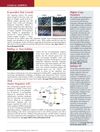 July 2016 in “Experimental Dermatology”
 New treatments for hair growth and psoriasis may be possible, and gene differences could affect baldness and the severity of skin conditions.
 17 citations
,
October 2006 in “Molecular and Cellular Endocrinology”
17 citations
,
October 2006 in “Molecular and Cellular Endocrinology” The L457(3.43)R mutation in the human lutropin receptor causes increased activity and hormone insensitivity, leading to precocious puberty.
January 1997 in “Purdue e-Pubs (Purdue University)” Whole hair strands can reliably measure gamma ray exposure using ESR techniques, but samples should be analyzed quickly or stored in liquid nitrogen.
September 2025 in “PeerJ” FCER1A and RGS1 may help diagnose and treat systemic lupus erythematosus.
14 citations
,
August 2014 in “The FASEB Journal” CAP1/Prss8 does not activate PAR2 or inhibit PN-1.
 13 citations
,
September 2019 in “Clinical, Cosmetic and Investigational Dermatology”
13 citations
,
September 2019 in “Clinical, Cosmetic and Investigational Dermatology” Early treatment of EPDS can improve outcomes and reduce recurrence risk.
9 citations
,
August 2021 in “Biomedicines” 17β-estradiol boosts APE1/Ref-1 secretion in cells and mice via a calcium-dependent pathway.
CRPS I is complex, linked to immune and nerve issues, and needs comprehensive treatment.
4 citations
,
January 2006 in “PubMed” DHT deficiency may disrupt rat epididymis function by affecting estrogen receptors.
July 2025 in “Journal of Investigative Dermatology” 3 citations
,
December 2023 in “Pain Medicine” Peripheral nerve stimulation greatly reduced pain and improved skin symptoms in a CRPS patient.