 March 2026 in “Clinical and Experimental Medicine”
 Extracellular vesicles are important for disease treatment and monitoring.
13 citations
,
January 2012 in “Dermatology” Eruptive vellus hair cysts are rare, benign skin lesions that are hard to treat.
10 citations
,
January 2018 in “International journal of trichology” Eruptive vellus hair cysts are rare and often misdiagnosed, requiring biopsy for accurate diagnosis.
 July 2021 in “British Journal of Dermatology”
 Laser treatment for skin conditions VEN and ILVEN is effective and liked by patients.
2 citations
,
January 2022 in “International journal of trichology” Eruptive vellus hair cysts are often missed in diagnoses.
December 2025 in “Indian Journal of Dermatology” Extraction videodermoscopy is an effective, non-invasive diagnostic tool for eruptive vellus hair cysts.
 January 2018 in “The Kaohsiung journal of medical sciences”
 A young man had a rare case of hair cysts on his elbows, which was hard to diagnose and treat.
61 citations
,
April 2023 in “Advanced Materials” The new electrode improves long-term monitoring on hairy skin by reducing motion issues and is easy to use.
 June 2024 in “British Journal of Dermatology”
 A rare case of a transplant patient developing a skin condition linked to HPV-49.
4 citations
,
April 2025 in “Frontiers in Immunology” Extracellular vesicles could offer precise treatments for psychiatric conditions by targeting brain networks.
29 citations
,
December 2022 in “Journal of Nanobiotechnology” Stem cell vesicles reduced eczema symptoms in mice safely.
1 citations
,
July 2024 in “Nanomedicine” Stem cell-derived vesicles improve blood vessel growth in limbs.
14 citations
,
July 2022 in “Applied Sciences” Extracellular vesicles can help repair and regenerate tissues with less risk of rejection.
 4 citations
,
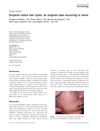
July 2014 in “International Journal of Dermatology”
4 citations
,
July 2014 in “International Journal of Dermatology” Twins had rare skin cysts likely due to genetics.
 August 2025 in “BMC Pregnancy and Childbirth”
 A new EDA gene variant causes X-linked hypohidrotic ectodermal dysplasia in a Chinese family.
December 2005 in “Dermatologic surgery” Er:YAG laser therapy is ineffective for treating facial eruptive vellus hair cysts due to early recurrence and side effects.
 April 2026 in “Frontiers in Medicine”
 Enfortumab vedotin can cause skin issues, especially in older males, needing early monitoring.
 40 citations
,
June 2013 in “Molecular Pharmaceutics”
40 citations
,
June 2013 in “Molecular Pharmaceutics” The gelatin/β-TCP scaffold with nanoparticles improves wound healing and skin regeneration.
21 citations
,
June 2023 in “Journal of Nanobiotechnology” Engineered extracellular vesicles could improve CRISPR/Cas delivery, making gene editing safer and more effective.
 26 citations
,
December 2021 in “Regenerative Biomaterials”
26 citations
,
December 2021 in “Regenerative Biomaterials” The hydrogel speeds up skin wound healing and helps regenerate tissue.
 4 citations
,
April 2019 in “Gynecological Endocrinology”
4 citations
,
April 2019 in “Gynecological Endocrinology” Certain gene variations are found in people with polycystic ovary syndrome.
 April 2026 in “DiRROS repository (University of Maribor)”
 MSC-derived EVs have potential as therapeutic agents but face challenges like production complexity and high costs.
July 2025 in “Journal of Investigative Dermatology” Tissue-engineered skin substitutes can model junctional epidermolysis bullosa and may help develop gene therapy.
15 citations
,
December 2009 in “PubMed” A child with eruptive vellus hair cysts showed some improvement with calcipotriene cream.
22 citations
,
April 2022 in “Stem cell research & therapy” Hair follicle-derived extracellular vesicles may help heal chronic wounds as effectively as those from adipose tissue.
88 citations
,
May 2024 in “Journal of Extracellular Vesicles” Extracellular vesicles show promise as treatments but need more research for safety and effectiveness.
 38 citations
,
December 2012 in “Journal of Cutaneous Pathology”
38 citations
,
December 2012 in “Journal of Cutaneous Pathology” EVG staining is a valuable, simple, and cost-effective method for diagnosing various skin conditions in dermatopathology.
December 2025 in “Pharmaceutics” EV-based drug delivery shows promise but faces challenges in standardization and scalability.
 March 2026 in “Cosmoderma”
 Venusia CeraPlus cream and lotion effectively reduce eczema severity and improve skin moisture.
 December 2024 in “International Journal of Molecular Sciences”
 Human umbilical cord stem cell vesicles may help treat aging and related diseases.