 11 citations
,
February 2019 in “Research and reports in forensic medical science”
11 citations
,
February 2019 in “Research and reports in forensic medical science” DNA phenotyping helps predict physical traits from DNA with varying accuracy and requires careful ethical and legal handling.
 May 2023 in “GSC biological and pharmaceutical sciences”
 Forensic DNA phenotyping is becoming useful for predicting physical traits in criminal investigations but is limited by ethical concerns and incomplete genetic understanding.
 December 2022 in “IntechOpen eBooks”
 Forensic DNA Phenotyping accurately predicts physical traits and is used in investigations, but needs more diverse population data for confirmation.
 July 2025 in “Indian Journal of Forensic Medicine & Toxicology”
 DNA phenotyping can predict physical traits like eye, hair, and skin color, improving forensic investigations.
May 2023 in “Zenodo (CERN European Organization for Nuclear Research)” Forensic DNA phenotyping can predict physical traits from DNA but faces challenges in knowledge and ethics.
March 2024 in “Jagiellonian University Repository (Jagiellonian University)” Genetic and lifestyle factors influence skin and hair aging, and prediction models can help assess aging and cosmetic treatments.
 383 citations
,
February 2011 in “Nature Reviews Genetics”
383 citations
,
February 2011 in “Nature Reviews Genetics” DNA profiling in forensics has improved, but predicting physical traits and ancestry from DNA has limitations and requires ethical consideration.
 6 citations
,
November 2022 in “Forensic Science Medicine and Pathology”
6 citations
,
November 2022 in “Forensic Science Medicine and Pathology” Genetic markers can help predict ear shapes for forensic use.
 March 2026 in “Egyptian Journal of Forensic Sciences”
 Unified regulations and ethical guidelines are needed for fair use of forensic DNA phenotyping.
 48 citations
,
May 2015 in “PLOS ONE”
48 citations
,
May 2015 in “PLOS ONE” DNA variants can predict male pattern baldness, with higher risk scores increasing baldness likelihood.
 36 citations
,
September 2015 in “Forensic Science International: Genetics”
36 citations
,
September 2015 in “Forensic Science International: Genetics” Certain DNA variants can predict straight hair in Europeans but are not highly specific.
 4 citations
,
December 2020 in “Dermatologic Therapy”
4 citations
,
December 2020 in “Dermatologic Therapy” Ellis van Creveld syndrome, a rare genetic disorder, can cause unexpected abnormalities in various body organs, requiring thorough patient evaluations.
 2 citations
,
March 2023 in “Research Square (Research Square)”
2 citations
,
March 2023 in “Research Square (Research Square)” Forensic DNA phenotyping faces challenges due to inconsistent terminology, limited genetic understanding, and debates over technology and models.
 1 citations
,
January 2020 in “Elsevier eBooks”
1 citations
,
January 2020 in “Elsevier eBooks” Forensic medicine is crucial for justice and needs continuous innovation and technology integration.
 5 citations
,
September 2016 in “Security science and technology”
5 citations
,
September 2016 in “Security science and technology” DNA can predict physical traits like eye and hair color accurately, especially in Europeans, but predicting other traits and in diverse populations needs more research.
 1 citations
,
March 2023 in “European Journal of Human Genetics”
1 citations
,
March 2023 in “European Journal of Human Genetics” The UK's EDS National Diagnostic Service found that early diagnosis, lifestyle advice, and regular check-ups are crucial for managing vascular Ehlers-Danlos syndrome. A combination of losartan and bisoprolol can reduce vascular events, improving survival and quality of life.
51 citations
,
January 2024 in “Burns & Trauma” Engineered extracellular vesicles can improve tissue repair and regeneration.
8 citations
,
January 2025 in “Cell Transplantation” MSC-derived EVs show promise for therapy, but production and understanding need improvement.
October 2022 in “European Heart Journal” Potent extracellular vesicles from cardiosphere-derived cells can improve heart health and other functions in aging.
 February 2026 in “International Journal of Molecular Sciences”
 Extracellular vesicles show promise for medical use but face challenges in standardization and safety.
 77 citations
,
August 2025 in “Signal Transduction and Targeted Therapy”
77 citations
,
August 2025 in “Signal Transduction and Targeted Therapy” Extracellular vesicles show promise for treating diseases but face challenges in development and regulation.
 12 citations
,
February 2025 in “Scientific Reports”
12 citations
,
February 2025 in “Scientific Reports” MSC-EVs and UCB-EVs improve skin wound healing and reduce scarring.
June 2026 in “Advanced Healthcare Materials” Engineered vesicles with EGF mRNA improve skin wound healing and reduce scarring.
January 2024 in “Frontiers research topics” Comprehensive genetic testing and international collaboration are crucial for better understanding and managing Ehlers-Danlos syndromes.
 7 citations
,
June 2022 in “Frontiers in Medicine”
7 citations
,
June 2022 in “Frontiers in Medicine” ADSC-derived extracellular vesicles show promise for skin and hair regeneration and wound healing.
 June 2026 in “International Journal of Molecular Sciences”
 Extracellular vesicles show promise in regenerative and cosmetic medicine but need more research and regulation for safe use.
 41 citations
,
November 2024 in “Molecular Biomedicine”
41 citations
,
November 2024 in “Molecular Biomedicine” Engineered extracellular vesicles show promise for targeted therapy but need more research for clinical use.
 May 2024 in “Animal genetics”
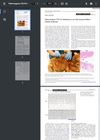
 A cat's poor wound healing was linked to a genetic deletion in the COL5A1 gene.
60 citations
,
February 2015 in “Biomaterials” A surface with VEGF can specifically capture endothelial cells from flowing fluids.
13 citations
,
December 2021 in “Journal of Cellular and Molecular Medicine” Exosome-enriched vesicles from placental cells improved skin condition in a patient with chronic graft-versus-host disease.