3 citations
,
October 2024 in “International Journal of Molecular Sciences” CRET therapy affects inflammation in skin cells by changing cytokine levels and activating certain proteins.
 November 2022 in “Journal of Investigative Dermatology”
 Human-induced stem cell-created skin models can help understand skin diseases by studying the skin's layers.
 18 citations
,
September 2003 in “The journal of investigative dermatology/Journal of investigative dermatology”
18 citations
,
September 2003 in “The journal of investigative dermatology/Journal of investigative dermatology” VDUP1 is found in skin and hair follicles, interacts with sciellin, and may help regulate skin cell differentiation.
September 2023 in “Journal of the American Academy of Dermatology” August 2015 in “PubMed Central” Epithelial-derived Pop-Up Keratinocytes (ePUKs) may enhance wound healing in regenerative medicine.
 December 2024 in “Journal of Cutaneous and Aesthetic Surgery”
 Advanced FUE systems have evolved to improve precision and efficiency in hair transplantation.
August 2022 in “Tissue Engineering Part A” Advancements in skin treatment and wound healing include promising gene therapy, 3D skin models, and potential new therapies.
 16 citations
,
May 2004 in “Hair transplant forum international”
16 citations
,
May 2004 in “Hair transplant forum international” Hair transplant megasessions have improved over time.
 January 2024 in “Wiadomości Lekarskie”
 AI and advanced technologies are improving medical diagnostics and treatments.
6 citations
,
June 2024 in “Biofabrication” A small 3D skin model helps study how immune cells move in the skin.
March 2026 in “Experimental Dermatology” The new model helps understand and develop treatments for genetic skin disorders like AEC.
118 citations
,
April 2020 in “Stem Cell Research & Therapy” IFNγ-primed MSC secretomes can improve joint health by reducing inflammation and supporting tissue repair.
 1 citations
,
January 2014 in “The Journal of Dermatology”
1 citations
,
January 2014 in “The Journal of Dermatology” A patient with Ivemark syndrome developed mixed type vitiligo after a hepatitis C infection, showing different treatment responses and immune cell involvement in the skin.
20 citations
,
August 2020 in “Stem Cell Research & Therapy” miR-150 helps blood vessel cells develop and speeds up blood clot healing.
 September 2019 in “Journal of Investigative Dermatology”
 Researchers developed a 3D skin model with its own immune and blood vessel cells to better understand skin health and disease.
 4 citations
,
July 2012 in “Genesis”
4 citations
,
July 2012 in “Genesis” The Megsin-Cre transgene is a new tool for genetic manipulation in the skin and upper digestive tract.
 July 2021 in “British Journal of Dermatology”
 Laser treatment for skin conditions VEN and ILVEN is effective and liked by patients.
 May 2026 in “Applied Biochemistry and Biotechnology”
 Lemon-derived vesicles may help hair grow.
 3 citations
,
October 2021 in “Research Square (Research Square)”
3 citations
,
October 2021 in “Research Square (Research Square)” The model can effectively help diagnose meibomian gland dysfunction automatically.
 November 2020 in “bioRxiv (Cold Spring Harbor Laboratory)”
 Dermal EZH2 controls skin cell growth and differentiation in mice.
 February 2016 in “The journal of allergy and clinical immunology/Journal of allergy and clinical immunology/The journal of allergy and clinical immunology”
 A new TP63 mutation was found in a baby with EEC syndrome, showing the need for TREC testing to check for immune issues.
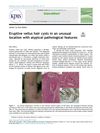 January 2018 in “The Kaohsiung journal of medical sciences”
 A young man had a rare case of hair cysts on his elbows, which was hard to diagnose and treat.
 January 2025 in “PLoS ONE”
 ING5 is crucial for stem cell maintenance and preventing certain cancers.
New bio-ink can print complex tissues and organs.
 36 citations
,
May 2016 in “Biomaterials”
36 citations
,
May 2016 in “Biomaterials” Endo-HSE helps grow hair-like structures from human skin cells in the lab.
CRISPR gene editing reduces harmful molecules in cells from Emery–Dreifuss Muscular Dystrophy patients.
 3 citations
,
April 2021 in “Biomolecules & Therapeutics”
3 citations
,
April 2021 in “Biomolecules & Therapeutics” The protein ER71/ETV2 helps regrow hair after chemotherapy by improving the growth of new blood vessels.
 January 2026 in “Dermatology Practical & Conceptual”
 Exosomes can improve skin elasticity, reduce wrinkles, and enhance hydration, but more research is needed.
1 citations
,
October 2020 in “Research Square (Research Square)” A genetic variant in goats is linked to cashmere growth.
 April 2018 in “Journal of Investigative Dermatology”
 Ovol2 is important for proper skin healing and hair growth.