 9 citations
,
May 2005 in “Facial plastic surgery”
9 citations
,
May 2005 in “Facial plastic surgery” Laser hair removal can be safe and effective for dark-skinned individuals with the right laser settings.
 September 2021 in “Medical lasers”
 Laser treatment followed by a special hair growth solution increased hair count and thickness without side effects.
 July 2023 in “Photodermatology, Photoimmunology and Photomedicine”
 Infrared radiation can cause skin aging and cancer at high temperatures but may have therapeutic benefits at controlled levels.
3 citations
,
May 2023 in “PLoS ONE” The professional laser is more effective than the home-use laser for hair reduction.
 45 citations
,
June 2004 in “Lasers in Medical Science”
45 citations
,
June 2004 in “Lasers in Medical Science” Intense pulsed light (IPL) is an efficient and safe method for hair removal, reducing hair by about 80%.
 March 2026 in “Cosmetics”
 Using enzymes with laser hair removal may reduce unwanted hair growth better than laser alone.
 June 2017 in “Journal of The American Academy of Dermatology”
 LED light helps hair follicle cells grow and prevents them from dying by activating certain cell pathways.
 17 citations
,
January 2021 in “Dermatology and Therapy”
17 citations
,
January 2021 in “Dermatology and Therapy” Laser-assisted drug delivery has shown improved treatment outcomes for skin conditions and has potential to reduce side effects and treatment time.
13 citations
,
December 2005 in “Dermatologic surgery” Er:YAG laser therapy is not effective for widespread facial eruptive vellus hair cysts due to recurrence and side effects.
 April 2018 in “Journal of Investigative Dermatology”
 Finasteride helps female-pattern hair loss.
 2 citations
,
January 2005 in “Journal of Cosmetic and Laser Therapy”
2 citations
,
January 2005 in “Journal of Cosmetic and Laser Therapy” New cosmetic treatments for acne, hair loss, cellulite, wrinkles, and skin resurfacing are effective.
 2 citations
,
November 2018 in “International Journal of Cosmetic Science”
2 citations
,
November 2018 in “International Journal of Cosmetic Science” Chamomile extract can protect hair from damage caused by light.
6 citations
,
December 2019 in “International Journal of Cosmetic Science” White hair has weaker tryptophan fluorescence than other unpigmented fibers, possibly due to UV exposure or unknown substances.
1 citations
,
June 2023 in “Journal of Visualized Experiments” A new 3D-printed microscope stage makes long-term imaging of live tissue easier and more accessible.
September 2017 in “Dermatologic Surgery”  3 citations
,
May 2018 in “European Journal of Dermatology”
3 citations
,
May 2018 in “European Journal of Dermatology” Photodynamic therapy may not work for erythroplasia of Queyrat and could lead to invasive squamous cell carcinoma.

Gene editing holds promise for skin treatments but needs careful safety and ethical consideration.
 February 2009 in “Journal of The American Academy of Dermatology”
 Fractional infrared technology is effective and safe for treating cervical laxity.
 3 citations
,
October 2022 in “Clinical, Cosmetic and Investigational Dermatology”
3 citations
,
October 2022 in “Clinical, Cosmetic and Investigational Dermatology” The 532 nm laser effectively reduces facial vascular and pigmented lesions, with the VISIA system reliably assessing treatment results.
 August 2024 in “Journal of Marine Medical Society”
 Dermoscopy helps diagnose skin issues and warns against unqualified treatments.

A portable imaging system shows promise for diagnosing skin diseases and checking laser treatment effects.
July 2026 in “Materials Today Bio” 36 citations
,
February 1998 in “Journal of Anatomy” Fibre optic confocal imaging can visualize skin layers, blood vessels, and nerves in live mice.
 March 2026 in “Quality in Sport”
 Red light therapy can boost athletic performance and aid healing.
 18 citations
,
May 2013 in “Journal of Dermatological Treatment”
18 citations
,
May 2013 in “Journal of Dermatological Treatment” Non-ablative fractional laser treatments have a low risk of side effects in Asian patients.
October 2014 in “Microscopy” The method using ionic liquid improves observation of cell structures with less damage.
 January 2021 in “Dermatologic Therapy”
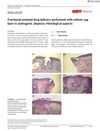
 Channels stay open for 24 hours, making laser treatment potentially effective for hair loss.
 July 2022 in “Skin research and technology”
 Skin CT can help diagnose rosacea by identifying specific skin features, but should be used with clinical signs to avoid misdiagnosis.
February 2025 in “Journal of the European Academy of Dermatology and Venereology” UVFD helps detect hair follicles in alopecia areata better than traditional methods.
 1 citations
,
September 2019 in “Journal of Investigative Dermatology”
1 citations
,
September 2019 in “Journal of Investigative Dermatology” The research showed that CRISPR/Cas9 can fix mutations causing a skin disease in stem cells, which then improved skin grafts in mice, but more work on safety and efficiency is needed.