Search
forProducts matching "excipients"
Tracking 1 products like 184 DUTASTERIDE / TAMSULOZIN 0.5 MG from by companies like OnlinePharmacy-BG. View product »
Sort by
Research
660-690 / 1000+ results
research Characterization of Hydrogels of Gelatin/O-Carboxymethyl Chitosan in Ovule Form with Curcumin and Retinyl Palmitate as a Treatment for Cervical Cancer
The hydrogels show promise for targeted cervical cancer treatment but need more testing.

research The Anti-Aging Effects of Adipose-Derived Mesenchymal Stem Cell Exosomes on Skin and Their Potential for Personalized Skincare Applications
Adipose-derived stem cell exosomes and AI can improve personalized skincare by offering anti-aging benefits and precise product customization.
research Pomegranate-peel-chitosan-gelatin composite: A hemostatic dental sponge with antibacterial enhancement
The sponge effectively controls bleeding and prevents infection after tooth extraction.
research Composition, structural features, and multifunctional properties of extracellular polysaccharides from the non-toxic green alga Parachlorella sp.
The green alga Parachlorella sp. has potential for use in cosmetics and health products due to its antioxidant, anti-hypertensive, and hair growth properties.
research Effects of caffeine and siloxanetriol alginate caffeine, as anticellulite agents, on fatty tissue: histological evaluation
Caffeine and siloxanetriol alginate caffeine in emulsion form can reduce fatty cell size and number, potentially treating cellulite effectively.
research Development and Evaluation of a Novel Delivery System Containing Phytophospholipid Complex for Skin Aging
The cream with orange peel and liquorice extracts may help reduce skin aging.
research Selective inhibition of glucuronidation and sulfation in vitro and in vivo
research Antianaphylactic activity of alcoholic extract ofEclipta alba
Alcoholic extract of Eclipta alba may help treat allergies and is safe at high doses.
research Combinatorial Therapy of Letrozole- and Quercetin-Loaded Spanlastics for Enhanced Cytotoxicity against MCF-7 Breast Cancer Cells
Combining letrozole and quercetin in spanlastics may improve breast cancer treatment.

research Targeted delivery of extracellular vesicles: the mechanisms, techniques and therapeutic applications
Engineered extracellular vesicles show promise for targeted therapy but need more research for clinical use.
research STRESS AND AGING*
Anabolic steroids may help prevent aging effects by reducing toxicity, not by their usual functions.
research Injectable Ag nanoclusters-based hydrogel for wound healing via eliminating bacterial infection and promoting tissue regeneration
The hydrogel with silver and mangiferin helps heal wounds by killing bacteria and aiding skin and tissue repair.
research Efficient Intradermal Delivery of Superoxide Dismutase Using a Combination of Liposomes and Iontophoresis for Protection against UV-Induced Skin Damage
Liposomes and iontophoresis effectively deliver protective enzymes into the skin against UV damage.
research Formulation, Development and Evaluation of Invasomes Loaded Clotrimazole Gel for Fungal Treatment
Invasomes loaded with clotrimazole gel could improve drug delivery through the skin for fungal treatment.
research Fabrication of Thymoquinone and Ascorbic Acid-Loaded Spanlastics Gel for Hyperpigmentation: In Vitro Release, Cytotoxicity, and Skin Permeation Studies
The gel is a safe and effective treatment for hyperpigmentation.
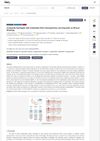
research Composite Hydrogels with Embedded Silver Nanoparticles and Ibuprofen as Wound Dressing
The hydrogel with silver and ibuprofen promotes wound healing and fights infection.

research Liposome-Based Carriers for CRISPR Genome Editing
Liposomes show promise for delivering CRISPR for gene editing but face challenges like delivery efficiency and safety concerns.
research A compositionally synergistic approach for the development of a multifunctional bilayer scaffold with antibacterial property for infected and chronic wounds
The developed scaffold effectively treats chronic wounds by promoting healing and preventing infection.
research DERMATOLOGICAL COMPOSITION OF DEODORANTS AND POTENTIAL CUTANEOUS RISKS: A NARRATIVE REVIEW AND CLINICAL IMPLICATIONS
Choose deodorants with low allergenic ingredients and follow usage instructions to avoid skin issues.
research Temperature-dependent phase transition microemulsions for enhanced transdermal delivery of finasteride and silodosin
Menthol-based microemulsions improve skin delivery of finasteride and silodosin.
research Vesicular Carriers for Follicular Drug Delivery
Deformable vesicular carriers improve drug delivery for skin conditions and systemic treatments.
research A Prospective, Multicenter, Open-label Study to Evaluate the Safety and Efficacy of a Cream Containing Xyloglucan, Pea Protein, and Opuntia ficus-indica Extract Versus Calcipotriol/Betamethasone in Adult Patients with Mild-to-moderate Psoriasis.
The cream with xyloglucan, pea protein, and cactus extract works as well as the standard treatment for psoriasis and is well-tolerated.
research Industry update: the latest developments in the field of therapeutic delivery, July 2018
New partnerships, clinical trials, and drug approvals marked progress in therapeutic delivery in July 2018.
research Dexmedetomidine-Loaded Hydrogel Microneedles Alleviate Acute Inflammatory Visceral Pain in Mice
Dexmedetomidine-loaded microneedles effectively reduce pain without sedation.
research COSMECEUTICALS: THE BIOACTIVE ELEMENTS IN NEW-AGE BEAUTY PRODUCTS
Cosmeceuticals are popular for their skin health benefits and anti-aging effects.
research SYK inhibitor entospletinib prevents ocular and skin GVHD in mice
Entospletinib effectively prevents eye and skin GVHD in mice.

research Formulation, Selection, Physical Properties and Antifungal Effect Evaluation of Semi-solid Dosage Forms with Organic Acids
Cinnamic acid in hydrogels can effectively fight fungi but spreads less than in solution.
research Pharmaceutical care in transplantation: current challenges and future opportunities
Pharmaceutical care in transplantation faces challenges but has promising future opportunities for better outcomes.
research Green Surface Engineering of Spun-Bonded Nonwovens Using Polyphenol-Rich Berry Extracts for Bioactive and Functional Applications
Berry extracts improve fabric strength and flexibility, making it suitable for medical and cosmetic uses.