September 2019 in “Journal of Investigative Dermatology” Sox13 is a new marker for early hair follicle development and differentiation.

Enterococcus faecalis delays wound healing by disrupting cell functions and creating an anti-inflammatory environment.
 April 2018 in “Journal of Investigative Dermatology”
 CREB, a protein that can promote cancer traits, is controlled by β-catenin in skin cancer cells.
 4 citations
,
September 2020 in “Cell division”
4 citations
,
September 2020 in “Cell division” XMU-MP-1 stops cell growth in a human mini-organ and reduces the effectiveness of the chemotherapy drug paclitaxel.
 24 citations
,
July 2018 in “Stem cells”
24 citations
,
July 2018 in “Stem cells” Runx1 controls fat-related genes important for normal and cancer cell growth, affecting skin and hair cell behavior.
November 2024 in “Journal of Investigative Dermatology” 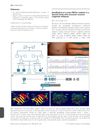 23 citations
,
December 2013 in “British Journal of Dermatology”
23 citations
,
December 2013 in “British Journal of Dermatology” A new gene mutation linked to a skin condition was found in a Spanish family.
 April 2017 in “The journal of investigative dermatology/Journal of investigative dermatology”
 Astrotactin2 affects hair follicle orientation and skin cell polarity.
63 citations
,
January 2021 in “Adipocyte” Adipose tissue-derived exosomes help regulate metabolism and may aid in disease treatment.
 December 2024 in “Turkish Journal of Forensic Medicine”
 Next-Generation Sequencing improves forensic analysis by providing detailed genetic information quickly.
1 citations
,
April 2010 in “Digital WPI” CLK1 is needed for skin cells to become epidermal cells but not sebocytes.
2 citations
,
July 2025 in “Acta Pharmacologica Sinica” Isoginkgetin reduces inflammation in cells by blocking NF-κB activation.
128 citations
,
March 1989 in “Experimental Cell Research” Hoxc13 is important for hair and tongue development by controlling hair keratin genes.
26 citations
,
May 2016 in “Journal of biological chemistry/The Journal of biological chemistry” sPLA2-IIE is crucial for normal hair follicle structure and skin health.
April 2010 in “Cancer Research” Mcl-1 can activate Wnt signaling in skin cells, promoting growth and possibly cancer.
 7 citations
,
January 2023 in “Frontiers in cell and developmental biology”
7 citations
,
January 2023 in “Frontiers in cell and developmental biology” Celsr1 is crucial for skin cell alignment, while Celsr2 has little effect on this process.
 May 2025 in “Science Advances”
 PIEZO1 helps keep hair follicle stem cells inactive, affecting hair growth.
132 citations
,
February 2002 in “Journal of Biological Chemistry” HOXC13 is crucial for regulating hair keratin genes in hair follicles.
112 citations
,
January 2013 in “Experimental dermatology” Faulty Notch signalling may cause hair follicle changes and inflammation in hidradenitis suppurativa.
Defective nuclear transport may cause gene expression changes in Progeria.
July 2026 in “Pediatric Allergy and Immunology” 2 citations
,
June 2025 in “Chemical Engineering Journal” The hydrogel helps heal seawater-immersed wounds by reducing infection and inflammation.
 57 citations
,
December 2021 in “Nature Communications”
57 citations
,
December 2021 in “Nature Communications” Non-canonical Wnt signaling helps intestinal stem cells move to injury sites for tissue repair.
51 citations
,
September 2012 in “Gene” The research identified a gene in sheep important for wool quality, which could help improve wool traits.
November 2024 in “Journal of Investigative Dermatology” Blocking the JAK/STAT pathway may help reduce skin sensitivity in Xeroderma pigmentosum.
 1 citations
,
December 2022 in “BMC Genomics”
1 citations
,
December 2022 in “BMC Genomics” The Msx2 gene affects feather development in Hungarian white geese and a specific gene variation could indicate feather quality.
18 citations
,
July 2006 in “British Journal of Dermatology” Connexin 30 is usually absent in normal skin but can appear in certain skin conditions.
 April 2017 in “The journal of investigative dermatology/Journal of investigative dermatology”
 HSD11b1 affects skin nerves and increases non-histaminergic itch.
 May 2026 in “Research Square”
 The polyG fragment in Hoxc13 protein helps evolve mammalian skin and hair by enhancing gene interactions.
 134 citations
,
January 2011 in “Development”
134 citations
,
January 2011 in “Development” Adam10 enzyme is crucial for healthy skin and proper Notch signaling.