Search
for
Did you mean Exosome Therapy?
Sort by
Research
30 / 1000+ results
research Microneedling: monotherapy or adjuvant treatment?
Microneedling works better when combined with other treatments.
research Methods of hair restoration for men and women
Various hair restoration methods can effectively promote hair growth.

research Combination of Low-Level Laser Therapy and Autologous Exosome Therapy in Hair Growth; Case Series
Combining low-level laser therapy and exosome therapy promotes hair growth.

research Exosomes in Skin Rejuvenation: Systematic Review of Anti-Aging Effects and Clinical Applications
Exosomes can improve skin elasticity, reduce wrinkles, and enhance hydration, but more research is needed.

research ROS-scavenging microneedles loaded with Portulaca oleracea L.-derived exosomes for atopic dermatitis therapy
A new microneedle patch effectively treats atopic dermatitis by reducing skin stress and restoring immune balance.
research Exosomes and Hair Regeneration: A Systematic Review of Clinical Evidence Across Alopecia Types and Exosome Sources
Exosome therapy shows promise for hair growth with minimal side effects, but more research is needed.
research A Scoping Review of Exosome Delivery Applications in Hair Loss
Exosome therapy could help hair growth but needs more research for safety and effectiveness.

research Safety and Efficacy of Mesotherapy with Placenta Polypeptide Injection for Moderate-to-Severe Sensitive Skin: A Multicenter, Randomized, Controlled Trial
Placenta polypeptide injection is a safe and effective treatment for sensitive skin.

research Regenerative potential and clinical application of mesenchymal stem cell-derived exosomes (review)
MSC-derived exosomes can help treat COVID-19, hair loss, skin aging, and arthritis.

research The Anti-Aging Effects of Adipose-Derived Mesenchymal Stem Cell Exosomes on Skin and Their Potential for Personalized Skincare Applications
Adipose-derived stem cell exosomes and AI can improve personalized skincare by offering anti-aging benefits and precise product customization.

research A umbilical cord blood-derived exosome product simulates hair growth through laminin V and collagen XVII: an ex vivo study
Limelight (CB-EVs) safely promotes hair growth.

research Promises and Pitfalls of Regenerative Therapies for Androgenetic Alopecia: Platelet-Rich Plasma, Photobiomodulation, Stem Cells, and Exosomes
Regenerative therapies show promise for hair regrowth, but more research and standardization are needed.
research Exosomes versus Platelet-rich Plasma in Hair Loss Therapy: A Comprehensive Literature Review
Exosomes and PRP both show promise for hair loss treatment, but more research is needed.
research Medicalized Aesthetic Uses of Exosomes and Cell Culture-Conditioned Media: Opening an Advanced Care Era for Biologically Inspired Cutaneous Prejuvenation and Rejuvenation
Exosomes and cell culture-conditioned media improve skin quality and reduce aging signs.
research Laser-Assisted Exosome Delivery (LAED) with Fractional CO2 Laser: A Pilot Two-Case Report and Narrative Review
Laser-Assisted Exosome Delivery showed early skin improvement without side effects, but more research is needed.
research Exosome-driven treatments for hair regrowth in androgenetic alopecia: a systematic review of preclinical studies, clinical experiments, safety, and future prospects

research A Pilot Randomized Controlled Trial (RCT) Evaluating the Efficacy of an Exosome-Containing Plant Extract Formulation for Treating Male Alopecia
The plant extract helped increase hair growth in men without severe side effects.

research Assessing the efficacy of mesotherapy products: Ultra Exo Booster, and Ultra S Line Plus in hair growth: An ex vivo study
The products significantly promote hair growth and maintain hair bulb health.
research Androgenetic Alopecia: Therapy Update
There are many treatments for common hair loss, but more trials are needed to decide which are best.
research Global Research Trends for Platelet-Rich Plasma: A Science Mapping with Machine Learning Techniques
The USA, China, Italy, and Türkiye lead in diverse PRP research, focusing on healing and pain management.
research Efficacy of Platelet-Rich Plasma versus Mesotherapy with Recombinant Growth Factors and Stem Cell-Conditioned Media in Androgenetic Alopecia: A Retrospective Study
Both PRP and MZT treatments can significantly improve hair growth in patients with androgenetic alopecia.
research Refractory Alopecia Areata of the Beard: Novel Improvement Through Exosome Therapy With Signs of Hair Repigmentation
Exosome therapy helped regrow and repigment beard hair in a man with alopecia.
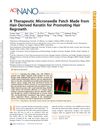
research A Therapeutic Microneedle Patch Made from Hair-Derived Keratin for Promoting Hair Regrowth
A new microneedle patch made from hair proteins helps regrow hair faster and better than current treatments.
research Exploring the reality of exosomes in dermatology
Exosomes show promise in skin and hair treatments, but more research is needed to ensure their safety and effectiveness.

research From Cells to Strands: A Systematic Review Comparing Exosome Therapy, Platelet-Rich Plasma, and Minoxidil for Androgenetic Alopecia Treatment
Exosome therapy is the most effective for hair growth, but it's experimental and expensive.

research Advancing Aesthetic Medicine Through Exosome-Based Regenerative Therapies with Dr. Face Innovations: Molecular Mechanisms, Nanotechnology Integration, and Data-Driven Insights
Exosome therapies improve skin, hair, and healing but face challenges like cost and regulation.

research Updates in Treatment for Androgenetic Alopecia
New treatments for hair loss include low-dose oral minoxidil, light therapy, and innovative therapies targeting hair growth mechanisms.
research Current Trends and Emerging Paradigms in the Treatment of Alopecia Areata
New treatments for alopecia areata focus on targeted drugs and regenerative therapies, but challenges remain.
research Platelet-Rich Plasma-Derived Exosomes Modulate Follicular Regeneration: A Comparative Mechanistic Analysis with Minoxidil in a Preclinical Model of Androgenetic Alopecia
Combining PRP-Exo with minoxidil significantly improves hair growth in androgenetic alopecia.