 April 2015 in “Plastic and Reconstructive Surgery”
 TLR3 activation helps improve skin and hair follicle healing in mice.

Alopecia areata is an autoimmune disease affecting hair follicles and may harm heart health.
North American ginseng extract helped regrow hair in balding mice.
 January 2015 in “Durham e-Theses (Durham University)”
 Adipose tissue changes in obesity can trigger stress in fat cells.
 February 2014 in “Journal of The American Academy of Dermatology”
  November 2013 in “Elsevier eBooks”
 Skin and hair renewal is maintained by both fast and slow cycling stem cells, with hair regrowth primarily driven by specific stem cells in the hair follicle bulge. These cells can also help heal wounds and potentially treat hair loss.
 August 2013 in “Fertility and Sterility”
 PCOS may be influenced by factors in the blood, not just the ovaries.
 January 2012 in “heiDOK (Heidelberg University)”
 Dormant melanoma cells in mice interact minimally with memory T cells due to a suppressive tumor environment.
 June 2008 in “British Journal of Dermatology”
 Herpes gestationis is linked to certain antigens, atopic eczema affects T cell populations and may be eased by breastfeeding, higher doses of anti-androgen treatment can improve androgenic alopecia, topical minoxidil increases hair thickness, long-term methotrexate therapy can cause liver fibrosis in psoriasis patients, and Lichen Sclerosus et Atrophicus patients aren't at higher risk for autoimmune disorders.
 January 2008 in “Durham e-Theses (Durham University)”
 Hair follicle stem cells are similar to mesenchymal stem cells and can become neural-like cells under certain conditions.
 January 2007 in “Dermatologic Surgery”
 A new scalp surgery technique leads to significantly thinner scars.
 September 2004 in “Experimental dermatology”
 Melatonin directly affects mouse hair follicles and may influence hair growth.
 October 2003 in “Journal of Investigative Dermatology Symposium Proceedings”
 Mice treatments didn't grow hair, a patient treatment may affect immune response, and people with hair loss often feel anxious or depressed.
 June 1996 in “Irish Journal of Medical Science (1971 -)”
 The document summarizes medical findings on topics like heart rhythm treatment, sleep apnea therapy, and various health conditions and treatments.
 July 1995 in “Journal of Dermatological Science”
 Cyclosporine starts hair growth faster, while minoxidil makes it last longer.
 July 2026 in “Nature Communications”
 Colorectal cancer uses wound-healing processes to spread, suggesting new treatment targets.
 June 2026 in “Scientific Reports”
 Nestin-expressing hair follicle cells may be useful for nerve repair and regeneration.
 March 2026 in “Molecular and Cellular Biomedical Sciences”
 EH-MSCs may help treat hair loss by reducing inflammation.
 February 2026 in “Frontiers in Materials”
 Iron-curcumin nanoparticles help heal diabetic wounds faster by reducing inflammation and promoting tissue repair.
 January 2026 in “Nanoscale Advances”
 The nanocomposite effectively targets lung cancer cells without harming normal cells.
 December 2025 in “Scientific Reports”
 Valproic acid helps hair follicle stem cells survive better in low oxygen and glucose conditions.
 October 2025 in “Frontiers in Veterinary Science”
 Quercetin boosts hair follicle stem cell growth and survival in cashmere goats.
 July 2025 in “Bulletin de la Banque Méllié Iran.”
 Spirulina extract helps stem cells become neuron cells safely.
 January 2025 in “Advances in Dermatology and Allergology”
 Eating foods with sulfhydryl may worsen pemphigus vulgaris.
 November 2023 in “Food science of animal resources”
 Lactilactobacillus curvatus LB-P9 taken orally helps hair regrow faster and thicker in mice.
 April 2023 in “Digital Library of Theses and Dissertations (Universidade de São Paulo)”
 Mesenchymal stem cells from laser-assisted liposuction are as effective and safe as those from conventional liposuction for cell therapy.

Mesenchymal stem cells from laser-assisted liposuction are as effective and safe as those from conventional methods for cell therapy.
 June 2022 in “Research Square (Research Square)”
 Lipid peroxidation may worsen social behavior issues in autism.
 November 2021 in “Research Square (Research Square)”
 MRI can enhance the quality and effectiveness of certain stem cells.
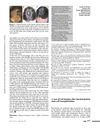 May 2018 in “European Journal of Dermatology”
 Adjusting the medication tacrolimus resolved a boy's red nail beds after a stem cell transplant.