 April 2017 in “Journal of Investigative Dermatology”
 Researchers improved a method to study individual cells in newborn mouse skin and found a way to assess the severity of a skin condition in humans.
21 citations
,
November 2014 in “Cytotechnology”  March 2022 in “Indian Journal of Animal Research”
 Dog hair follicle stem cells can turn into fat cells.
17 citations
,
March 2005 in “Journal of Investigative Dermatology” Autofluorescence in hair follicle stem cells can interfere with studies but may help isolate these cells.
November 2025 in “Journal of Investigative Dermatology” PCFCL may have unrecognized subtypes and needs more research.

Canine fetal hair follicle stem cells show pluripotency, with higher S100 protein expression at 40 days.

Researchers improved mouse skin cell culture methods and created a similar immortal cell line, but need to clarify their methods and benefits.
 1 citations
,
June 2020 in “bioRxiv (Cold Spring Harbor Laboratory)”
1 citations
,
June 2020 in “bioRxiv (Cold Spring Harbor Laboratory)” Fetal skin has unique immune cells different from adult skin.
43 citations
,
September 2009 in “Stem Cells” A nonviral method was developed to label and culture human hair follicle stem cells.
 10 citations
,
January 2016 in “Annals of Dermatology”
10 citations
,
January 2016 in “Annals of Dermatology” 3D-cultured dermal papilla cells are better at inducing hair follicles than adipose-derived stem cells.
January 2018 in “Belarusian State Pedagogical University repository (Belarusian State Pedagogical University)” Adipose-derived stem cells can be used to create cells that help grow new hair.
November 2022 in “Journal of Investigative Dermatology” A new tool helps study hair follicle cells to develop better treatments for hair disorders.
 12 citations
,
August 2018 in “Journal of Dermatological Science”
12 citations
,
August 2018 in “Journal of Dermatological Science” Scientists made stem cells that can grow hair by adding three specific factors to them.
2 citations
,
July 2025 in “Cells” Platelet lysate is better than fetal bovine serum for growing stem cells and healing wounds.
1 citations
,
May 2024 in “Communications Biology” Dab2 protein is crucial for hair follicle stem cell renewal and preventing early aging.
5 citations
,
October 2017 in “Cellular Reprogramming” Inhibiting HSP90 increases cell adaptability and survival under stress.
September 2016 in “Journal of Dermatological Science” Hair follicle stem cells can become heart muscle cells.
Rat hair follicle bulge cells can become nerve and glial cells, showing potential for neuroprotection.
2 citations
,
January 2019 in “Methods in molecular biology” A new method helps grow skin cells from humans and mice more easily and quickly.
 1 citations
,
January 2021
1 citations
,
January 2021 CD4+ skin cells may be precursors to basal cell carcinoma.
 16 citations
,
February 2010 in “Journal of the European Academy of Dermatology and Venereology”
16 citations
,
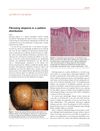
February 2010 in “Journal of the European Academy of Dermatology and Venereology” Fibrosing alopecia in a pattern distribution is a unique hair loss condition that may respond to antiandrogen therapy.
3 citations
,
August 2023 in “Journal of Investigative Dermatology”  7 citations
,
December 2016 in “Journal of The Taiwan Institute of Chemical Engineers”
7 citations
,
December 2016 in “Journal of The Taiwan Institute of Chemical Engineers” Pig blood plasma can be used to promote human hair growth and is a good alternative to the commonly used serum additive.
 October 2012 in “Faculty Opinions – Post-Publication Peer Review of the Biomedical Literature”
 Scientists used a special imaging technique to observe that hair follicle regeneration involves cell division and structural changes, mostly in the lower part of the follicle, and that the dermal papilla at the base is crucial for regrowth.
 15 citations
,
February 2021 in “Scientific Reports”
15 citations
,
February 2021 in “Scientific Reports” A specific group of stem cells can help regenerate hair continuously.
14 citations
,
January 2021 in “Stem cell research & therapy” Human skin cells with stem-like features can help create new hair follicles and sebaceous glands when combined with other cells.
3 citations
,
January 2021 in “FEBS open bio” Camellia japonica extract may improve scalp health and promote hair growth.
 April 2018 in “The journal of investigative dermatology/Journal of investigative dermatology”
 Li2CO3 improved skin disease in a mouse model of Focal Dermal Hypoplasia without toxicity.
January 2020 in “한국공업화학회 연구논문 초록집” Encapsulated hair cells in a special gel can help regenerate hair follicles, potentially treating hair loss.
6 citations
,
January 2014 in “Genetics and Molecular Research” The method successfully created stable transfection donor cells for goat hair follicle research.