 6 citations
,
December 2004 in “Anais Brasileiros de Dermatologia”
6 citations
,
December 2004 in “Anais Brasileiros de Dermatologia” Some family members had a condition with both loose hair and unique eye changes, possibly indicating a new type of ectodermal dysplasia.
 166 citations
,
April 2012 in “Journal of The American Academy of Dermatology”
166 citations
,
April 2012 in “Journal of The American Academy of Dermatology” Mostly postmenopausal Caucasian women get Frontal Fibrosing Alopecia, which often includes eyebrow loss and has limited treatment success.
January 2016 in “Zurich Open Repository and Archive (University of Zurich)” Dietary L-serine supplementation can reduce symptoms of HSAN1 by lowering harmful 1-deoxySL levels.
9 citations
,
June 2017 in “American journal of ophthalmology. Case reports” A new mutation in the CDH3 gene causes hair loss and vision problems in a young girl.
 1 citations
,
August 2011 in “Dermatology Reports”
1 citations
,
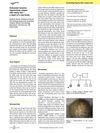
August 2011 in “Dermatology Reports” Two siblings were found to have a genetic condition causing progressive hair loss and woolly hair, which may often be misdiagnosed.
January 2019 in “International Journal of Clinical & Medical Images” The patient showed signs of liver disease due to alcohol use but didn't need treatment for Dupuytren’s contracture.
11 citations
,
April 2012 in “Journal of Investigative Dermatology” A specific mutation in PA-PLA1α causes abnormal hair growth.
 3 citations
,
February 2022 in “Dermatology practical & conceptual”
3 citations
,
February 2022 in “Dermatology practical & conceptual” The study concludes that early diagnosis of Frontal Fibrosing Alopecia is important, as it is often found in postmenopausal women, may be related to Lichen Planopilaris, and eyebrow hair loss is a common sign.
23 citations
,
July 2016 in “JAMA Ophthalmology” CDH3-related disease causes worsening eye and hair issues.
14 citations
,
March 2018 in “The American journal of case reports” People with the same genetic mutation for Woodhouse-Sakati syndrome can have different symptoms.
January 2022 in “Clinical dermatology review” A girl with a rare skin condition called Keratosis Follicularis Spinulosa Decalvans showed no significant improvement with treatment.
8 citations
,
June 1981 in “Clinica Chimica Acta” 
The study concluded that Frontal fibrosing alopecia can affect younger people, is often missed in men, and may be autoimmune-related.
 1 citations
,
September 2021 in “CRC Press eBooks”
1 citations
,
September 2021 in “CRC Press eBooks” Frontal Fibrosing Alopecia is a hair loss condition mainly affecting postmenopausal women, with unclear causes and various clinical patterns.
 18 citations
,
November 2012 in “Australasian Journal of Dermatology”
18 citations
,
November 2012 in “Australasian Journal of Dermatology” A 66-year-old man with a rare case of male frontal fibrosing alopecia did not regrow hair despite treatment.
A rare genetic mutation causes Woodhouse-Sakati syndrome symptoms.
November 2025 in “JDDG Journal der Deutschen Dermatologischen Gesellschaft” Restoring phenylalanine levels improved skin and hair symptoms in a PKU infant.
June 2026 in “Clinical Case Reports” Early recognition and treatment of multiple carboxylase deficiency with biotin can prevent serious health issues in infants.
1 citations
,
November 2023 in “Indian Journal of Dermatology” A 6-year-old Asian boy has a rare scalp condition causing hair loss and thickening, with unclear causes and no effective treatment.
A new genetic mutation was found causing hair and eye issues in a boy.
 12 citations
,
March 2018 in “Anais brasileiros de dermatologia/Anais Brasileiros de Dermatologia”
12 citations
,
March 2018 in “Anais brasileiros de dermatologia/Anais Brasileiros de Dermatologia” A patient had both chronic cutaneous lupus erythematosus and frontal fibrosing alopecia.
17 citations
,
September 2000 in “Journal of dermatology” A baby with a rare metabolic disorder developed a rash not cured by zinc alone, likely due to both zinc and amino acid deficiencies.
May 2025 in “Dermatology Reports” A genetic mutation in the LIPH gene causes a rare hair disorder with sparse, curly hair.
January 2016 in “Indian dermatology online journal” The patient has frontal fibrosing alopecia (FFA).
 10 citations
,
November 2017 in “Journal of Investigative Dermatology”
10 citations
,
November 2017 in “Journal of Investigative Dermatology” A mutation in the FAM83G gene is linked to skin and hair abnormalities in two related individuals.
 2 citations
,
July 2022 in “Frontiers in Medicine”
2 citations
,
July 2022 in “Frontiers in Medicine” The cause of Frontal fibrosing alopecia, a type of hair loss, is complex, likely involving immune responses and genetics, but is not fully understood.
5 citations
,
April 1984 in “Archives of Dermatology” Porphyria cutanea tarda causes skin issues due to an enzyme deficiency.
 4 citations
,
January 2017 in “Journal of pediatric endocrinology & metabolism/Journal of pediatric endocrinology and metabolism”
4 citations
,
January 2017 in “Journal of pediatric endocrinology & metabolism/Journal of pediatric endocrinology and metabolism” Two different mutations in the vitamin D receptor gene cause different symptoms and responses to treatment in Lebanese patients with hereditary rickets.
 April 2023 in “Journal of Investigative Dermatology”
 The study suggests fibrosing alopecia in a pattern distribution has distinct features and may vary by race.
 February 2024 in “Scientific reports”
 Four genes are potential markers for hair loss condition alopecia areata, linked to a specific type of cell death.