26 citations
,
February 1991 in “PubMed” Trichotillomania can be identified by a "Friar Tuck sign" and nail-biting.
1 citations
,
March 2013 in “Journal of Dermatological Case Reports” A rare skin condition affected only the facial hair of a 46-year-old man.
October 2020 in “Der Hautarzt” Tofacitinib helped regrow hair in a woman with alopecia areata.
 1 citations
,
September 2024 in “Frontiers in Cell and Developmental Biology”
1 citations
,
September 2024 in “Frontiers in Cell and Developmental Biology” Pigs are a good model for studying human hair growth and disorders.
 November 2025 in “Zenodo (CERN European Organization for Nuclear Research)”
 Dermatophytosis in cats is a common fungal infection that usually resolves itself but can be severe in vulnerable animals.
 6 citations
,
February 2013 in “Veterinary Dermatology”
6 citations
,
February 2013 in “Veterinary Dermatology” A young cat had a rare hair condition with twisted hair shafts but stayed healthy.
 August 2024 in “Clinical Cosmetic and Investigational Dermatology”
 Upadacitinib and narrowband UVB effectively treated a child's vitiligo and alopecia areata.
2 citations
,
January 2023 in “Brazilian Journal of Development” Illegal wildlife captivity poses health risks and highlights the need for conservation and public health awareness.
44 citations
,
May 1980 in “Archives of Dermatology” "20-nail dystrophy" can have multiple causes.
 2 citations
,
January 2019 in “Dermatology Review”
2 citations
,
January 2019 in “Dermatology Review” Pigmented vellus and upright regrowing hairs predict hair regrowth in severe alopecia.
 6 citations
,
February 2022 in “The journal of neuroscience/The Journal of neuroscience”
6 citations
,
February 2022 in “The journal of neuroscience/The Journal of neuroscience” Deleting the PTEN gene in mice causes nerve cells to grow larger and heal better after injury, but may cause overgrowth and hair loss in older mice.
 January 2025 in “Pakistan Veterinary Journal”
 A cat had a rare, aggressive pancreatic cancer that spread quickly and led to its death.
 8 citations
,
December 2017 in “Journal of The American Academy of Dermatology”
8 citations
,
December 2017 in “Journal of The American Academy of Dermatology” The authors updated the criteria for diagnosing frontal fibrosing alopecia, making it easier to diagnose without a biopsy.
 75 citations
,
October 2010 in “Mammalian genome”
75 citations
,
October 2010 in “Mammalian genome” Sphynx cats are hairless and Devon Rex cats have curly hair due to specific genetic mutations.
 89 citations
,
February 2002 in “Australasian journal of dermatology”
89 citations
,
February 2002 in “Australasian journal of dermatology” A premenopausal woman had hair loss and skin issues, treated with topical steroids.
10 citations
,
January 2018 in “International journal of trichology” Eruptive vellus hair cysts are rare and often misdiagnosed, requiring biopsy for accurate diagnosis.
35 citations
,
January 2008 in “American Journal of Clinical Dermatology” KFSD can be linked to acne keloidalis nuchae and tufted hair folliculitis.
8 citations
,
January 2013 in “Australasian journal of dermatology” Trichodysplasia spinulosa is a rare skin condition caused by a virus, treatable with antiviral medication.
May 2025 in “OPAL (Open@LaTrobe) (La Trobe University)” Targeting specific metabolic and ionic pathways may improve alopecia areata treatment.
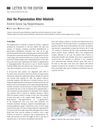 April 2025 in “Turkish Journal of Hematology”
 Nilotinib may cause gray hair to return to its original color.
Combining excimer lamp and tofacitinib gel may help treat hair loss in children.
Early diagnosis and treatment of frontal fibrosing alopecia are crucial to prevent permanent hair loss.
10 citations
,
September 2016 in “Journal of cutaneous medicine and surgery” Patients on dabrafenib and trametinib for melanoma often experience skin side effects.
 1 citations
,
October 2023 in “Journal of the Pakistan Medical Association”
1 citations
,
October 2023 in “Journal of the Pakistan Medical Association” Folliculotropic mycosis fungoides can occur in children and is diagnosed with specific tests, but often stays in early stages with treatment.
26 citations
,
May 1988 in “Pediatric dermatology” Eruptive vellus hair cysts can run in families.
5 citations
,
May 2024 in “Journal of Cosmetic Dermatology” Engineered nanovesicles from hair follicle stem cells can effectively treat UVB-induced skin aging.
December 2020 in “Research Square (Research Square)” Neural cell nanovesicles help hair growth by activating key signals.
 21 citations
,
January 2018 in “Anticancer Research”
21 citations
,
January 2018 in “Anticancer Research” NBCCS and BFHS might be the same syndrome, helping better identify and manage cases.
 June 2017 in “Journal of the American Academy of Dermatology”
 Tofacitinib is effective and safe for treating severe alopecia areata and related conditions.
4 citations
,
August 2024 in “Non-coding RNA Research”