May 2025 in “Journal of Traditional Chinese Medical Sciences” Stellera chamaejasme L. extract promotes hair growth by activating hair growth genes.
January 2025 in “Archives of Dermatological Research” Moracin M helps hair grow by activating specific pathways and improving blood vessel formation.
 January 2025 in “Institutional Repositories DataBase (IRDB)”
 Maslinic acid from olive extracts promotes hair growth like minoxidil.
 November 2024 in “Research Square (Research Square)”
 Moracin M boosts hair growth by activating key pathways and promoting cell growth.
 August 2024 in “Current Issues in Molecular Biology”
 Key genes and RNAs related to hair growth in sheep were identified, aiding future breeding improvements.
July 2024 in “Journal of Investigative Dermatology” JAK inhibitors improve hair growth in alopecia areata, especially in patchy types.
July 2024 in “Journal of Investigative Dermatology” PRP preparation partially activates platelets, causing varied growth factor release.
 May 2024 in “Journal of cosmetic dermatology”
 Heat-treated Limosilactobacillus fermentum with menthol, salicylic acid, and panthenol promotes hair growth and balances scalp microbiome in people with androgenetic alopecia.
 May 2024 in “FEBS open bio”
 Annurca apple extract may help treat hair loss and protect against oxidative stress.
 April 2024 in “bioRxiv (Cold Spring Harbor Laboratory)”
 Removing Sprouty genes in mice causes various hormone-related issues but does not increase cancer risk by one year of age.
 April 2023 in “Journal of Investigative Dermatology”
 Ganoderma lucidum extract can potentially reduce stress-induced hair loss by slowing down premature hair aging and removing harmful substances.
 April 2023 in “The journal of investigative dermatology/Journal of investigative dermatology”
 KLF4 is important for keeping hair follicle stem cells inactive.
 September 2022 in “Institutional Repositories DataBase (IRDB)”
 Adipose-derived stem cells can be transformed into hair-forming cells using specific extracellular vesicles, offering potential for hair regeneration therapies.
 July 2022 in “Journal of Investigative Dermatology”
 High platelet numbers in PRP may not be essential for hair growth, and certain growth factors could negatively affect treatment outcomes for hair loss.
January 2022 in “Springer eBooks” Fibroblast growth factors are crucial for hair follicle development and regeneration.
 January 2022 in “Journal of St. Marianna University”
 Substances from human hair cells can affect hair loss-related genes, potentially leading to new treatments for baldness.
 October 2021 in “Research Square (Research Square)”
 Hair follicle stem cells in hairpoor mice are disrupted, causing hair loss.
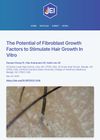
Some fibroblast growth factors may promote hair growth similarly to minoxidil and could potentially treat hair loss.
January 2020 in “bioRxiv (Cold Spring Harbor Laboratory)” DNA methylation controls hair follicle gene expression in cashmere goats.
 April 2018 in “The journal of investigative dermatology/Journal of investigative dermatology”
 Androgens increase growth factors in skin cells, which may lead to acne.
Researchers improved mouse skin cell culture methods and created a similar immortal cell line, but need to clarify their methods and benefits.
 December 2017 in “Dong-ui saengni byeongni hakoeji”
 Cynanchi Wilfordii Radix has strong antioxidant effects and may help treat male hair loss.
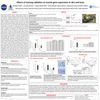 January 2017 in “NASA Technical Reports Server (NASA)”
 Early changes in skin gene expression can predict later bone mass loss after radiation exposure.
 August 2016 in “Journal of Investigative Dermatology”
 Zinc deficiency disrupts hair growth and cycle, but zinc supplements can fix this.
 April 2016 in “The journal of investigative dermatology/Journal of investigative dermatology”
 M2 macrophages help hair regrowth in wounds by making growth factors.
 October 2015 in “Regenerative Medicine”
 Two growth factors, PDGF and FGF2, can potentially be used together to grow enough cells for a hair loss treatment, but their exact function on human cells needs further confirmation.
September 2014 in “Genes and Cells” Genetically modified umbilical cord blood cells improved skin wound healing in rats.
 January 2014 in “Genes and Cells”
 Genetically modified cells improved skin wound healing in rats.
January 2014 in “Ghent University Academic Bibliography (Ghent University)” FGF18 may influence hair loss in dogs.
 October 2013 in “Faculty Opinions – Post-Publication Peer Review of the Biomedical Literature”
 FGF9 from certain T cells helps create new hair follicles during wound healing, which could potentially be used for hair loss treatments.