 June 2020 in “Journal of Investigative Dermatology”
 The technique effectively shows how human skin and hair cells form into ball-like structures.
 19 citations
,
January 2009 in “International review of cell and molecular biology”
19 citations
,
January 2009 in “International review of cell and molecular biology” Hair's strength and flexibility come from its protein structure and molecular interactions.
 30 citations
,
January 2020 in “Journal of The American Academy of Dermatology”
30 citations
,
January 2020 in “Journal of The American Academy of Dermatology” Fibrosing alopecia in a pattern distribution is a hair loss condition often confused with other types, requiring early treatment but usually not resulting in significant hair regrowth.
January 1980 in “中国科学A辑(英文版)” The protein structures in the hair and tendon were preserved, but their molecular arrangements changed.
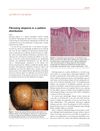 16 citations
,
February 2010 in “Journal of the European Academy of Dermatology and Venereology”
16 citations
,
February 2010 in “Journal of the European Academy of Dermatology and Venereology” Fibrosing alopecia in a pattern distribution is a unique hair loss condition that may respond to antiandrogen therapy.
1 citations
,
August 2016 in “Dermatology - Open Journal” Mitochondria change shape to meet energy needs during cell movement.
85 citations
,
October 2007 in “International Journal of Dermatology” Curly hair shape is due to uneven growth patterns in the hair follicle.
30 citations
,
July 2000 in “PubMed” Hair has unevenly distributed proteins and lipids, with lipids mainly in the cuticle and proteins in the cortex and medulla.
11 citations
,
June 1974 in “Journal of Cutaneous Pathology” Follicular mucinosis causes significant damage to hair follicle cells.
161 citations
,
June 1993 in “Journal of Biological Chemistry” Trichohyalin helps in hair and skin cell structure and function by binding calcium and linking proteins.
1 citations
,
September 2025 in “PLoS ONE” Actin and alpha-smooth muscle actin help skin heal in mouse fetuses.
 April 2023 in “Journal of Investigative Dermatology”
 The study suggests fibrosing alopecia in a pattern distribution has distinct features and may vary by race.
1235 citations
,
December 2013 in “Nature” Two fibroblast types shape skin structure and repair differently.
Arabidopsis Formin 2 stabilizes actin filaments to aid cell-to-cell trafficking.
 3 citations
,
August 2012 in “Nature Cell Biology”
3 citations
,
August 2012 in “Nature Cell Biology” Certain proteins help nerve cells branch, and other findings relate to cancer, stem cell behavior, and cell division.
 149 citations
,
July 2017 in “PLoS Biology”
149 citations
,
July 2017 in “PLoS Biology” Hair follicle patterns form through a mix of self-organization and signaling interactions.
Glycogen helps E. coli cells divide unevenly and organize their contents.
13 citations
,
January 2002 in “Biological chemistry” Different conditions affect how hair proteins assemble, and certain mutations can change their structure.
46 citations
,
December 1998 in “Journal of Biological Chemistry” Keratin 19 forms less stable and shorter filaments than keratin 14, giving unique traits to certain skin cells.
 2 citations
,
February 2016 in “Journal of sol-gel science and technology”
2 citations
,
February 2016 in “Journal of sol-gel science and technology” A small molecule can strengthen fine hair, making it more resistant and natural-feeling.
30 citations
,
November 1992 in “The Journal of Dermatology” Keratohyalin and trichohyalin proteins help form and organize skin and hair structures.
 44 citations
,
June 2009 in “Biomaterials”
44 citations
,
June 2009 in “Biomaterials” Skin cell clumping for hair growth is improved by a protein called fibronectin, which helps cells stick and move better.
February 2025 in “Archives of Dermatological Research” Fibrosing alopecia can be diagnosed without typical signs of lichen planopilaris.
7 citations
,
January 2011 Collagen XVIII is crucial for maintaining tissue structure and function in the brain, kidneys, and hair.
April 2019 in “Journal of Investigative Dermatology” Frontal Fibrosing Alopecia involves disrupted cholesterol pathways, fibrosis, and increased mast cells.
34 citations
,
June 2020 in “British journal of dermatology/British journal of dermatology, Supplement” Frontal fibrosing alopecia is linked to increased immune system activity and reduced stem cells, suggesting early treatment targeting this pathway might prevent hair follicle damage.
19 citations
,
December 2006 in “Journal of Structural Biology” Type I and Type II keratin chains can form heterodimers despite sequence differences.
28 citations
,
July 1993 in “The journal of investigative dermatology/Journal of investigative dermatology” 53 citations
,
April 1985 in “Developmental Biology” Fibronectin and other basement membrane components increase during hair growth and decrease during rest.
3 citations
,
April 2018 in “Journal of Investigative Dermatology” CCCA may be a fibroproliferative disorder, and anti-fibrotic therapies could help.