42 citations
,
February 2000 in “Journal of Investigative Dermatology” Type VII collagen absence helps skin development by allowing tissue remodeling.
59 citations
,
March 1984 in “Journal of Investigative Dermatology”  September 2016 in “Journal of Dermatological Science”
 Protein extract from embryonic skin can create new hair follicles in adult life, primarily through effects on fibroblasts.
44 citations
,
February 2023 in “Cell” Fingerprints form uniquely before birth due to specific genetic pathways and local signals.
May 2026 in “Journal of Proteomics” 16 citations
,
March 2024 in “International Journal of Molecular Sciences” Natural compounds and biomimetic engineering can improve wound healing by enhancing fibroblast activity.
 7 citations
,
March 2021 in “Biology”
7 citations
,
March 2021 in “Biology” Scaffold improves hair growth potential.
93 citations
,
May 1990 in “The EMBO Journal” Mice with extra sheep genes had hair that fell out and regrew in cycles.
17 citations
,
October 1997 in “Australian Journal of Agricultural Research” Stocking rate affects wool follicle inactivity, not Merino strain.
 19 citations
,
February 2008 in “Archives of Dermatological Research”
19 citations
,
February 2008 in “Archives of Dermatological Research” Mast cells might contribute to hair loss by causing skin thickening.
6 citations
,
August 2024 in “Biomacromolecules” The model helps test drugs for clubfoot fibrosis by mimicking cell environments and shows minoxidil reduces harmful collagen links.
 September 2025 in “Animals”
 Key proteins and pathways are crucial for wool fineness, but more research is needed.

Injectable PRF therapy may help with hair growth and skin rejuvenation, but more research is needed.
 February 2024 in “Advanced Science”
 The new scaffold with two growth factors speeds up skin healing and reduces scarring.
 39 citations
,
July 2015 in “British Journal of Dermatology”
39 citations
,
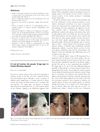
July 2015 in “British Journal of Dermatology” The pseudo 'fringe sign' can also appear in frontal fibrosing alopecia, not just in traction alopecia, showing that this condition may be more common than thought.
36 citations
,
June 1988 in “Australian Journal of Biological Sciences” Mouse epidermal growth factor injections in sheep affected wool growth and skin, but saline did not.
 54 citations
,
June 2003 in “The journal of investigative dermatology. Symposium proceedings/The Journal of investigative dermatology symposium proceedings”
54 citations
,
June 2003 in “The journal of investigative dermatology. Symposium proceedings/The Journal of investigative dermatology symposium proceedings” Disruptions in hair follicle fibroblast dynamics can cause hair growth problems.
 6 citations
,
May 2020 in “Scientific reports”
6 citations
,
May 2020 in “Scientific reports” Researchers identified genes and proteins that may influence wool thickness in sheep.
 September 2016 in “Journal of Dermatological Science”
 Certain factors can start hair growth in adult skin by making cells communicate and form new hair follicles.
 30 citations
,
January 2020 in “Journal of The American Academy of Dermatology”
30 citations
,
January 2020 in “Journal of The American Academy of Dermatology” Fibrosing alopecia in a pattern distribution is a hair loss condition often confused with other types, requiring early treatment but usually not resulting in significant hair regrowth.
7 citations
,
May 2023 in “Animals” Fraser's dolphins heal wounds exceptionally well, with their skin's collagen returning to normal after injury.
Fgf20 is crucial for hair follicle formation by influencing cell movement and growth.
30 citations
,
January 1994 in “Micron” Mature hair surfaces are formed by keratinized cells with developed layers, not just modified plasma membranes.
June 2026 in “Experimental Dermatology” Large wounds have more infundibular basal keratinocytes, aiding hair follicle regeneration.
 October 2024 in “BMC Genomics”
 Understanding hair follicle development can help improve cashmere quality.
 5 citations
,
June 2023 in “BMC genomics”
5 citations
,
June 2023 in “BMC genomics” A specific gene mutation causes long hair in Angora rabbits.
48 citations
,
January 2002 in “Journal of Structural Biology” Trichocyte filaments have a low-density core and may include proteins for hair structure.
21 citations
,
July 2024 in “Journal of Investigative Dermatology” 29 citations
,
May 1988 in “Clinical Endocrinology” Fibroblasts help understand androgen resistance at the cellular level.
January 2020 in “eScholarship (California Digital Library)” Signaling factors and gene-driven cell adhesion are crucial for wound healing and embryo development.