6 citations
,
June 2024 in “Medical Review” Biliary fibrosis is crucial in liver diseases and understanding it can help prevent and treat these conditions.
 September 2023 in “International Journal of Science and Research (IJSR)”
 PRP and PRF can effectively heal chronic wounds.
7 citations
,
March 2024 in “Veterinary Medicine and Science” PRF therapy effectively promotes natural wound healing in dogs.
 February 2024 in “Skin research and technology”
 The research suggests that immune cells and a specific type of cell death called ferroptosis are involved in Frontal fibrosis alopecia.
 May 2022 in “Research Square (Research Square)”
 Certain Chinese herbs may help treat kidney fibrosis by targeting TGF-β.
 January 2020 in “Majalah Kedokteran Gigi Indonesia”
 Freeze-drying collagen-activated PRP increases TGF-β1 levels, enhancing tissue regeneration potential.
4 citations
,
February 2016 in “Experimental Dermatology” Blocking α1-integrin makes adult fibroblasts more like foetal ones, improving their movement and aiding wound healing.
26 citations
,
May 2023 in “Journal of Nanobiotechnology” The hydrogel speeds up healing of normal and MRSA-infected wounds.
 5 citations
,
January 2021 in “IEEE Access”
5 citations
,
January 2021 in “IEEE Access” Electric pulses can effectively activate platelets and release growth factors, offering a better alternative to traditional methods.
3 citations
,
August 2024 in “Biomimetics” The hydrogel effectively heals wounds and fights bacteria.
1 citations
,
January 2024 in “Surgical & Cosmetic Dermatology” Botulinum toxin A helped a patient recover from dissecting folliculitis when antibiotics failed.
CRISPR gene editing reduces harmful molecules in cells from Emery–Dreifuss Muscular Dystrophy patients.
Compound 6 is a promising candidate for better wound healing.
22 citations
,
September 2022 in “Materials & Design” The particles effectively stop bleeding quickly and reduce blood loss.
 103 citations
,
June 2018 in “International Journal of Molecular Sciences”
103 citations
,
June 2018 in “International Journal of Molecular Sciences” FGF signaling is a promising target for developing treatments for wounds, metabolic diseases, and cancer.
March 2025 in “Tissue and Cell” Frozen-thawed fibroblast sheets enhance wound healing and hair growth in mice.
189 citations
,
July 2009 in “The Journal of clinical investigation/The journal of clinical investigation” Epidermolysis bullosa simplex causes easily blistered skin due to faulty skin cell proteins, leading to new treatment ideas.
July 2024 in “Journal of Investigative Dermatology” Combining certain treatments, including FOL005, may improve healing of difficult wounds.
 3 citations
,
April 2021 in “PLoS ONE”
3 citations
,
April 2021 in “PLoS ONE” Pulse electric fields can control the release of growth factors and serotonin from platelet-rich plasma, offering a tailored approach to wound healing.
Certain Chinese herbs may help treat kidney fibrosis by targeting TGF-β.
 13 citations
,
September 2019 in “Scientific Reports”
13 citations
,
September 2019 in “Scientific Reports” High levels of the protein Flightless I worsen ulcerative colitis symptoms in mice.
 January 2007 in “Sen'i Gakkaishi”
 Mf-rich hair degrades more than Ma-rich hair, especially with Proteinase K.
Mechanical stress causes ligament thickening through WISP-1 and Hedgehog signaling.
 October 2025 in “Journal of Nanobiotechnology”
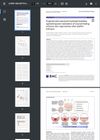
 The hydrogel helps wounds heal better by reducing inflammation and promoting skin regeneration.
 March 2021 in “Institutional Repositories DataBase (IRDB)”
 Heparin-functionalized nanofabrics help heal wounds effectively and safely without scars in 14 days.
 May 2023 in “Elsevier eBooks”
 Platelet-rich plasma may help heal injuries.
 April 2022 in “The Egyptian Journal of Hospital Medicine”
 Platelet Rich Fibrin improves healing and reduces acne scars by slowly releasing growth factors.
 March 2023 in “Scientific Reports”
 Using focused ultrasound on the brain can help epilepsy medicine work better in rats.
July 2021 in “Plastic and reconstructive surgery. Global open” Verteporfin treatment in mice led to complete skin healing without scarring.
28 citations
,
September 1998 in “Journal of Investigative Dermatology” Two distinct caspases in human skin help with cell death and skin formation.