 10 citations
,
December 2008 in “Journal of Clinical Neuromuscular Disease”
10 citations
,
December 2008 in “Journal of Clinical Neuromuscular Disease” Finasteride can cause muscle pain and high creatine kinase levels, but stopping the medication may resolve symptoms.
 12 citations
,
October 2016 in “Anais Brasileiros de Dermatologia”
12 citations
,
October 2016 in “Anais Brasileiros de Dermatologia” Frontal Fibrosing Alopecia may be linked to autoimmune diseases like Sjögren's syndrome.
 166 citations
,
April 2012 in “Journal of The American Academy of Dermatology”
166 citations
,
April 2012 in “Journal of The American Academy of Dermatology” Mostly postmenopausal Caucasian women get Frontal Fibrosing Alopecia, which often includes eyebrow loss and has limited treatment success.

The study concluded that Frontal fibrosing alopecia can affect younger people, is often missed in men, and may be autoimmune-related.
 May 2025 in “The Journal of Rheumatology”
 Mixed Connective Tissue Disease can develop from overlapping symptoms of several autoimmune diseases, making diagnosis complex.
 April 2023 in “World Journal Of Advanced Research and Reviews”
 Cosmetic products or emotional factors might contribute to Frontal Fibrosing Alopecia, and trichoscopy is useful for diagnosis.
Different connective tissue disorders have unique symptoms and treatments, with varying outcomes and often require ongoing care from a specialist.
 102 citations
,
April 2014 in “International Journal of Dermatology”
102 citations
,
April 2014 in “International Journal of Dermatology” The treatment helped reduce symptoms and stabilize the hairline in most patients with Frontal Fibrosing Alopecia, but hair regrowth was limited.
 8 citations
,
November 2018 in “Australasian Journal of Dermatology”
8 citations
,
November 2018 in “Australasian Journal of Dermatology” Frontal fibrosing alopecia in families shows similar signs to individual cases and may have a genetic link.
 March 2022 in “Más dermatología”
 Chronic lupus and frontal fibrosing alopecia can occur together, but their connection is unclear.
 1 citations
,
October 2008 in “Expert Review of Dermatology”
1 citations
,
October 2008 in “Expert Review of Dermatology” Frontal Fibrosing Alopecia is a slowly progressing hair loss condition, likely underdiagnosed, with ineffective treatments, needing more research to understand it fully.
53 citations
,
June 2019 in “JEADV. Journal of the European Academy of Dermatology and Venereology/Journal of the European Academy of Dermatology and Venereology” Frontal fibrosing alopecia mainly affects postmenopausal women and may be linked to thyroid hormones.
June 2015 in “Annals of the Rheumatic Diseases” Managing multiple autoimmune diseases in one patient is very challenging.
19 citations
,
March 2020 in “Mayo Clinic Proceedings” Breast pain is common and usually not linked to cancer, with treatment varying by severity.
135 citations
,
May 2002 in “Anesthesiology” CRPS type I is a complex pain condition with no proven cure, requiring personalized treatment.
 1 citations
,
May 2025 in “The Journal of Rheumatology”
1 citations
,
May 2025 in “The Journal of Rheumatology” Anifrolumab effectively improved lupus headaches in a patient unresponsive to other treatments.
 August 2018 in “Journal of Investigative Dermatology”
 A woman with dermatomyositis improved after treatment for neck panniculitis, suggesting similar treatment for related conditions.
 1 citations
,
January 2019 in “Acta dermato-venereologica”
1 citations
,
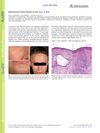
January 2019 in “Acta dermato-venereologica” The woman's skin and hair symptoms were confirmed as frontal fibrosing alopecia, and while facial papules are common in such cases, there's no effective local treatment, but systemic treatments can help.
 January 2026 in “Frontiers in Medicine”
 FFA and FAPD might be related or stages of the same disease.
1 citations
,
January 2024 in “BMJ Case Reports” A woman had meningitis caused by mixed connective tissue disease, not an infection.
 July 2021 in “British Journal of Dermatology”
 A woman with systemic sclerosis developed a unique scarring hair loss combining features of systemic sclerosis and frontal fibrosing alopecia.
50 citations
,
March 2021 in “Annals of Translational Medicine” More research is needed to understand and treat morphea effectively.
 23 citations
,
November 2018 in “Journal of the European Academy of Dermatology and Venereology”
23 citations
,
November 2018 in “Journal of the European Academy of Dermatology and Venereology” The study concluded that severity of Frontal fibrosing alopecia is not linked to how long someone has it, can start before menopause, and eyebrow loss may be an early sign.
 August 2021 in “Annals of Agricultural and Environmental Medicine”
 The article concludes that understanding Frontal Fibrosing Alopecia (FFA) is crucial for effective treatment, which includes medication like 5α-reductase inhibitors and hydroxychloroquine.
3 citations
,
March 2002 in “Linchuang pifuke zazhi” Most patients with dermatomyositis had skin rash, itching, and muscle weakness, treated mainly with prednisolone and hydroxychloroquine.
 33 citations
,
January 2015 in “Journal of Cosmetic Dermatology”
33 citations
,
January 2015 in “Journal of Cosmetic Dermatology” Familial frontal fibrosing alopecia affects premenopausal women too, and early diagnosis is important, but no proven medication exists yet.
22 citations
,
February 2023 in “European Journal of Neurology” Fremanezumab effectively reduces migraines and improves quality of life with mild side effects.
 8 citations
,
September 2011 in “European Journal of Dermatology”
8 citations
,
September 2011 in “European Journal of Dermatology” Most treatments for Frontal Fibrosing Alopecia are ineffective, but early anti-inflammatory therapy may help and the condition may stabilize over time.
 July 2015 in “Journal of the Dermatology Nurses’ Association”
 A 66-year-old woman experienced hair loss due to Frontal Fibrosing Alopecia, a condition with no consistently effective treatment, but it usually stabilizes over time. More research is needed for better understanding and treatment options.
23 citations
,
March 2017 in “JAAD case reports” The document suggests a possible link between FAM111B gene mutations and increased cancer risk, particularly pancreatic cancer.