September 2021 in “Morphologia” Dermal fibroblasts have at least three distinct types, each with unique roles in skin structure and hair development.
 126 citations
,
April 2006 in “International Journal of Dermatology”
126 citations
,
April 2006 in “International Journal of Dermatology” The conclusion is that FFA and LPP have similar scalp biopsy features, making them hard to distinguish histologically, and FFA may be a specific kind of scarring hair loss.
 5 citations
,
January 1985 in “The Journal of Dermatologic Surgery and Oncology”
5 citations
,
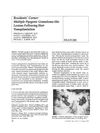
January 1985 in “The Journal of Dermatologic Surgery and Oncology” A man developed unusual growths after a hair transplant, which were treated successfully with no recurrence after a month.
 January 2016 in “Journal of The American Academy of Dermatology”
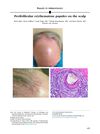
 The woman has a type of scarring hair loss with red bumps around hair follicles.
June 2026 in “Indian Dermatology Online Journal” A supernumerary nipple was correctly identified using dermoscopy, avoiding misdiagnosis.
 July 2025 in “JOURNAL OF CLINICAL AND DIAGNOSTIC RESEARCH”
 Trichofolliculoma should be considered in children with scalp nodules for accurate diagnosis and treatment.
7 citations
,
October 2013 in “International Journal of Dermatology” Post-waxing folliculitis is common on arms and forearms, and further biopsies are needed to understand it better.
 1 citations
,
August 2023 in “The Journal of Pathology”
1 citations
,
August 2023 in “The Journal of Pathology” Different types of skin fibroblasts have unique roles in skin health and disease.
 January 2026 in “Frontiers in Medicine”
 FFA and FAPD might be related or stages of the same disease.
1 citations
,
September 2023 in “Portuguese Journal of Dermatology and Venereology” Trichoscopy can help diagnose and decide when to biopsy folliculotropic mycosis fungoides.
July 1979 in “Archives of Dermatology” A 68-year-old woman with benign mucous membrane pemphigoid has eye, mouth, and skin issues, including thick plaques and nail changes.
4 citations
,
November 2020 in “Case reports in dermatology” A rare skin condition causes red, dark, bumpy facial lesions.
8 citations
,
January 2011 in “International journal of trichology” Accurate diagnosis of APL is crucial to avoid unnecessary treatments.
July 2024 in “Indian Dermatology Online Journal” A benign tumor on the cheek, called trichoadenoma, should be surgically removed for cosmetic reasons.
 13 citations
,
January 2019 in “Skin appendage disorders”
13 citations
,
January 2019 in “Skin appendage disorders” FAPD is a possible diagnosis for hair loss in patients of color and requires multiple evaluations for accurate diagnosis.
 1 citations
,
September 2023 in “International Journal of Dermatology”
1 citations
,
September 2023 in “International Journal of Dermatology” Early detection and treatment of folliculitis keloidalis can prevent disease progression.
 November 2021 in “CRC Press eBooks”
 Fibrosing alopecia in a pattern distribution is a new type of scarring hair loss that resembles common baldness and an autoimmune skin disease.
96 citations
,
February 2002 in “Journal of the American Academy of Dermatology” Pseudofolliculitis barbae is a chronic skin condition affecting mainly African American and Hispanic individuals, caused by shaving tightly curled hair, and managed by prevention and treatment but not curable.
 7 citations
,
August 2018 in “The American Journal of Dermatopathology”
7 citations
,
August 2018 in “The American Journal of Dermatopathology” Researchers found a new early sign of Frontal Fibrosing Alopecia that could help avoid misdiagnosis.
 40 citations
,
June 2013 in “Biomaterials”
40 citations
,
June 2013 in “Biomaterials” Scientists created 3D hair-like structures that could help study hair growth and test treatments.
 16 citations
,
February 2010 in “Journal of the European Academy of Dermatology and Venereology”
16 citations
,
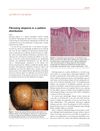
February 2010 in “Journal of the European Academy of Dermatology and Venereology” Fibrosing alopecia in a pattern distribution is a unique hair loss condition that may respond to antiandrogen therapy.
January 2003 in “Linchuang pifuke zazhi” A benign skin tumor was removed from a man's leg, and it didn't come back after 9 months.
 5 citations
,
April 2014 in “The American Journal of Dermatopathology”
5 citations
,
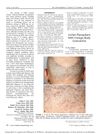
April 2014 in “The American Journal of Dermatopathology” Foreign-body granuloma may be a marker for late-stage Lichen Planopilaris and should be considered in diagnosis.
3 citations
,
January 1989 in “The Nishinihon Journal of Dermatology” A hair cyst can become cancerous, showing specific keratins from the hair sheath.
26 citations
,
December 1979 in “Journal of Cutaneous Pathology” Seborrheic keratoses may partly come from hair follicle cells.
Tricholemmoma is linked to Cowden syndrome and can be benign or malignant.
1 citations
,
January 2013 in “Journal of the Scientific Society” A painless cheek lump was misdiagnosed but later identified as a rare benign skin lesion called pilomatrixoma.
June 2025 in “British Journal of Dermatology” Melanocytic matricoma can look like skin cancer but is usually harmless; surgery and follow-up are advised.
 June 2026 in “Frontiers in Cell and Developmental Biology”
 Dermal papilla cells are key to fine wool growth in sheep.
4 citations
,
January 2020 in “Dermatology Online Journal” Congenital atrichia with papular lesions causes permanent hair loss and skin bumps due to a gene mutation.