 January 2021 in “Nasza Dermatologia Online”
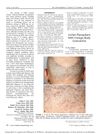
 Plica polonica is a rare condition where hair becomes irreversibly tangled, and the treatment is to cut the matted hair.
 263 citations
,
February 2011 in “Journal of Controlled Release”
263 citations
,
February 2011 in “Journal of Controlled Release” Medium-sized particles penetrate hair follicles better than smaller or larger ones, which could improve delivery of skin treatments.
 November 2023 in “Journal of Basic Microbiology”
 Green-synthesized zinc oxide nanoparticles effectively inhibit common fungi found on human scalp hair.
January 2006 in “中华医学杂志:英文版” Cultured skin cells can trigger hair growth and the amount of certain proteins they produce affects their ability to regenerate hair follicles.
59 citations
,
January 2003 in “Phytomedicine” Fennel extract cream can reduce hair thickness in people with excessive hair growth.
 24 citations
,
January 2011 in “International Journal of Trichology”
24 citations
,
January 2011 in “International Journal of Trichology” Light microscopy is useful for diagnosing different hair disorders.
 5 citations
,
April 2014 in “The American Journal of Dermatopathology”
5 citations
,
April 2014 in “The American Journal of Dermatopathology” Foreign-body granuloma may be a marker for late-stage Lichen Planopilaris and should be considered in diagnosis.
20 citations
,
December 2010 in “Journal of Morphology” Lizard claws have hair-like keratins similar to those in mammals.
 41 citations
,
March 1998 in “Archives of Dermatological Research”
41 citations
,
March 1998 in “Archives of Dermatological Research” The enzyme that changes testosterone to a stronger form is mostly found in the part of the hair follicle called the dermal papilla.
 December 2016 in “John Wiley & Sons, Ltd eBooks”
 The document concludes that proper recognition and treatment of skin appendage disorders are important for management.
 May 2024 in “Australasian journal of dermatology”
 A man with a type of skin lymphoma had unusual yellowish skin growths despite normal blood lipid levels, and treatment reduced some symptoms but not the growths.
 6 citations
,
February 2016 in “American Journal of Dermatopathology”
6 citations
,
February 2016 in “American Journal of Dermatopathology” The boy with woolly hair nevus had thinner hair and abnormal hair follicles, which improved with treatment but worsened when treatment stopped.
 1 citations
,
May 2015 in “Journal of The American Academy of Dermatology”
1 citations
,
May 2015 in “Journal of The American Academy of Dermatology” Oral clindamycin and rifampicin are the most effective treatments for Folliculitis decalvans.
July 2025 in “ALEXMED ePosters” 1 citations
,
November 2023 in “Journal of Microbiology and Biotechnology” Immortalized human dermal papilla cells were created that grow better and can still help form hair.
1 citations
,
January 2018 in “Jornal Brasileiro de Patologia e Medicina Laboratorial” Monilethrix causes brittle hair and hair loss, and it runs in families.
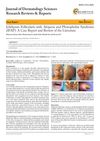
The document describes a rare case of IFAP syndrome, a genetic condition with symptoms of hair loss, light sensitivity, and scaly skin.
 September 2024 in “Cosmoderma”
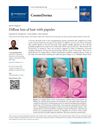
 The young man has complete hair loss and skin bumps, with no other health issues or family history.
2 citations
,
April 2012 in “American Journal of Dermatopathology” Accurate diagnosis of NLS with dilated hair follicles is crucial to distinguish it from other conditions.
 July 2025 in “JOURNAL OF CLINICAL AND DIAGNOSTIC RESEARCH”
 Trichofolliculoma should be considered in children with scalp nodules for accurate diagnosis and treatment.
 1 citations
,
August 2023 in “bioRxiv (Cold Spring Harbor Laboratory)”
1 citations
,
August 2023 in “bioRxiv (Cold Spring Harbor Laboratory)” Certain cells in the adult mouse ear come from cranial neural crest cells, but muscle and hair cells do not.
 August 2021 in “Case Reports”
 A woman thought to have rosacea was actually suffering from Frontal Fibrosing Alopecia, a hair loss condition. Despite treatment, her condition didn't change, showing the importance of accurate early diagnosis.
 November 2015 in “Indian drugs”
 The aerial roots of the Ficus benghalensis plant contain flavonoids, phenolics, and saponins.
November 2024 in “Stem Cell Research & Therapy” A new method improves the isolation of hair follicle cells for better hair growth research.
 68 citations
,
August 2014 in “Stem Cells Translational Medicine”
68 citations
,
August 2014 in “Stem Cells Translational Medicine” Dermal papilla cells help wounds heal better and can potentially grow new hair.
 January 2022 in “Journal of pharmacognosy and phytochemistry”
 The polyherbal hair gel is effective against fungal infections and helps nourish hair and prevent graying.
 2 citations
,
November 2022 in “IP Indian journal of clinical and experimental dermatology”
2 citations
,
November 2022 in “IP Indian journal of clinical and experimental dermatology” Dermoscopic and histopathological features combined can help diagnose Pityriasis versicolor.
 8 citations
,
October 2018 in “Applied sciences”
8 citations
,
October 2018 in “Applied sciences” Alginate spheres help maintain hair growth potential in human cells for hair loss treatment.
Dermal papilla cells can help form hair-like structures in lab-grown skin cells.
August 2025 in “Journal of Investigative Dermatology” Fibronectin is essential for hair follicle regeneration and may help rejuvenate aged skin.