 1 citations
,
January 2026 in “Frontiers in Bioengineering and Biotechnology”
1 citations
,
January 2026 in “Frontiers in Bioengineering and Biotechnology” Ionizable lipid nanoparticles are the best for delivering gene-editing therapies.
 1 citations
,
June 2013 in “Clinics in dermatology”
1 citations
,
June 2013 in “Clinics in dermatology” Herbs may be safer and effective for treating hair loss.
 June 2026 in “International Journal of Ayurveda and Pharma Research”
 Ayurvedic treatment significantly improved psoriasis symptoms.
 February 2026 in “Clinical Cosmetic and Investigational Dermatology”
 Low humidity changes skin gene expression, but emollients can help manage these changes.
 November 2025 in “International Journal of Research in Medical Sciences”
 Unani medicine may help treat a rare, hard-to-treat hair loss pattern in children.
 November 2025 in “Quality in Sport”
 Consistent use of natural methods is key for healthy hair and scalp.
 October 2025 in “International Research Journal of Ayurveda & Yoga”
 Kusthadi Lepa may effectively manage psoriasis symptoms safely.
 September 2025 in “Drug Design Development and Therapy”
 Combining platelet-rich products, biomaterials, and bioactive substances may improve skin treatment, but more research is needed.
 June 2025 in “International Journal of Research and Review”
 Unani medicine offers a natural, effective approach to treating hair loss with minimal side effects, but needs more scientific validation.
 March 2025 in “World s Veterinary Journal”
 Therapy lowers IgM levels in dogs with severe dermatitis but not in mild cases.
 January 2025 in “International Journal of Reproduction Contraception Obstetrics and Gynecology”
 PCOS and lifestyle choices like diet and hair removal methods play a key role in moderate hirsutism.
 January 2025 in “Exploratory Animal and Medical Research”
 Lithium carbonate and lead acetate together harm the heart more than individually.
 November 2024 in “Journal of Scientific Agriculture”
 Silk proteins are great for cosmetics because they protect and improve skin and hair while being eco-friendly.
 April 2024 in “bioRxiv (Cold Spring Harbor Laboratory)”
 GRK2 is essential for healthy hair follicle function, and its absence can lead to hair loss and cysts.
 February 2024 in “Oriental Journal of Chemistry/Oriental journal of chemistry”
 Eclipta alba shows promise for treating various health issues and needs more research.
 January 2024 in “Journal of Ayurveda Campus”
 Psoralea corylifolia Linn. is a medicinal plant used for skin diseases and has various health benefits.
 August 2023 in “International journal of research in Ayurveda and pharmacy”
 Ayurveda can prevent hair fall and promote regrowth using herbs and lifestyle changes.
 August 2023 in “International Ayurvedic medical journal”
 Ayurvedic treatment successfully regrew hair in a 7-year-old girl with alopecia areata.
 June 2023 in “International Journal for Research in Applied Science and Engineering Technology”
 Emulgel improves skin delivery of various drugs better than traditional methods.
 May 2023 in “Jurnal Sains Insani”
 Shaykh Abbas Kuta Karang significantly advanced Malay medical knowledge with his detailed manuscript.
 May 2023 in “International Journal of Home Science”
 PCOS is linked to metabolic issues and infertility, needing more research.
 July 2022 in “Journal of bio innovation”
 Panchakarma detoxifies the body, balances doshas, and is more effective than modern medicine alone for toxin removal and cell rejuvenation.
 October 2020 in “Misr journal of agricultural engineering”
 Drying pomegranate peel is profitable and useful for various industries.
 November 2019 in “Harper's Textbook of Pediatric Dermatology”
 The document is a detailed medical reference on skin and genetic disorders.
 August 2017 in “Indian journal of history of science”
 The manuscript "Strīvilāsa" offers ancient Ayurvedic knowledge on women's health, beauty treatments, and reproductive care.
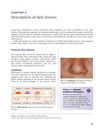
The document explains different types of skin lesions and their characteristics, causes, and related conditions.
 April 2014 in “Journal of evolution of medical and dental sciences”
 Women over forty can maintain skin and hair health with lifestyle and dietary changes.
 July 2013 in “British Journal of Dermatology”
 The document reviews key historical figures and discoveries in dermatology.
 October 2001 in “WORLD SCIENTIFIC eBooks”
 Many substances, including chemicals and metals, can cause skin reactions; careful handling and identification of allergens are crucial to prevent dermatitis.
 January 1997 in “Elsevier eBooks”
 Hair and nails are skin parts that develop early and serve protective and functional roles.