24 citations
,
January 2018 in “Development” Frizzled 3 and Frizzled 6 together control the orientation of mouse hair follicles.
NCBP3, SDHA, and PTPRA are the best genes for normalizing goat skin experiments.
January 2000 in “Europe PMC (PubMed Central)” 7 citations
,
May 2021 in “EBioMedicine” Increased methylation of the Filip1l gene may contribute to aggressive skin cancer.
 3 citations
,
January 2019 in “Journal of Dermatology”
3 citations
,
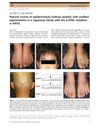
January 2019 in “Journal of Dermatology” The p.P25L mutation in the KRT5 gene causes a rare skin condition that worsens over time and may lead to hair loss starting in young adulthood.
 April 2023 in “The journal of investigative dermatology/Journal of investigative dermatology”
 HPV8 causes hair follicle stem cells to grow, leading to skin lesions.
66 citations
,
June 2001 in “Gastroenterology” The keratin 19 promoter effectively targets genes in specific epithelial cells in mice.
 55 citations
,
June 2007 in “Journal of Statistical Planning and Inference”
55 citations
,
June 2007 in “Journal of Statistical Planning and Inference” The flexible fixed-sequence testing method allows for more effective evaluation of multiple goals in a clinical trial while controlling the risk of false positives.
May 2022 in “The journal of immunology/The Journal of immunology” FOXN1 is crucial for thymus development and immune response in Xenopus laevis.
 April 2023 in “Journal of Investigative Dermatology”
 POUF51 and HES3 are key in controlling stem cell numbers in psoriasis.
34 citations
,
June 2020 in “British journal of dermatology/British journal of dermatology, Supplement” Frontal fibrosing alopecia is linked to increased immune system activity and reduced stem cells, suggesting early treatment targeting this pathway might prevent hair follicle damage.
 1 citations
,
July 2022 in “The journal of investigative dermatology/Journal of investigative dermatology”
1 citations
,
July 2022 in “The journal of investigative dermatology/Journal of investigative dermatology” Tofacitinib helps improve skin conditions in people with Down syndrome, especially alopecia areata.
April 2019 in “The journal of investigative dermatology/Journal of investigative dermatology” A specific mutation in the TRPV3 gene causes hair follicle cells to develop improperly, leading to hair loss.
38 citations
,
February 1988 in “Molecular and Cellular Biology” Only one of the two K16 genes on chromosome 17 makes a functional protein for keratin filaments.

EFBL offers hidden incisions, faster recovery, and fewer risks, but may raise hairline and cost more.
33 citations
,
March 2015 in “Experimental Dermatology” LHX2 and SOX9 identify unique hair follicle cell groups, crucial for hair maintenance.
7 citations
,
October 2019 in “Frontiers in bioengineering and biotechnology” Fusion proteins can protect hair from heat damage.
 53 citations
,
September 1999 in “The journal of cell biology/The Journal of cell biology”
53 citations
,
September 1999 in “The journal of cell biology/The Journal of cell biology” K16 can partially replace K14 but causes hair loss and skin issues.
37 citations
,
December 1995 in “Journal of Cell Science” Nexin 1 may help control hair growth.
 16 citations
,
August 2015 in “Protein Expression and Purification”
16 citations
,
August 2015 in “Protein Expression and Purification” Scientists successfully made a human growth factor in a plant, which could help with hair growth and bone development.
180 citations
,
April 2002 in “Cell Death and Differentiation” October 2025 in “The Sri Lanka Journal of Dermatology” Inverted follicular keratosis can look like cancer but is actually a harmless tumor.
27 citations
,
October 1998 in “Differentiation” Basonuclin helps identify and track hair follicle development and cycling in mice.
 June 2026 in “Springer Link (Chiba Institute of Technology)”
 FGFs have evolved differently across species, affecting skin and wound healing.
 August 2023 in “Cell Proliferation”
 Human cells in plasma-derived gels can potentially mimic hair follicle environments, improving hair regeneration therapies.
91 citations
,
June 2011 in “The EMBO Journal” TCF/Lef1 activity is essential for proper skin cell development and renewal.
 April 2023 in “Egyptian journal of Immunology”
 10% hPL is best for growing mesenchymal stem cells, while 10% FBS is best for hepatocytes.
 April 2021 in “Research Square (Research Square)”
 The new cocrystal KET-PABA is a more effective and safe anti-inflammatory treatment for skin conditions in mice.
1 citations
,
November 2023 in “International Journal of Molecular Sciences” SOX18 helps sheep hair cells grow by activating a specific cell growth pathway.
 18 citations
,
April 2019 in “Archives of Dermatological Research”
18 citations
,
April 2019 in “Archives of Dermatological Research” Lactoferrin helps mice grow hair by increasing cell growth and hair follicle development.