12 citations
,
August 2015 in “Plastic Surgery” Botulinum toxin may help reduce skin flap damage caused by cigarette smoke.
 2 citations
,
November 2002 in “Dermatologic Surgery”
2 citations
,
November 2002 in “Dermatologic Surgery” The authors' 10-year experience shows that a personalized approach to hair restoration surgery, using various techniques, leads to natural results and high patient satisfaction.

Platelet-rich plasma improves skin flap survival by reducing tissue death.
 6 citations
,
September 2012 in “Aesthetic Plastic Surgery”
6 citations
,
September 2012 in “Aesthetic Plastic Surgery” Minoxidil applied before and after surgery improves skin flap survival in rats.
January 2006 in “Chinese Journal of Aesthetic Medicine” Zinc improves skin flap survival in rats.
 March 1998 in “Dermatologic Surgery”
 The Miniflap Hair Restoration method effectively restores hair and reduces baldness, but may cause some hair loss and increased baldness in the crown, with the Juri flap method suggested as a quicker, less risky alternative.
 50 citations
,
May 1999 in “Journal of Reconstructive Microsurgery”
50 citations
,
May 1999 in “Journal of Reconstructive Microsurgery” Microsurgical reconstruction effectively covers complex scalp defects but doesn't improve survival for cancer-related cases.
 November 2002 in “Dermatologic Surgery”
 Scalp reduction gives the most natural result for significant crown baldness, despite potential complications, and a systematic approach to surgical hair restoration results in few complications and high graft survival.
 15 citations
,
January 2014 in “BioMed Research International”
15 citations
,
January 2014 in “BioMed Research International” Heparin and protamine are promising in tissue repair and organ regeneration, including skin and hair.
 January 2022 in “Plastic and Aesthetic Research”
 Choose the simplest, most fitting scalp reconstruction method for each patient's unique needs.
 November 2008 in “Medical & surgical dermatology”
 A device was made in 2008 to measure hair loss severity. Other findings include: frizzy mutation in mice isn't related to Fgfr2, C/EBPx marks preadipocytes, Cyclosporin A speeds up hair growth in mice, blocking plasmin and metalloproteinases hinders healing, hyperbaric oxygen helps ischemic wound healing, amniotic membranes heal wounds better than polyurethane foam, rhVEGF165 from a fibrin matrix improves tissue flap viability and induces VEGF-R2 expression, and bFGF enhances wound healing and reduces scarring in rabbits.
6 citations
,
October 2014 in “International Journal of Molecular Sciences” Tanshinone IIA helps protect tissue from low oxygen damage by activating certain cell pathways.
 20 citations
,
February 1991 in “The Journal of Dermatologic Surgery and Oncology”
20 citations
,
February 1991 in “The Journal of Dermatologic Surgery and Oncology” Scalp flaps are used for reconstruction, considering factors like inelasticity, hair growth, and blood supply, with techniques adapting to age-related changes in vascularity.
14 citations
,
November 2019 in “Mediators of inflammation” IL-6 from stem cells helps repair skin and grow hair.
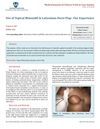 January 2020 in “Medical Journal of Clinical Trials & Case Studies”
 Topical minoxidil effectively prevents tissue death in certain surgeries.
 December 1994 in “The American Journal of Cosmetic Surgery”
 Understanding the scalp's blood flow and using delay techniques can improve the success of hair restoration surgeries.
 October 2022 in “Indian journal of anatomy and surgery of head, neck and brain”
 The nasolabial flap is effective for repairing the mouth in patients with oral submucous fibrosis.
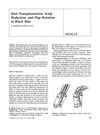 8 citations
,
January 1986 in “The Journal of Dermatologic Surgery and Oncology”
8 citations
,
January 1986 in “The Journal of Dermatologic Surgery and Oncology” Hair loss surgeries like grafts, scalp reductions, and flap rotations can be effective for black men with proper technique adjustments.
 2 citations
,
May 2005 in “Seminars in Plastic Surgery”
2 citations
,
May 2005 in “Seminars in Plastic Surgery” The Juri Temporo-Parieto-Occipital Flap is a good option for scalp reconstruction and hairline restoration with a natural look, despite some risk of necrosis and scarring.
 2 citations
,
November 2020 in “International Journal of Otorhinolaryngology and Head and Neck Surgery”
2 citations
,
November 2020 in “International Journal of Otorhinolaryngology and Head and Neck Surgery” The nasolabial flap is a reliable option for reconstructing oral defects in early cancer patients.
 7 citations
,
March 2017 in “Annals of Plastic Surgery”
7 citations
,
March 2017 in “Annals of Plastic Surgery” The new Mercedes flap variant effectively closed medium-sized scalp defects in a single operation with good cosmetic results and no complications.
 March 2026 in “Clinical Cosmetic and Investigational Dermatology”
 Effective hair removal is crucial for better cosmetic results in forehead flap reconstruction, with laser hair removal being the preferred method.
 6 citations
,
June 2016 in “Journal of Craniofacial Surgery”
6 citations
,
June 2016 in “Journal of Craniofacial Surgery” Reconstructing lower face gunshot injuries with a fibula and scalp flap is effective and gives good long-term results.
 1 citations
,
January 2019 in “Advances in Medical Sciences”
1 citations
,
January 2019 in “Advances in Medical Sciences” The combination of azelaic acid, minoxidil, and caffeine significantly increased the survival of skin flaps by affecting certain body channels and nitric oxide levels.
 8 citations
,
February 2025 in “Frontiers in Medicine”
8 citations
,
February 2025 in “Frontiers in Medicine” IGF-1, KGF, and stem cells help skin cells move and survive, potentially speeding up wound healing.
 4 citations
,
June 2013 in “Aesthetic Plastic Surgery”
4 citations
,
June 2013 in “Aesthetic Plastic Surgery” Minoxidil improved rat skin flap survival but was less effective than surgical methods.
 25 citations
,
January 2001 in “Facial Plastic Surgery”
25 citations
,
January 2001 in “Facial Plastic Surgery” Both tissue expansion and serial excision are effective for scar revision in the head and neck area.
 24 citations
,
August 2011 in “Experimental Dermatology”
24 citations
,
August 2011 in “Experimental Dermatology” The flap assay grows the most natural hair but takes the longest, the chamber assay is hard work but gives dense, normal hair, and the patch assay is quick but creates poorly oriented hair with some issues.
 10 citations
,
January 2011 in “Journal of Cutaneous and Aesthetic Surgery”
10 citations
,
January 2011 in “Journal of Cutaneous and Aesthetic Surgery” Surgical methods for hair loss are less common than hair transplants but still useful, especially for scarring hair loss.
 10 citations
,
May 2009 in “Journal of The American Academy of Dermatology”
10 citations
,
May 2009 in “Journal of The American Academy of Dermatology” Technique effectively reconstructs large scalp defects with minimal hair loss and visible scarring.