
A new microneedle patch helps repair spinal cord injuries by reducing scarring and promoting nerve growth.
1 citations
,
April 2025 in “Materials Today Communications” The dressing speeds up wound healing by mimicking skin's natural properties.
28 citations
,
September 2023 in “International Journal of Biological Macromolecules” The new dressing speeds up wound healing better than current options.
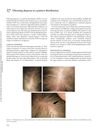 April 2012 in “Informa Healthcare eBooks”
 Fibrosing alopecia in a pattern distribution is a unique hair loss condition with inflammation and scarring, resembling but distinct from common balding.
15 citations
,
June 2023 in “Molecules” Agarose/fucoidan hydrogels may help treat diabetes by supporting pancreatic cell growth.
 23 citations
,
July 2021 in “International Journal of Pharmaceutics”
23 citations
,
July 2021 in “International Journal of Pharmaceutics” New dissolving and implantable microneedle patches have been created for a long-lasting, non-invasive delivery of the drug finasteride.
14 citations
,
March 2025 in “Nano Today” The hydrogel dressing speeds up and improves diabetic wound healing.
10 citations
,
March 2016 in “Development Growth & Differentiation” Scientists created feather buds in lab-grown chick skin using specific cell interactions.
 133 citations
,
February 2019 in “PLoS Biology”
133 citations
,
February 2019 in “PLoS Biology” Feather patterns in birds are shaped by signaling interactions and cell movements, with EDA/EDAR crucial for pattern formation.
8 citations
,
October 2022 in “International Journal of Molecular Sciences” The hydrogels improved healing in deep second-degree burns.
May 2018 in “Dermatologic Surgery”  62 citations
,
March 2015 in “PLOS ONE”
62 citations
,
March 2015 in “PLOS ONE” Pre-seeding scaffolds with fibroblasts improves skin wound healing.
 September 2025 in “ACS Applied Materials & Interfaces”
 The hydrogel effectively heals diabetic wounds, closing over 90% within 7 days.
4 citations
,
January 2026 in “Micro” Bioinspired conductive materials and advanced bioprinting can improve tissue regeneration by creating smart, adaptable scaffolds.
Compound 6 is a promising candidate for better wound healing.
 August 2019 in “Journal of Investigative Dermatology”
 Frog skin cells need the protein desmoplakin for proper development and cell layer formation.
2 citations
,
July 2012 in “BMJ” FFA can be mistaken for rosacea, requiring specific treatment for accurate diagnosis and management.
 6 citations
,
July 2018 in “Hair transplant forum international”
6 citations
,
July 2018 in “Hair transplant forum international” Dr. Parsa Mohebi created a new tool to improve hair transplant efficiency and reduce follicle damage.
 October 2022 in “ACS Applied Materials & Interfaces”
 The hydrogel is versatile and easy to make.
November 2025 in “Journal of Investigative Dermatology” Mesenchymal stiffness affects sweat gland cell development.
11 citations
,
February 2018 in “Medical science monitor” An alternating inflatable head pad reduced pressure ulcers and hair loss in heart surgery patients.
June 2026 in “Precision medicine and engineering.” The hydrogel dressing RD@PVA helps heal diabetic wounds by reducing stress and improving blood vessel growth.
December 2025 in “Materials Technology” The engineered scaffold shows promise for effective skin repair.
12 citations
,
February 2017 in “Graefe s Archive for Clinical and Experimental Ophthalmology” Gore-Tex is effective for severe congenital ptosis, with the open approach better for no lid crease and the closed approach better for a preserved crease.
 November 2025 in “Communications Materials”
 Pomelo peel can be turned into materials that help stop bleeding and heal wounds better than commercial dressings.
116 citations
,
April 2022 in “Science Translational Medicine” The EG7 foam dressing improved wound healing and reduced inflammation better than other treatments.
8 citations
,
August 2017 in “Skin appendage disorders” Red dots on the upper chest may be an early sign of certain types of hair loss.
1 citations
,
October 2025 Smart hydrogels improve wound healing by adapting to needs and releasing medicine.
September 2023 in “Journal of the American Academy of Dermatology” Oral difelikefalin significantly reduces itch in notalgia paresthetica.
September 2025 in “OPAL (Open@LaTrobe) (La Trobe University)” The hydrogel effectively heals diabetic wounds and promotes hair growth.