 June 2026 in “Springer Link (Chiba Institute of Technology)”
 FGFs have evolved differently across species, affecting skin and wound healing.
 8 citations
,
November 2018 in “Australasian Journal of Dermatology”
8 citations
,
November 2018 in “Australasian Journal of Dermatology” Frontal fibrosing alopecia in families shows similar signs to individual cases and may have a genetic link.
 55 citations
,
June 2007 in “Journal of Statistical Planning and Inference”
55 citations
,
June 2007 in “Journal of Statistical Planning and Inference” The flexible fixed-sequence testing method allows for more effective evaluation of multiple goals in a clinical trial while controlling the risk of false positives.

GFC injections significantly improved hair growth and quality with minimal side effects.
 45 citations
,
January 2014 in “International Journal of Trichology”
45 citations
,
January 2014 in “International Journal of Trichology” Low-level laser therapy helps male and female hair loss alone or with other treatments.
 15 citations
,
August 2019 in “Dermatologic Therapy”
15 citations
,
August 2019 in “Dermatologic Therapy” Platelet-rich plasma (PRP) may help treat hair loss in patients with frontal fibrosing alopecia who don't respond to other treatments.
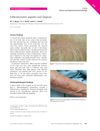 May 2014 in “Clinical and Experimental Dermatology”
 A 70-year-old woman with a rare skin condition improved after treatment with topical steroids and acitretin.
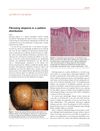 16 citations
,
February 2010 in “Journal of the European Academy of Dermatology and Venereology”
16 citations
,
February 2010 in “Journal of the European Academy of Dermatology and Venereology” Fibrosing alopecia in a pattern distribution is a unique hair loss condition that may respond to antiandrogen therapy.
 2 citations
,
January 2023 in “Curēus”
2 citations
,
January 2023 in “Curēus” Low-dose naltrexone may help reduce redness in certain scalp conditions.

RNase L hinders hair follicle regeneration by altering immune signals.
 April 2021 in “BMJ Case Reports”
 Accurate diagnosis of pseudolymphomatous folliculitis is crucial to avoid mistaking it for more serious conditions.
 July 2022 in “Research Square (Research Square)”
 Lower PPARγ levels and specific gene variations are linked to more severe Frontal Fibrosing Alopecia.
 September 2022 in “British Dental Journal”
 Platelet-rich fibrin is becoming popular for medical and cosmetic uses like hair growth and natural fillers.
Linalool in personal care products may worsen frontal fibrosing alopecia by damaging hair follicle stem cells and triggering harmful immune responses.
Mechanical stress causes ligament thickening through WISP-1 and Hedgehog signaling.
 September 2013 in “Hair transplant forum international”
 The document says doctors should identify and treat Frontal fibrosing alopecia medically before considering surgery, as treatments often don't work well.
April 2023 in “Journal of Investigative Dermatology” AL136131.3 slows hair growth by affecting energy processes in hair loss.
12 citations
,
April 2004 in “PubMed” A rare skin condition in a baby showed unusual fat and hair follicle changes.
 September 2024 in “Egyptian Journal of Dermatology and Venerology”
 Low-energy fractional CO2 laser therapy significantly improves hair regrowth in women with female-pattern hair loss.
 18 citations
,
April 2019 in “Archives of Dermatological Research”
18 citations
,
April 2019 in “Archives of Dermatological Research” Lactoferrin helps mice grow hair by increasing cell growth and hair follicle development.
 January 2026 in “Frontiers in Medicine”
 FFA and FAPD might be related or stages of the same disease.
June 2026 in “Journal of Cosmetic Dermatology” CGF-PF may improve hair loss treatment by targeting hair follicle stem cells more effectively.
 2 citations
,
April 2017 in “Actas Dermo-Sifiliográficas”
2 citations
,
April 2017 in “Actas Dermo-Sifiliográficas” Best treatment for Frontal Fibrosing Alopecia is 5-alpha-reductase inhibitors and intralesional corticosteroids.
 2 citations
,
April 2022 in “African Health Sciences”
2 citations
,
April 2022 in “African Health Sciences” The Fatty Liver Index (FLI) may not be enough to rule out non-alcoholic fatty liver disease in lean women with polycystic ovary syndrome.
July 2020 in “Journal of Tissue Engineering and Reconstructive Surgery”  49 citations
,
February 2019 in “The Journal of Clinical Endocrinology and Metabolism”
49 citations
,
February 2019 in “The Journal of Clinical Endocrinology and Metabolism” Use "female pattern hair loss" term, assess androgen excess, treat with minoxidil and other medications if needed.
 1 citations
,
July 2018 in “Elsevier eBooks”
1 citations
,
July 2018 in “Elsevier eBooks” FAPD and possibly CCCA may be AGA subtypes, and treatments combining antiandrogens, hair growth agents, hair transplants, and anti-inflammatories could be effective.
September 2025 in “Current Oncology” LncRNAs may help improve brain cancer treatment and diagnosis.
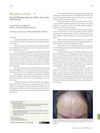 May 2019 in “Anais brasileiros de dermatologia/Anais Brasileiros de Dermatologia”
 Frontal fibrosing alopecia mostly affects postmenopausal women, with diagnosis often delayed by 3 years.
 January 2022 in “Dermatology Review”
 EGFR inhibitors can cause unusual localized hair growth.