During late pregnancy in rats, hormonal changes increased certain GABAA receptors in specific brain cells.
 February 1956 in “Bulletin of Experimental Biology and Medicine”
 Glycogen levels in mouse skin drop after injury but increase during healing, returning to normal within a month.
 1 citations
,
December 2021 in “Pakistan biomedical journal”
1 citations
,
December 2021 in “Pakistan biomedical journal” Eating certain seeds may help reduce symptoms of Polycystic Ovary Syndrome.
 March 2025 in “Journal of Craniofacial Surgery”
 Natural hairline asymmetry should be embraced for better-looking hair transplants.
 July 2016 in “Journal of Cutaneous Medicine and Surgery”
 Receding hairlines in men are uneven, with the right side larger than the left.
October 2019 in “European Journal of Dermatology” The boy's hair and skin color differences are due to a pigmentation disorder.
 25 citations
,
April 2007 in “Journal of The American Academy of Dermatology”
25 citations
,
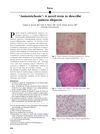
April 2007 in “Journal of The American Academy of Dermatology” The document suggests "anisotrichosis" as a new term for hair thickness variation in common baldness.
May 2016 in “DOAJ (DOAJ: Directory of Open Access Journals)” Asian women often experience distinct hair thinning at the top of the head.
Vertex accentuation is a common pattern in female hair loss.
June 2025 in “British Journal of Dermatology” Segmented hair color changes can indicate active alopecia areata.
 4 citations
,
August 2023 in “Nature Communications”
4 citations
,
August 2023 in “Nature Communications” Mouse zigzag hair bends form due to a 3-day cycle of changes in hair progenitors and their environment.
April 2017 in “Journal of Dermatological Science” Asymmetric hair follicle differentiation causes the unique shape of kinky hair.
July 2024 in “LA Referencia (Red Federada de Repositorios Institucionales de Publicaciones Científicas)” Adipose tissue and eccrine gland displacement are common in certain alopecias but don't help differentiate between them.
 2 citations
,
January 2017 in “Przegla̧d dermatologiczny”
2 citations
,
January 2017 in “Przegla̧d dermatologiczny” Two trichoscopic patterns found in hair loss: diffuse fibrotic and androgenetic alopecia, affecting treatment choice and regrowth chances.
 September 1997 in “Journal of the European Academy of Dermatology and Venereology”
 Hirsute women with ovarian-sourced hirsutism are more likely to have irregular periods, with higher BMI and altered hormone ratios.
 January 2012 in “Yearbook of Dermatology and Dermatologic Surgery”
 The study concluded that a 'Swiss cheese' pattern in hair follicles is a useful sign for diagnosing alopecia areata.
 December 2025 in “Reports of Morphology”
 Men with alopecia areata have different body fat distribution compared to healthy men.
 35 citations
,
November 2010 in “Journal of Cutaneous Pathology”
35 citations
,
November 2010 in “Journal of Cutaneous Pathology” Dilated follicular infundibula and increased catagen/telogen follicles are key indicators for diagnosing alopecia areata.
 November 2021 in “CRC Press eBooks”
 Fibrosing alopecia in a pattern distribution is a new type of scarring hair loss that resembles common baldness and an autoimmune skin disease.
Mirror-image twins can have alopecia areata on opposite sides of their heads.
Digit ratio likely doesn't predict male hair loss.
 April 2023 in “Journal of Investigative Dermatology”
 The study suggests fibrosing alopecia in a pattern distribution has distinct features and may vary by race.
2 citations
,
July 2024 in “Indian Journal of Dermatology” Adults with alopecia areata often have empty follicular openings, while children show more honeycomb pigment patterns.
 20 citations
,
August 2009 in “Journal of The European Academy of Dermatology and Venereology”
20 citations
,
August 2009 in “Journal of The European Academy of Dermatology and Venereology” Occipital scalp affects female hair loss; terminal/vellus ratio helps diagnose androgenetic alopecia.
December 2023 in “JEADV Clinical Practice” Brownish halos around axillary hair can help diagnose frontal fibrosing alopecia.
October 1995 in “Pediatric Research” 13 citations
,
June 2012 in “European journal of medical genetics” Identical twins had different symptoms because one had more cells with an extra chromosome fragment in different tissues.
 30 citations
,
May 2005 in “Pediatric dermatology”
30 citations
,
May 2005 in “Pediatric dermatology” Some families have a genetic condition where they are born with irregular scalp defects.
20 citations
,
July 2005 in “Experimental dermatology” The fuzzy gene is crucial for controlling hair growth cycles.
 66 citations
,
August 1999 in “The Journal of Clinical Endocrinology & Metabolism”
66 citations
,
August 1999 in “The Journal of Clinical Endocrinology & Metabolism” Women with acromegaly often have irregular periods due to hormone imbalances and growth hormone effects.