Artemisia maritima L. has strong medicinal potential, especially for treating infections and inflammation.
 97 citations
,
September 2016 in “Reviews in Endocrine and Metabolic Disorders”
97 citations
,
September 2016 in “Reviews in Endocrine and Metabolic Disorders” The sebaceous gland has more roles than just producing sebum and contributing to acne, and new research could lead to better skin disease treatments.
 9 citations
,
February 2004 in “Clinical and Experimental Ophthalmology”
9 citations
,
February 2004 in “Clinical and Experimental Ophthalmology” The document discusses various eye conditions and their treatments, including a rare eye cancer in a baby, vision loss from a cancer drug, cataracts from a baldness treatment, a rare skin disorder, and a specific type of eye disease diagnosed with a special imaging technique.
 8 citations
,
April 2015 in “Expert Review of Gastroenterology & Hepatology”
8 citations
,
April 2015 in “Expert Review of Gastroenterology & Hepatology” Effective symptom management in IBD improves quality of life and prevents complications.
 36 citations
,
June 2019 in “eLife”
36 citations
,
June 2019 in “eLife” The study developed a tool to predict how gut microbes process foods and drugs, showing that similar compounds often share metabolic pathways and effects.
 27 citations
,
January 2015 in “Current problems in dermatology”
27 citations
,
January 2015 in “Current problems in dermatology” The document concludes that primary scarring alopecias cause permanent hair loss, have unpredictable outcomes, and lack definitive treatments, requiring personalized care.
August 2025 in “EMC - AKOS - Trattato di Medicina” Non-scarring alopecia can regrow hair, but scarring alopecia is often permanent and needs quick treatment.
 July 2012 in “Springer eBooks”
 The document concludes that proper diagnosis and treatment of nonscarring alopecias can improve quality of life and hair regrowth is possible as the hair follicle remains intact.
January 2016 in “Indian dermatology online journal” Frontal fibrosing alopecia causes hair loss at the front hairline, and no effective treatment exists.
Early and accurate identification of primary scarring alopecias is crucial to prevent permanent hair loss.
 August 2015 in “Dermatología Argentina”
 Frontal fibrosing alopecia causes hairline recession and eyebrow loss in postmenopausal women.
April 2021 in “Aktuelle Dermatologie” Frontal Fibrosing Alopecia is a type of hair loss that mainly affects postmenopausal women, has unclear causes, and lacks evidence-based treatments.
 January 2022 in “Дерматологія та венерологія”
 Frontal fibrosing alopecia causes hair loss along the frontal hairline, mainly in postmenopausal women, and needs better treatments.
January 2024 in “Revista Dermatológica Centro Uraga” Frontal fibrosing alopecia is increasingly affecting men, causing hair loss around the hairline and possibly other areas.
 1 citations
,
June 2012 in “Actas Dermo-Sifiliográficas”
1 citations
,
June 2012 in “Actas Dermo-Sifiliográficas” Early and aggressive treatment of scarring alopecia is important to prevent further hair follicle damage.
332 citations
,
June 1994 in “Archives of Dermatology” Postmenopausal frontal fibrosing alopecia may be a unique condition linked to postmenopausal changes.
 February 2021 in “Cureus”
 A woman's hair loss was initially misdiagnosed as scarring hair loss but was actually a treatable autoimmune hair loss.
 1 citations
,
June 2022 in “PubMed”
1 citations
,
June 2022 in “PubMed” Alopecia causes hair loss and should be treated early, especially scarring types where hair cannot regrow.
May 2026 in “International Journal of Dermatology” This type of alopecia areata shows limited hair regrowth and poor response to treatment.
 January 2024 in “Archives of pathology & laboratory medicine”
 New findings may help diagnose and understand scarring alopecia better.
 February 2014 in “Medicine - Programa De Formación Médica Continuada Acreditado”
 The document concludes that non-scarring alopecias can be reversed, but scarring alopecias cause permanent hair loss.
5 citations
,
October 2019 in “JAAD Case Reports” These hair loss conditions might be part of a spectrum, not separate issues.
 57 citations
,
January 2003 in “Clinical and experimental dermatology”
57 citations
,
January 2003 in “Clinical and experimental dermatology” Postmenopausal frontal fibrosing alopecia is a type of hair loss in postmenopausal women that may stop on its own but has no effective treatment.
November 2023 in “Journal of Investigative Dermatology” Different types of hair loss have unique cellular changes, suggesting new treatment targets.
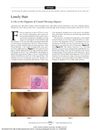 63 citations
,
October 2011 in “Archives of Dermatology”
63 citations
,
October 2011 in “Archives of Dermatology” Isolated long hairs at the original hairline can help diagnose Frontal Fibrosing Alopecia.
June 2020 in “The journal of investigative dermatology/Journal of investigative dermatology” Hair follicle bumps with stem cells might contribute to permanent hair loss by getting disconnected due to scarring.
March 2025 in “Revista Foco” Early diagnosis of Alopecia Frontal Fibrosante is crucial for effective treatment.
 December 2020 in “Skin appendage disorders”
 A young man with an unusual type of scarring hair loss suggests a possible new variant of a known scalp condition.
2 citations
,
May 2000 in “International Society of Hair Restoration Surgery” Scarring alopecias are a complex type of hair loss that are hard to treat and often can't be fixed with hair transplants.