August 2025 in “Biomolecules” Fibroblast growth factors could be a better, safer treatment for hair loss than current options.
 27 citations
,
January 2006 in “Dermatologic Surgery”
27 citations
,
January 2006 in “Dermatologic Surgery” The SAFE System for hair transplants results in low damage to follicles and could make the procedure suitable for more patients.
 40 citations
,
June 2013 in “Biomaterials”
40 citations
,
June 2013 in “Biomaterials” Scientists created 3D hair-like structures that could help study hair growth and test treatments.
 88 citations
,
December 2012 in “Journal of The European Academy of Dermatology and Venereology”
88 citations
,
December 2012 in “Journal of The European Academy of Dermatology and Venereology” Injecting CD34+ cell-containing platelet-rich plasma into the scalp can improve hair count and thickness in people with pattern hair loss.
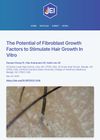
Some fibroblast growth factors may promote hair growth similarly to minoxidil and could potentially treat hair loss.
 1 citations
,
July 2010 in “Dermatologic Surgery”
1 citations
,
July 2010 in “Dermatologic Surgery” Splitting one hair follicle into two can help regrow hair with a 50% to 70% success rate, useful when donor hair is limited.
3 citations
,
December 2024 in “Journal of Animal Physiology and Animal Nutrition” FGF20 is essential for hair follicle stem cell growth and development in fine-wool sheep.
 April 2016 in “Journal of Investigative Dermatology”
 Scientists have found a way to grow hair follicles from human cells in a lab, which could help treat hair loss and skin damage.
 June 2020 in “Medicina estética”
 More research is needed to find effective treatments for Female Pattern Hair Loss.
 September 2017 in “Klìnìčna farmacìâ”
 The cream with plant substances can stimulate hair follicles.
 14 citations
,
July 2009 in “Current Opinion in Otolaryngology & Head and Neck Surgery”
14 citations
,
July 2009 in “Current Opinion in Otolaryngology & Head and Neck Surgery” Hair restoration techniques like follicular unit transplant surgery and follicular unit extraction are effective, with ideal graft placement density between 20-30 units per cm². Medications like Minoxidil and Finasteride can help maintain and regrow hair.
 August 2014 in “Journal of clinical & experimental dermatology research”
 Platelet-released growth factors can treat hair loss by activating hair follicle stem cells, blocking certain pathways, and controlling inflammation and fibrosis.
 October 2025 in “Journal of Pharmacy And Bioallied Sciences”
 PRP significantly improves hair density and satisfaction in hair restoration.
February 2025 in “Experimental Cell Research” Combining specific proteins and cell-derived particles may help treat hair loss.
2 citations
,
November 2018 in “Seminars in Cutaneous Medicine and Surgery” Combining different treatments works best for female hair loss.
 10 citations
,
December 2011 in “Cell Transplantation”
10 citations
,
December 2011 in “Cell Transplantation” Researchers successfully grew human hair follicle cells that could potentially lead to new hair loss treatments.
 December 2025 in “Plastic & Reconstructive Surgery”
 The treatment effectively reduces hair loss and improves hair growth with minimal side effects.
54 citations
,
November 2007 in “Actas Dermo-Sifiliográficas” Early diagnosis of frontal fibrosing alopecia is crucial to prevent permanent hair loss.
January 2020 in “한국공업화학회 연구논문 초록집” Encapsulated hair cells in a special gel can help regenerate hair follicles, potentially treating hair loss.
 May 2022 in “Dermatologic therapy”
 Combining PRP with follicular transplantation improves vitiligo treatment better than follicular transplantation alone.
 July 2012 in “Faculty Opinions – Post-Publication Peer Review of the Biomedical Literature”
 New treatment with Wnt proteins and growth factors safely increases hair thickness.
January 1974 in “Almogaren” A new method shows promise for regenerating hair follicles to treat hair loss.
88 citations
,
January 2010 in “Escritura pública” A combined strip and FUE method with careful planning improves hair restoration results.
 May 2024 in “Journal of the Egyptian Women's Dermatologic Society /Journal of the Egyptian Women's Dermatologic Society”
 Combining fractional CO2 laser and PRP is very effective for treating female hair loss.
 3 citations
,
June 2006 in “Expert Review of Dermatology”
3 citations
,
June 2006 in “Expert Review of Dermatology” The document concludes that hair loss is complex, affects many people, has limited treatments, and requires more research on its causes and psychological impact.
 July 2008 in “Expert Review of Dermatology”
 Proper planning for hair transplants is crucial for natural results, with careful patient selection and strategic graft placement being key factors.
 77 citations
,
April 1999 in “Dermatologic Clinics”
77 citations
,
April 1999 in “Dermatologic Clinics” The document concludes that follicular unit transplantation offers more natural results and better graft survival than older hair transplant methods.
 January 2017 in “Springer eBooks”
 Over 40% of postmenopausal women experience hair loss, with treatments aiming to stop further loss and possibly thicken hair.
 June 2025 in “Dermatologic Surgery”
 GFC improves hair quickly, while PRP offers longer-lasting benefits; using both sequentially is recommended.
 179 citations
,
December 2004 in “Journal of The American Academy of Dermatology”
179 citations
,
December 2004 in “Journal of The American Academy of Dermatology” Some postmenopausal women with frontal fibrosing alopecia stopped losing hair with finasteride treatment, hinting at a possible hormonal cause.