45 citations
,
September 2000 in “Archives of dermatology” The study found that the enzyme linked to acne is present in the same areas of both acne-affected and normal skin.
 43 citations
,
January 2012 in “Biological Research”
43 citations
,
January 2012 in “Biological Research” The origins of many adult skin stem cells are still mostly unknown.
43 citations
,
October 2005 in “Molecular and cellular endocrinology” Hair melanocytes help the skin respond to stress and regulate hair pigmentation.
 42 citations
,
October 2011 in “Seminars in Cell & Developmental Biology”
42 citations
,
October 2011 in “Seminars in Cell & Developmental Biology” Eph/ephrin signaling is important for skin cell behavior and could be targeted to treat skin diseases.
 40 citations
,
January 2016 in “Elsevier eBooks”
40 citations
,
January 2016 in “Elsevier eBooks” The skin is the largest organ, protecting the body, regulating temperature, and producing hormones.
40 citations
,
April 1995 in “Journal of Cutaneous Pathology” Androgen receptors are found in some skin tumors but not in hair follicle tumors.
39 citations
,
March 2022 in “Nature Protocols” Scientists created hair-growing skin models from stem cells, which could help treat hair loss and skin diseases.
 39 citations
,
January 2016 in “PubMed”
39 citations
,
January 2016 in “PubMed” Understanding how EDC genes are regulated can help develop better drugs for skin diseases.
38 citations
,
November 1991 in “Archiv für Pathologische Anatomie und Physiologie und für Klinische Medicin” Keratins 8 and 14 can help identify and diagnose benign skin tumors.
37 citations
,
February 2007 in “Experimental Dermatology” Increasing PDCD4 protein may help prevent or treat some skin cancers.
36 citations
,
March 2009 in “Molecular Carcinogenesis” Disrupting Bcl-xL in mice reduces skin cancer risk.
 35 citations
,
April 2008 in “Human Molecular Genetics”
35 citations
,
April 2008 in “Human Molecular Genetics” Skin and hair can help us understand organ regeneration, especially how certain stem cells might be used to form new organs.
33 citations
,
August 2014 in “Veterinary Dermatology” Keratinocytes play a key role in skin health, but more research is needed.
33 citations
,
June 2007 in “Gene Expression Patterns” CTIP2 may help in skin development and maintenance.
 29 citations
,
March 2012 in “Stem Cell Research & Therapy”
29 citations
,
March 2012 in “Stem Cell Research & Therapy” Some stem cells in the body rarely divide, which could help create better treatments for diseases and aging.
29 citations
,
October 2004 in “Differentiation” Multiple mouse desmoglein 1 isoforms have distinct roles in skin and hair development.
28 citations
,
June 2020 in “ACS Biomaterials Science & Engineering” The new ECM patch greatly improves wound healing and tissue regeneration.
28 citations
,
September 2013 in “European Journal of Histochemistry” Keratins in Malayan pangolins vary by region, suggesting scales evolved from the tail towards the head.
 28 citations
,
December 2008 in “Laboratory investigation”
28 citations
,
December 2008 in “Laboratory investigation” Activin activation in skin cells speeds up wound healing without affecting scar quality.
27 citations
,
May 2024 in “Clinical and Translational Medicine” Melanocyte stem cells are vital for skin and hair color and have potential in treating skin disorders and cancer.
 24 citations
,
September 2008 in “Clinical and experimental dermatology”
24 citations
,
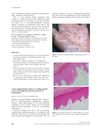
September 2008 in “Clinical and experimental dermatology” Repigmentation in vitiligo may come from melanocyte stem cells in the skin.
23 citations
,
October 1996 in “Dermatologic clinics” Genes affect cytokine production, which can influence chronic diseases, and certain interventions may help prevent related molecular damage.
22 citations
,
August 2020 in “Cells” TGM3 is important for skin and hair structure and may help diagnose cancer.
22 citations
,
July 1998 in “Journal of Investigative Dermatology” The 4C32 gene may help in mouse skin development and differentiation.
 22 citations
,
January 1968 in “THE JOURNAL OF VITAMINOLOGY”
22 citations
,
January 1968 in “THE JOURNAL OF VITAMINOLOGY” α-Tocopheryl acetate is well absorbed through healthy skin.
21 citations
,
October 2007 in “Journal of Investigative Dermatology” Fetuin-A helps wounds heal without scars by promoting cell movement.
21 citations
,
April 2000 in “Journal of Cutaneous Pathology” The hamartoma is an abnormal hair growth with limited development in the upper hair follicle.
20 citations
,
August 2005 in “The Journal of laboratory and clinical medicine” Mice with damaged skin or hair follicles are more susceptible to anthrax infection.
19 citations
,
February 2013 in “Journal of Investigative Dermatology” Touch domes in human skin are complex sensory structures not directly linked to hair.
 19 citations
,
January 2007 in “Journal of medical investigation”
19 citations
,
January 2007 in “Journal of medical investigation” GFP transgenic mice help study cell origins in skin grafts.