 January 2024 in “Journal of Biosciences and Medicines”
 Future treatments for androgenic alopecia may focus on reactivating hair follicle stem cells and improving drug delivery.
 December 2023 in “Benha Journal of Applied Sciences”
 AGEs and their receptors play a significant role in hair loss by causing inflammation and oxidative stress.
 December 2023 in “Scientific Reports”
 Scientists created cell lines from balding patients and found that cells from the front of the scalp are more affected by hormones that cause hair loss than those from the back.
 November 2023 in “Frontiers in cell and developmental biology”
 Hair aging is caused by stress, hormones, inflammation, and DNA damage affecting hair growth and color.
 July 2023 in “Journal of Clinical Medicine”
 The document concludes that understanding hair follicle histology and the hair cycle is crucial for diagnosing alopecia.

Minoxidil and finasteride are the only FDA-approved treatments for hair loss caused by genetic and hormonal factors, but their effectiveness is often doubted, indicating a need for new treatments.
May 2022 in “European Journal of Dermatology” New treatments for hair loss are being developed.
 July 2021 in “British Journal of Dermatology”
 A woman with systemic sclerosis developed a unique scarring hair loss combining features of systemic sclerosis and frontal fibrosing alopecia.
 April 2019 in “Journal of Investigative Dermatology”
 Increasing COX-2 in mouse skin causes bigger sebaceous glands and thinner hair, but stopping COX-2 can reverse hair thinning.
 September 2018 in “Open Repository of the University of Porto (University of Porto)”
 The internship highlighted the pharmacist's important role in health education and community engagement.
 August 2018 in “Journal of the American Academy of Dermatology”
 Tofacitinib is a potential alternative treatment for alopecia totalis, especially in patients with a shorter duration of the condition and more preserved hair follicles, but the overall response rate is low.
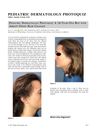 September 2017 in “Pediatric Dermatology”
 A 14-year-old boy was diagnosed with a rare hair condition that may lead to hair thinning and has no known effective treatments.
 September 2016 in “Más dermatología”
 New factors in female hair loss include genetics, hormones, stress, and inflammation; future treatments should also focus on these areas and consider the patient's emotional well-being.

Female hair loss is often hereditary and can be treated with medication, hair transplants, and lasers.
 June 2016 in “Experimental Dermatology”
 Changing hair follicle identity could potentially reverse balding.
Minoxidil and a solvent mixture can prevent hair loss caused by chemotherapy in mice.
September 2004 in “Dépôt institutionnel de l'Université libre de Bruxelles (Université Libre de Bruxelles)” Early diagnosis and treatment can help manage hair loss effectively.
 July 2004 in “Dermatologic Surgery”
 A woman had temporary hair loss due to a stress-related condition after a facelift.
July 2022 in “Journal of Investigative Dermatology” TRPS1 loss in balding scalp areas contributes to hair loss in androgenic alopecia.
February 2021 in “International journal of regenerative medicine” A new method using fat tissue cells may help treat hair loss.
January 2020 in “International journal of scientific and research publications” Lower SOD enzyme levels are linked to more severe hair loss in men.
 March 2019 in “Chinese Journal of Dermatology”
 Hair loss, known as androgenetic alopecia, is mainly caused by genetics, but also by hormone imbalances, shrinking hair follicles, inflammation, and environmental factors.
 May 2015 in “Hair transplant forum international”
 Androgenetic alopecia causes hair loss by shrinking hair follicles due to androgens, with the connection between the muscle and hair follicle determining if the loss is reversible.
 July 2012 in “Medical Hypotheses”
 Artemis dysfunction might cause hair loss through telomere shortening.
143 citations
,
October 1988 in “Clinics in Dermatology” The understanding of male-pattern baldness remains unclear.
 40 citations
,
May 2012 in “British Journal of Dermatology”
40 citations
,
May 2012 in “British Journal of Dermatology” Recognizing specific features of African-American hair can help diagnose hair loss conditions.
 38 citations
,
October 1988 in “Clinics in Dermatology”
38 citations
,
October 1988 in “Clinics in Dermatology” Minoxidil can help grow hair and make hair follicles bigger, but it can also cause side effects.
 18 citations
,
May 2017 in “Experimental Dermatology”
18 citations
,
May 2017 in “Experimental Dermatology” AMT may cause hair loss and changing dWAT activity could help treat it.
 10 citations
,
January 2013 in “Journal of The European Academy of Dermatology and Venereology”
10 citations
,
January 2013 in “Journal of The European Academy of Dermatology and Venereology” The home-use IPL device effectively reduced hair and delayed its regrowth after six months of use, with users happy and no negative side effects.
 9 citations
,
October 1988 in “Clinics in Dermatology”
9 citations
,
October 1988 in “Clinics in Dermatology” Hair loss is caused by genetics and hormones, diagnosed through examination and biopsy, and treated with medications or surgery.