17 citations
,
September 2016 in “Stem cells translational medicine” Using bioreactors, scientists can grow more skin stem cells that keep their ability to regenerate skin and hair.
 January 2019 in “Springer eBooks”
 Transplanting skin cells is a safe, effective, and affordable treatment for vitiligo.
1 citations
,
February 2016 in “Cell Transplantation” Hair follicles have a more inactive cell cycle than other skin cells, which may help develop targeted therapies for skin diseases and cancer.
 January 2018 in “Open access journal of pharmaceutical research”
 Biofield Energy Healing may increase hair growth by enhancing cell proliferation.
3 citations
,
April 2025 in “International Journal of Pharmaceutics” Nanocrystals improve alopecia areata treatment by better targeting hair follicles.
3 citations
,
August 2025 in “Stem Cell Research & Therapy” Adipose-derived stem cells show promise in treating hair loss by promoting hair regrowth and improving hair follicle function.
July 2026 in “Advanced Science” A new adhesive coating from scallop protein boosts hair growth better than minoxidil.
18 citations
,
October 2022 in “Biomedicines” Regenerative treatments for vitiligo show promise but need more research for long-term safety and effectiveness.
 September 2023 in “Forum Dermatologicum”
 Various treatments for common hair loss in men and women are effective, but should be tailored to individual needs and potential side effects.
 May 2025 in “Frontiers in Bioengineering and Biotechnology”
 EX104 shows promise in treating hair loss by promoting hair growth and improving scalp health.
 January 2025 in “Frontiers in Medicine”
 Hair follicles are key to treating vitiligo and alopecia areata, but challenges exist.
43 citations
,
January 2016 in “Cellular physiology and biochemistry” Epidermal Growth Factor helps hair follicle cells grow and move by activating a specific cell signaling pathway.
 December 2016 in “Paleontological Journal”
 Hair growth can be induced by transplanting certain cells, but these cells lose their properties during culturing. The best cell interaction happens in a liquid medium under gravity, and using collagen doesn't help. Future research could focus on using growth factors to stimulate these cells.
 June 2026 in “Clinical Cosmetic and Investigational Dermatology”
 Cell-based therapies offer better repigmentation for larger vitiligo areas, with CD8+ T cell count as a potential biomarker for success.
 8 citations
,
May 2019 in “Journal of dermatological treatment”
8 citations
,
May 2019 in “Journal of dermatological treatment” Vismodegib is effective for basal cell carcinoma but has severe side effects.
 15 citations
,
July 2017 in “PubMed”
15 citations
,
July 2017 in “PubMed” Injecting a mix of human skin and hair cells into mice can grow new hair.
 17 citations
,
June 2017 in “Journal of pharmaceutical sciences”
17 citations
,
June 2017 in “Journal of pharmaceutical sciences” Researchers developed a nanomedicine for acne treatment that delivers medication with less irritation and is non-irritating for oily skin.
November 2024 in “Stem Cell Research & Therapy” A new method improves the isolation of hair follicle cells for better hair growth research.
 2 citations
,
May 2021 in “Research Square (Research Square)”
2 citations
,
May 2021 in “Research Square (Research Square)” Ketoconazole loaded solid lipid nanoparticles can penetrate skin better than regular drug suspension and marketed product, providing slow, sustained release and improved stability.
 9 citations
,
November 2017 in “Journal of Glaucoma”
9 citations
,
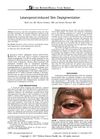
November 2017 in “Journal of Glaucoma” Latanoprost eye drops may cause skin depigmentation.
 December 2025 in “IP Indian Journal of Clinical and Experimental Dermatology”
 Androgenetic alopecia treatments are becoming more personalized and include new therapies like topical antiandrogens and regenerative strategies.
 January 2026 in “Cosmetics”
 New regenerative treatments show promise in improving hair growth for androgenetic alopecia.
5 citations
,
October 2020 in “Bioengineering & translational medicine” Researchers used a laser to create advanced skin models with hair-like structures.

Hair RiseTM microemulsion effectively promotes hair growth and treats hair loss better than standard treatments.
 21 citations
,
May 2018 in “Journal of Cosmetic Dermatology”
21 citations
,
May 2018 in “Journal of Cosmetic Dermatology” Costunolide helps human hair cells grow and can stimulate hair growth in mice.
 34 citations
,
April 2009 in “Skin Pharmacology and Physiology”
34 citations
,
April 2009 in “Skin Pharmacology and Physiology” Minoxidil affects cell growth in two ways: low doses increase growth, while high doses slow it down and can be toxic.
 19 citations
,
September 2019 in “EMBO molecular medicine”
19 citations
,
September 2019 in “EMBO molecular medicine” Blocking TSLP reduces skin inflammation and cell overgrowth in psoriasis.
 57 citations
,
June 2003 in “American Journal of Physiology-cell Physiology”
57 citations
,
June 2003 in “American Journal of Physiology-cell Physiology” Cyclosporin A helps mice grow hair by blocking a specific protein activity in skin cells.
 17 citations
,
January 1997 in “Cell and Tissue Research”
17 citations
,
January 1997 in “Cell and Tissue Research” Scientists developed a method to grow human fetal skin and digits in a lab for 3-4 weeks, which could help study skin features and understand genetic interactions in tissue formation.
 November 2024 in “Stem Cell Research & Therapy”
 Stem cells from umbilical cords can help regrow hair in mice with hair loss.