October 2025 in “Dermatologic Surgery” Twisted hair follicles can survive transplantation as well as intact ones.
 May 2021 in “GSC Advanced Research and Reviews”
 Hair color is influenced by genetics and can indicate certain health conditions.
 January 2018 in “Georg Thieme Verlag eBooks”
 Hair transplantation is a surgical procedure to move hair to bald areas, requires good donor hair, and results show in about a year.
 August 2017 in “Journal of evolution of medical and dental sciences”
 Trichoscopy is effective for diagnosing different types of non-scarring hair loss.

Modern hair restoration techniques can effectively treat hair loss and provide natural-looking results.
 January 2010 in “Elsevier eBooks”
 Hair transplantation is a treatment for hair loss mainly caused by genetics, with various techniques and potential complications, and results visible after 8-12 months.
 June 2005 in “British Journal of Oral & Maxillofacial Surgery”
 Advancements in aesthetic surgery from 2002-2003 include improved skin resurfacing, effective migraine surgery, satisfying hair transplants, alternative treatments for skin nevi, successful endoscopic midface enhancement, and safe techniques for facial rejuvenation.
 April 2026 in “Frontiers in Immunology”
 Blocking the CXCL12–CXCR4 axis may help treat hair loss in alopecia.
 March 2026 in “Frontiers in Pharmacology”
 New treatments for hair loss show promise but need more testing for effectiveness and safety.
February 2026 in “European Journal of Pharmacology” Teicoplanin may help treat hair loss by reducing androgen receptors and boosting hair cell growth.
 January 2026 in “Applied Biological Chemistry”
 Ishophloroglucin A from Ishige okamurae may be a natural alternative for treating hair loss by inhibiting 5α-reductase and promoting hair growth.
December 2025 in “The Journal of Nutritional Biochemistry” Kaempferol may help treat hair loss by promoting hair growth and protecting hair cells.
 June 2025 in “Current Issues in Molecular Biology”
 Meloside A may help protect hair cells from damage linked to hair loss.
 June 2025 in “Journal of medical and dental science research.”
 i-PRF and A-PRF show promise in promoting hair regrowth and improving scalp health in androgenetic alopecia.
 June 2025 in “Universal library of medical and health sciences.”
 External factors like pollution, stress, and poor nutrition can negatively affect hair growth.
 May 2025 in “Journal of medical and dental science research.”
 i-PRF and A-PRF are promising treatments for hair regrowth in androgenetic alopecia.
 April 2024 in “bioRxiv (Cold Spring Harbor Laboratory)”
 GRK2 is essential for healthy hair follicle function, and its absence can lead to hair loss and cysts.
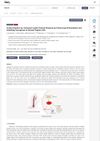 June 2023 in “Antioxidants”
 Lipids from Schizochytrium sp. help prevent hair loss by protecting hair cells from damage and promoting hair growth.
 February 2023 in “Scientific Reports”
 Cold Atmospheric Microwave Plasma (CAMP) helps hair cells grow and could potentially treat hair loss.
 April 2018 in “Journal of Investigative Dermatology”
 Older hair follicle stem cells have a reduced ability to renew themselves, leading to more hair loss.

Chrysanthemum zawadskii extract may help treat hair loss by promoting hair growth and affecting growth factors.
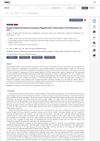 February 2023 in “International Journal of Molecular Sciences”
 Exosomes from skin cells can boost hair growth by stimulating a gene called LEF1.
 June 2022 in “Journal of Dermatology Research”
 Using 448-kHz Capacitive-Resistive Electrothermal Therapy can help increase hair density and prevent hair loss in women.
9 citations
,
April 2018 in “Canadian Journal of Animal Science” LEF-1 boosts cell growth in goat hair follicles, aiding cashmere production.
 71 citations
,
October 2008 in “The journal of investigative dermatology/Journal of investigative dermatology”
71 citations
,
October 2008 in “The journal of investigative dermatology/Journal of investigative dermatology” HFMs can help study hair growth and test potential hair growth drugs.
 53 citations
,
September 2011
53 citations
,
September 2011 Other common signs, not just the well-known immune cells around hair bulbs, are important for diagnosing hair loss from alopecia areata.
 49 citations
,
November 2014 in “Journal of Medicinal Food”
49 citations
,
November 2014 in “Journal of Medicinal Food” Red Ginseng Extract may help human hair grow by activating growth pathways and blocking negative effects of certain hormones.
 33 citations
,
January 2006 in “Journal of Dermatological Science”
33 citations
,
January 2006 in “Journal of Dermatological Science” A long-acting Vitamin C derivative helps hair grow by stimulating cells and increasing growth factors.
 28 citations
,
March 2019 in “Journal of Dermatological Science”
28 citations
,
March 2019 in “Journal of Dermatological Science” The document concludes that while lab results for hair growth promotion are promising, human trials are needed and better testing methods should be developed.
24 citations
,
August 2021 in “Scientific Reports” Non-thermal plasma could help hair growth by activating key cell signals.