7 citations
,
March 2018 in “Experimental Dermatology” Acne lesions don't show increased keratinocyte growth compared to healthy hair follicles.
 7 citations
,
March 2005 in “Journal of dermatological science”
7 citations
,
March 2005 in “Journal of dermatological science” Apoptosis helps shape hair growth and prepares the skin for hair to emerge.
Poly-D,L-lactic acid boosts hair growth in aged skin by activating hair follicle stem cells.
June 2025 in “Indian Journal of Dermatology” A rare skin condition was identified and planned for treatment in an elderly man.
 January 2025 in “International Journal of Dermatology”
 Consider TFI in facial hypopigmentation diagnoses and confirm with a biopsy.
 November 2024 in “Stem Cell Research & Therapy”
 Stem cells from umbilical cords can help regrow hair in mice with hair loss.
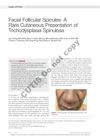
Trichodysplasia spinulosa can occur after a heart transplant due to immunosuppressive drugs.
37 citations
,
October 2009 in “Veterinary Dermatology” Canine hair follicles contain stem-like cells with high growth potential.
15 citations
,
July 1993 in “The journal of investigative dermatology/Journal of investigative dermatology” Retinoids can change the hair growth cycle by extending the growth phase and shortening the rest phase.
 September 2025 in “Frontiers in Medicine”
 Angiopoietin-1 helps hair cells survive and grow, making it a potential treatment for hair loss.
 September 2025 in “Bioscientia Medicina Journal of Biomedicine and Translational Research”
 Combining PRP-Exo with minoxidil significantly improves hair growth in androgenetic alopecia.
 August 2025 in “Stem Cell Research & Therapy”
 Exosomes from stem cells can help regrow hair better than minoxidil.
9 citations
,
October 1989 in “Australian Journal of Agricultural Research” Mouse epidermal growth factor temporarily stops wool growth and causes cell changes in Merino sheep.
 23 citations
,
July 2007 in “The journal of investigative dermatology/Journal of investigative dermatology”
23 citations
,
July 2007 in “The journal of investigative dermatology/Journal of investigative dermatology” Hair follicle bulge cells don't help skin regrow after glucocorticoid damage; interfollicular epidermis cells do.
158 citations
,
May 2003 in “Journal of Investigative Dermatology” Hair growth is influenced by dynamic changes in hair follicle cells, which could help treat hair loss.
 June 2025 in “Electronic Journal of General Medicine”
 Melatonin may help regrow hair, but more consistent research is needed.
 130 citations
,
January 1994 in “Differentiation”
130 citations
,
January 1994 in “Differentiation” Mouse hair follicle cells briefly grow during the early hair growth phase, showing that these cells are important for starting the hair cycle.
 8 citations
,
May 1998 in “Journal of Oral and Maxillofacial Surgery”
8 citations
,
May 1998 in “Journal of Oral and Maxillofacial Surgery” Acne is caused by increased sebum, abnormal skin shedding, bacteria, and inflammation, not dirt; treatments vary from creams to antibiotics or isotretinoin, with severe cases needing a dermatologist's care.
6 citations
,
November 2020 in “Annals of Plastic Surgery” Adipose-derived stem cells and platelet-rich plasma together can protect skin and hair from radiotherapy damage.
6 citations
,
June 1989 in “Cell Biology International Reports” Minoxidil temporarily stops endothelial cell growth without major changes in protein production or movement.
2 citations
,
September 2025 in “Food Science and Biotechnology” Placenderm® can improve hair health and promote hair regrowth.
 2 citations
,
June 2016 in “Journal of Applied Biological Chemistry”
2 citations
,
June 2016 in “Journal of Applied Biological Chemistry” Glycine soja extract stimulates hair growth and could help treat hair loss.
December 2025 in “Bioengineering” Sebum is essential for skin health but can cause acne if unbalanced.
 July 2021 in “Journal Für Ästhetische Chirurgie”
 Effective hair loss treatments require medical diagnosis and realistic expectations, with hair transplants offering improved, natural-looking results.
 December 2015 in “Vascular Pharmacology”
 Different cells affect hair follicle blood vessels, endothelial cells react differently to inflammation and oxidized fats, and prasugrel better protects heart vessels during a procedure than clopidogrel.
 37 citations
,
October 2009 in “Dermatology”
37 citations
,
October 2009 in “Dermatology” Minoxidil stimulates hair growth by increasing hair thickness and prolonging growth phase.
 82 citations
,
March 2012 in “Development”
82 citations
,
March 2012 in “Development” Drosha and Dicer are essential for hair follicle health and preventing DNA damage in skin cells.
 7 citations
,
January 2020 in “Frontiers in Pharmacology”
7 citations
,
January 2020 in “Frontiers in Pharmacology” Jagged1 and Epidermal Growth Factor together significantly increased hair growth in mice with androgen-suppressed hair.
1 citations
,
January 2010 Ornithine decarboxylase is crucial for human hair growth and the hair cycle.
 54 citations
,
June 1985 in “American Journal of Dermatopathology”
54 citations
,
June 1985 in “American Journal of Dermatopathology” Minoxidil helps grow longer, thicker hair in bald scalps of stumptailed macaques, and early treatment is more effective.