 January 2021 in “Skin appendage disorders”
 The report concludes that atypical Brauer nevus is more common in males, present at birth, and often misdiagnosed due to its unusual scalp locations.
 June 2020 in “Journal of cosmetic medicine”
 Eyebrow transplants use hair from the scalp or pubic area, with blonde hair looking more natural, and can leave scars depending on the method used.
Hair transplantation can restore underarm hair after surgery, despite challenges.
A wavy two-layer closure in hair transplants makes scars nearly invisible for most patients.
July 2017 in “DOAJ (DOAJ: Directory of Open Access Journals)” SVF-enhanced fat injections may effectively treat baldness by promoting hair growth.

Female hair loss is often hereditary and can be treated with medication, hair transplants, and lasers.
 November 2015 in “European journal of dermatology/EJD. European journal of dermatology”
 A 55-year-old woman with several health conditions did not see hair regrowth after a transplant.
 May 2013 in “Trends in Urology & Men's Health”
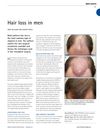
 Male-pattern hair loss is normal, often involves hormone effects on hair follicles, and can be treated with medication or surgery, but new treatments are being researched.
 January 2013 in “Dermatologic Clinics”
 Hair disorders need a holistic approach, including medical, cosmetic, and psychological support.
 April 2012 in “Informa Healthcare eBooks”
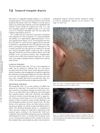
 Temporal triangular alopecia is a lifelong condition with hairless patches on the side of the head that may be present from birth.

Medical Hair Restoration added a non-surgical hair therapy program to help people with early hair loss.
 September 2007 in “Dermatologic Surgery”
 3% hydrogen peroxide does not reduce hair graft survival compared to saline.
 April 1998 in “Journal of women's health”
 Hair loss in women is often due to hereditary conditions or stress, and while treatments like minoxidil can help, diagnosis and management require medical guidance.

Hair loss in African American women, caused by hair care, genetics, and environment, needs more research for better treatment.
 July 2016 in “Journal of Cutaneous Medicine and Surgery”
 Receding hairlines in men are uneven, with the right side larger than the left.
 November 2015 in “Springer eBooks”
 Hair loss treated with minoxidil, finasteride, laser/light, hair transplant, and scalp prostheses; more research needed for skin of color.
 March 2026 in “Editora Pasteur eBooks”
 Early diagnosis and a combination of treatments can effectively manage hair loss and improve quality of life.
 August 2014 in “Aesthetic Surgery Journal”
 Book covers all aspects of hair restoration surgery, highly recommended.
October 2020 in “Plastic Surgery” Bone marrow stem cells improve healing of deep skin wounds.
 203 citations
,
December 2004 in “Journal of The American Academy of Dermatology”
203 citations
,
December 2004 in “Journal of The American Academy of Dermatology” Early diagnosis and treatment, using finasteride, minoxidil, or hair transplantation, improves hair loss outcomes.
 105 citations
,
April 2004 in “Dermatologic Therapy”
105 citations
,
April 2004 in “Dermatologic Therapy” The document concludes that proper diagnosis and a combination of medical, hair-care, and surgical treatments are important for managing alopecia in black women.
 15 citations
,
May 2004 in “Facial Plastic Surgery Clinics of North America”
15 citations
,
May 2004 in “Facial Plastic Surgery Clinics of North America” New techniques in hair restoration surgery can fix unnatural results from old methods, improving patient self-esteem.
 12 citations
,
November 2016 in “International Journal of Women's Dermatology”
12 citations
,
November 2016 in “International Journal of Women's Dermatology” Various hair camouflage options help people with hair loss improve appearance.
2 citations
,
June 2024 in “Journal of Plastic Reconstructive & Aesthetic Surgery” Hair transplantation effectively improves unnatural hairlines from laser hair removal.
 1 citations
,
May 2016 in “Hair transplant forum international”
1 citations
,
May 2016 in “Hair transplant forum international” Using scalp micropigmentation (a special tattoo technique) with hair transplantation can effectively treat hair loss, especially for those with low donor density or those unsuitable for only hair transplantation.
 198 citations
,
October 2011 in “Journal der Deutschen Dermatologischen Gesellschaft”
198 citations
,
October 2011 in “Journal der Deutschen Dermatologischen Gesellschaft” Use minoxidil for hair loss; finasteride and dutasteride for men, dutasteride for women.
 129 citations
,
October 2007 in “The New England Journal of Medicine”
129 citations
,
October 2007 in “The New England Journal of Medicine” Over one-third of women experience hair loss, with female-pattern hair loss being most common, and treatments include minoxidil and possibly hair transplantation.
 112 citations
,
October 2005 in “Mayo Clinic Proceedings”
112 citations
,
October 2005 in “Mayo Clinic Proceedings” Minoxidil and finasteride can slow hair loss and stimulate regrowth, but won't restore all lost hair or reverse complete baldness.
 70 citations
,
February 2015 in “Expert Opinion on Drug Discovery”
70 citations
,
February 2015 in “Expert Opinion on Drug Discovery” Topical drugs and near-infrared light therapy show potential for treating alopecia.