
Follicular unit extraction is safe and effective without bupivacaine and nerve blocks when using lignocaine with adrenaline.
October 2022 in “Hair Transplantation” FUE is popular due to no linear scar, but choice depends on personal preference and specific factors.
October 2022 in “Hair Transplantation” Quality control and assurance are crucial for improving hair transplant surgery outcomes.
October 2022 in “Hair Transplantation” New FUE systems have greatly improved hair restoration surgery.
October 2022 in “Hair Transplantation” The ISHRS standardized FUE terminology for global use in hair restoration.
 July 2022 in “Journal of Cosmetic Dermatology”
 Adding platelet rich plasma to follicular unit extraction doesn't significantly improve hair graft survival in cicatricial alopecia treatment.
 August 2021 in “Al-Azhar International Medical Journal (Print)”
 Hair transplantation is effective for treating cicatricial alopecia with fewer anesthesia risks, scars, and recovery time.
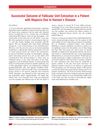 January 2021 in “Journal of Cutaneous and Aesthetic Surgery”
 Follicular unit extraction successfully restored hair growth in a leprosy patient without disease relapse.
 January 2016 in “International journal of basic and clinical pharmacology”
 Steroid use can cause a rare eye condition called central serous retinopathy, which can lead to permanent vision damage.
 June 2025 in “Clinical Cosmetic and Investigational Dermatology”
 FUE hair transplantation is safe and effective for improving hair loss in children.
 January 2020 in “Hair transplant forum international”
 The type of previous hair restoration surgery might affect the success of a later one, with strip harvesting possibly leading to fewer damaged hair follicles.
 April 2016 in “The journal of investigative dermatology/Journal of investigative dermatology”
 Applying the anti-cancer drug Bortezomib to skin can promote hair growth and increase hair proteins through the GATA-3 factor.
 47 citations
,
September 2008 in “British Journal of Dermatology”
47 citations
,
September 2008 in “British Journal of Dermatology” Ludwig pattern hair loss in women results from varying sensitivity in hair follicles, causing fewer visible hairs.
 January 2009 in “The Year book of dermatology”
 Ludwig pattern hair loss results from varying androgen sensitivity, causing fewer thick hairs and more thin hairs.
 3 citations
,
October 2021 in “Indian Journal of Plastic Surgery”
3 citations
,
October 2021 in “Indian Journal of Plastic Surgery” Strip harvest hair transplants produce natural-looking results and have a high success rate with minimal damage to hair follicles.
 3 citations
,
April 2011 in “Dermatologic Surgery”
3 citations
,
April 2011 in “Dermatologic Surgery” Different women have various natural hairline shapes, and understanding this is important for designing hair transplants.
 November 2018 in “Springer eBooks”
 The document concludes that hair transplant methods are often selected for provider convenience over patient benefit, highlighting the need for less invasive techniques and careful physician involvement for better results.
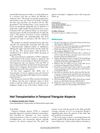 November 2009 in “Actas dermo-sifiliográficas/Actas dermo-sifiliográficas”
 Hair transplantation effectively treated a bald patch in an 18-year-old woman with Temporal Triangular Alopecia.
 March 2003 in “Dermatologic Surgery”
 Dr. Dominic A. Brandy shared methods to fix aesthetic problems from old hair restoration techniques, using methods like follicular unit grafting and scalp removal, which helped patients look more natural after surgery. He also suggested using oral finasteride and topical minoxidil to control hair loss in most men with baldness, especially those who had flap surgery.
 December 2002 in “Operative Techniques in Otolaryngology-Head and Neck Surgery”
 Hair loss from trauma can be managed using scalp expansion, flaps, and hair transplants to improve appearance and well-being.
 August 1999 in “Current Opinion in Otolaryngology & Head and Neck Surgery”
 In 1999, surgical hair restoration improved a lot, making hair look more natural with fewer procedures, thanks to better scalp treatments and a new method called follicular-unit hair grafting.
 August 1998 in “Dermatologic Surgery”
 Dr. George A. Farber recommends using follicular unit transplantation for hair restoration because it gives a more natural look and has fewer problems compared to the older miniflap technique.
 17 citations
,
November 2017 in “Dermatologic Clinics”
17 citations
,
November 2017 in “Dermatologic Clinics” New techniques improve hair restoration success.
6 citations
,
December 2023 in “Aesthetic Plastic Surgery” Hair transplantation improves quality of life and reduces stress and anxiety.
 2 citations
,
May 2015 in “Journal of Cosmetic and Laser Therapy”
2 citations
,
May 2015 in “Journal of Cosmetic and Laser Therapy” Hair follicles can survive for a few days before transplant but are less viable over time.
2 citations
,
January 2014 in “Journal of clinical and diagnostic research” Emerging therapies like stem cell and laser treatments show promise for hair regeneration.
 June 2025 in “Medical alphabet”
 The HFE hair transplant method is effective, safe, and provides natural-looking results with quick recovery for men with hair loss.
 June 2024 in “Journal of Dermatology & Cosmetology”
 The FUL hair restoration technique is better for aesthetics and causes less scarring.
 January 2024 in “Journal of Medicine in Scientific Research”
 Adding PRP to hair transplants improves results and recovery for patients with scarring hair loss.
Researchers developed a new device that improves non-incision hair transplant efficiency.