 July 2013 in “Hair transplant forum international”
 Dr. James Harris successfully incorporated Follicular Unit Extraction into his hair restoration practice, offering more surgical options and achieving natural results with the help of a team approach.
 13 citations
,
April 2022 in “Frontiers in oncology”
13 citations
,
April 2022 in “Frontiers in oncology” Melanoma development can be linked to the breakdown of skin's melanin-producing units.
Surgeons should evaluate new technologies critically, offer a range of services including non-surgical options, and be aware of marketing influences to meet patient needs and maintain a successful practice.
 November 2025 in “International Journal of Zoology and Applied Biosciences”
 New technologies like AI, robotics, and stem cells have made hair transplants more effective and natural-looking.
 January 2014 in “Pathology”
 Non-scarring hair loss can be diagnosed with two 4mm punch biopsies, one cut vertically and the other transversely.
January 2024 in “Pakistan Journal of Medical & Health Sciences” Innovative techniques improve hair transplant results and satisfaction in patients with low donor hair density.
 December 2025 in “Cureus”
 Hyperbaric oxygen therapy speeds up recovery and improves outcomes in hair transplants.
 12 citations
,
October 2017 in “Journal of Cosmetic Dermatology”
12 citations
,
October 2017 in “Journal of Cosmetic Dermatology” Combining plasma rich in growth factors with hair transplant surgery may lead to faster recovery and better outcomes for hair loss treatment.
October 2022 in “Hair Transplantation” Quality control and assurance are crucial for improving hair transplant surgery outcomes.
 April 2011 in “ISRN Dermatology (Print)”
 The wigs made from human hair and polypropylene were mostly well-tolerated and durable in rabbits, suggesting they could be a new option for people with extensive hair loss.
 14 citations
,
July 2016 in “Anatomical Science International”
14 citations
,
July 2016 in “Anatomical Science International” The study suggests that the arrector pili muscle is important for hair health and its damage might contribute to hair loss.
December 2025 in “Journal of Surgery Research and Practice” Accurate positioning in female hairline transplants creates a natural, feminine look.
 36 citations
,
February 2018 in “British Journal of Dermatology”
36 citations
,
February 2018 in “British Journal of Dermatology” Sweat glands and hair follicles are structurally connected within a specific layer of skin fat.
 4 citations
,
January 2012 in “International Society of Hair Restoration Surgery”
4 citations
,
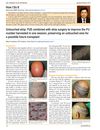
January 2012 in “International Society of Hair Restoration Surgery” Combining FUE and strip surgery increases hair harvested in one session and keeps options open for future transplants.
 January 2014 in “Pathology”
 The document concludes that understanding nail anatomy is key for diagnosing nail diseases, early signs of nail melanoma may allow for less aggressive treatment, and specific genetic mutations are important in thyroid cancer prognosis and treatment.
 3 citations
,
August 1998 in “Dermatologic Surgery”
3 citations
,
August 1998 in “Dermatologic Surgery” Bobby Limmer was crucial in developing a hair transplant method that uses natural hair groupings for a more realistic look.
 May 2026 in “Journal of Cutaneous and Aesthetic Surgery”
 The new hair restoration technique shows promise for quick, appealing results with minimal recovery time.
 September 2019 in “Journal of Investigative Dermatology”
 Researchers successfully used nude mice to study human hair growth, which could help with future hair research.
Robotic FUE hair transplants are better for men because they are precise, safe, and look natural.
 25 citations
,
August 1998 in “Dermatologic Surgery”
25 citations
,
August 1998 in “Dermatologic Surgery” Dissecting microscopes give more and better quality hair grafts than magnifying loupes.
The DNS FUE technique offers discreet hair transplants with high satisfaction and low damage rates.
 September 2025 in “Cellular and Molecular Biology”
 Intraoperative corticosteroids reduce swelling, and early care lowers folliculitis risk in hair transplant donor sites.
 4 citations
,
January 2005 in “Elsevier eBooks”
4 citations
,
January 2005 in “Elsevier eBooks” Follicular Unit Transplantation is a precise hair restoration technique that requires careful planning and a skilled team, and Follicular Unit Extraction offers a less invasive option.
 153 citations
,
August 2002 in “Dermatologic Surgery”
153 citations
,
August 2002 in “Dermatologic Surgery” Follicular Unit Extraction (FUE) is a less invasive hair transplant method with minimal scarring, suitable for about 60% of patients, especially those needing fewer grafts and quicker recovery.
 77 citations
,
April 1999 in “Dermatologic Clinics”
77 citations
,
April 1999 in “Dermatologic Clinics” The document concludes that follicular unit transplantation offers more natural results and better graft survival than older hair transplant methods.
 30 citations
,
June 2008 in “Dermatologic Surgery”
30 citations
,
June 2008 in “Dermatologic Surgery” The SAFE System may improve hair transplant results but isn't suitable for everyone.
 28 citations
,
July 2011 in “Journal of Plastic Reconstructive and Aesthetic Surgery”
28 citations
,
July 2011 in “Journal of Plastic Reconstructive and Aesthetic Surgery” A patient had skin tissue death at the hair removal site after a hair transplant, which was treated with surgery.
 28 citations
,
November 2008 in “Facial Plastic Surgery”
28 citations
,
November 2008 in “Facial Plastic Surgery” Follicular Unit Transplantation (FUT) can give great results and patient satisfaction when done carefully and by a skilled surgeon.
 27 citations
,
January 2006 in “Dermatologic Surgery”
27 citations
,
January 2006 in “Dermatologic Surgery” The SAFE System for hair transplants results in low damage to follicles and could make the procedure suitable for more patients.
 18 citations
,
May 2016 in “Aesthetic Surgery Journal”
18 citations
,
May 2016 in “Aesthetic Surgery Journal” Body hair transplantation is an effective method for restoring hair in people with severe baldness and limited scalp donor hair.