 5 citations
,
January 2001 in “Hair transplant forum international”
5 citations
,
January 2001 in “Hair transplant forum international” Different hair transplant methods affect how many hair grafts survive.
 October 2023 in “Facial Plastic Surgery”
 The FUE-LE technique combines two hair transplant methods to improve graft yield without needing a large team or extra costs.
 March 2021 in “International Journal of Research in Dermatology”
 Trapezoid donor strips give more hair follicles than elliptical ones in hair transplants.
 January 2024 in “Authorea (Authorea)”
 New punch technologies have improved hair transplant results over time.
17 citations
,
January 2014 in “Dermatology Online Journal” The Artas robotic system is effective and reliable for hair transplants.
 1 citations
,
July 2001 in “Hair transplant forum international”
1 citations
,
July 2001 in “Hair transplant forum international” The conclusion compares the effectiveness of different hair transplant techniques.
 November 2023 in “Facial Plastic Surgery”
 Choosing between follicular unit extraction and strip harvesting for hair restoration depends on the patient's individual goals and the pros and cons of each method.
October 2022 in “Hair Transplantation” Beard hair can be effectively used for hair transplants when scalp hair is insufficient.
 6 citations
,
March 2017 in “Plastic and reconstructive surgery. Global open”
6 citations
,
March 2017 in “Plastic and reconstructive surgery. Global open” Both pretrimmed and direct nonshaven methods are effective for hair transplants; pretrimmed takes longer but yields denser, longer hair.
251 citations
,
October 2006 in “Plastic and reconstructive surgery/PSEF CD journals” Using platelet plasma growth factors in baldness surgery can increase the number of hair follicles.
 15 citations
,
December 2007 in “Dermatologic Therapy”
15 citations
,
December 2007 in “Dermatologic Therapy” Hair transplantation has improved with techniques that increase graft survival and patient satisfaction for more natural results.
 November 2025 in “Indian Journal of Plastic Surgery”
 The new technique increases hair graft yield and minimizes scarring in hair restoration.
 25 citations
,
August 1998 in “Dermatologic Surgery”
25 citations
,
August 1998 in “Dermatologic Surgery” Dissecting microscopes give more and better quality hair grafts than magnifying loupes.
 6 citations
,
January 2019 in “Journal of Cutaneous and Aesthetic Surgery”
6 citations
,
January 2019 in “Journal of Cutaneous and Aesthetic Surgery” Follicular unit extraction is an effective hair transplant method for advanced baldness with high patient satisfaction, but some experienced decreased density over time.
 6 citations
,
January 2010 in “Actas Dermo-Sifiliográficas”
6 citations
,
January 2010 in “Actas Dermo-Sifiliográficas” Follicular Unit Hair Transplantation has become a less invasive procedure with natural results, suitable for certain adults with hair loss.
 16 citations
,
June 2009 in “Dermatologic Surgery”
16 citations
,
June 2009 in “Dermatologic Surgery” A 17-year-old boy with Temporal Triangular Alopecia successfully grew new hair after a hair restoration surgery using follicular unit transplantation.
 13 citations
,
March 2015 in “Plastic and reconstructive surgery. Global open”
13 citations
,
March 2015 in “Plastic and reconstructive surgery. Global open” Leg hair can be used for eyelash transplants, resulting in fuller lashes with less maintenance.
 5 citations
,
September 2012 in “Dermatology Online Journal”
5 citations
,
September 2012 in “Dermatology Online Journal” Follicular Unit Extraction (FUE) hair transplant is less invasive, leaves no scars, and has quicker recovery times, but it's more time-consuming and challenging. Automation helps speed up the process and improve graft survival, reducing the need for traditional strip surgery.
November 2024 in “Stem Cell Research & Therapy” A new method improves the isolation of hair follicle cells for better hair growth research.
 September 2024 in “Journal of Cosmetic Dermatology”
 Robotic hair transplants are easier and quicker to learn than traditional methods.
 November 2023 in “Facial Plastic Surgery”
 Follicular Unit Excision (FUE) is a popular, less invasive hair restoration method with high patient satisfaction when done correctly, despite some complications from untrained practitioners.
 1 citations
,
September 2016 in “Indian Journal of Plastic Surgery”
1 citations
,
September 2016 in “Indian Journal of Plastic Surgery” The new hair follicle harvesting technique improves hair transplant results and makes the procedure quicker and easier to learn.
 July 1998 in “Dermatologic Surgery”
 Various techniques and tools for hair restoration were presented in 1998, including a mathematical model for donor area, use of lasers in surgery, methods for controlling grafted hair direction, and ways to increase graft yield. Satisfaction rates were around 39%, and studies showed trauma and dehydration can damage hair follicles.
 13 citations
,
January 2013 in “Dermatologic Surgery”
13 citations
,
January 2013 in “Dermatologic Surgery” Experienced hair transplant surgeons suggest a limited number of hair follicles can be used for transplants, and recommend conservative methods to avoid scarring and depletion.
 31 citations
,
October 2017 in “Dermatologic Surgery”
31 citations
,
October 2017 in “Dermatologic Surgery” Hair transplants look natural, but the best method is debated, and PRP shows promise for hair regrowth.
 18 citations
,
April 2010 in “Actas Dermo-Sifiliográficas”
18 citations
,
April 2010 in “Actas Dermo-Sifiliográficas” Follicular unit hair transplantation is the standard method for natural-looking hair restoration in androgenic alopecia.
 13 citations
,
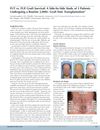
September 2018 in “Hair transplant forum international”
13 citations
,
September 2018 in “Hair transplant forum international” FUE and FUT hair transplants have similar success rates, with FUE slightly better.
 April 2018 in “The journal of investigative dermatology/Journal of investigative dermatology”
 Researchers found a new way to isolate sweat glands from the scalp for study and culture.
 June 2020 in “Journal of cosmetic medicine”
 Eyebrow transplants use hair from the scalp or pubic area, with blonde hair looking more natural, and can leave scars depending on the method used.
 25 citations
,
May 2011 in “Annals of Plastic Surgery”
25 citations
,
May 2011 in “Annals of Plastic Surgery” Nonhead hair transplantation is effective for patients with limited head donor hair, but more research is needed.