1 citations
,
January 1987 in “PubMed” Candida was found in most heroin users with folliculitis.
 January 2026 in “JOURNAL OF CLINICAL AND DIAGNOSTIC RESEARCH”
 A 62-year-old man with diabetes and kidney disease had itchy skin lesions diagnosed as perforating folliculitis, treated with medication and skin care.
January 2025 in “Veterinary Record Case Reports” The dog's skin condition improved quickly with treatment and did not return.
 November 2023 in “Berkala Ilmu Kesehatan Kulit dan Kelamin/Berkala ilmu kesehatan kulit dan kelamin (Periodical of dermatology and venerology)”
 A dermoscope helps accurately tell apart Pityrosporum folliculitis and Acne vulgaris.
 March 2023 in “Journal of the American Academy of Dermatology”
 Treating underlying conditions and using antifungals effectively resolve Pityrosporum folliculitis in immunocompromised people.
November 2021 in “Anais brasileiros de dermatologia/Anais Brasileiros de Dermatologia” The woman has a rare, harmless skin condition specific to pregnancy that causes itchy bumps and will go away after she gives birth.
 April 2021 in “BMJ Case Reports”
 Accurate diagnosis of pseudolymphomatous folliculitis is crucial to avoid mistaking it for more serious conditions.
September 2019 in “Journal of Investigative Dermatology” EGFR and MEK inhibitors reduce PD-L1 in hair follicles, possibly causing inflammation.
April 2018 in “The journal of investigative dermatology/Journal of investigative dermatology” A high-fat diet worsens neutrophilic folliculitis by increasing certain chemokines.
 September 2010 in “Institutional Repositories DataBase (IRDB)”
 Sorafenib can cause a temporary skin condition that goes away after stopping the drug.
40 citations
,
August 2005 in “JEADV. Journal of the European Academy of Dermatology and Venereology/Journal of the European Academy of Dermatology and Venereology” Acitretin moderately improved skin and eye issues but not hair loss or light sensitivity in a 3-year-old with IFAP syndrome.
36 citations
,
January 2000 in “British journal of dermatology/British journal of dermatology, Supplement” A mother and daughter had severe skin, hair, and eye issues linked to IFAP.
25 citations
,
April 2008 in “Clinical and experimental dermatology” EFFC might be common but underreported.
25 citations
,
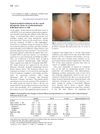
May 1995 in “Journal of the American Academy of Dermatology” Erythromelanosis follicularis faciei can also affect women, though it's rare.
 14 citations
,
July 2012 in “Journal of the American Academy of Dermatology”
14 citations
,
July 2012 in “Journal of the American Academy of Dermatology” Topical tacalcitol ointment can help improve symptoms of EFFC.
 14 citations
,
December 2010 in “Journal of human genetics”
14 citations
,
December 2010 in “Journal of human genetics” A Japanese patient with IFAP syndrome had a severe MBTPS2 gene mutation but showed milder symptoms than previously observed cases.
11 citations
,
June 2010 in “Dermatologic surgery” The dual-wavelength laser system effectively reduces EFFC symptoms with minimal side effects.
10 citations
,
September 1994 in “International Journal of Dermatology” Three Iranian men had reddish-brown facial pigmentation with no effective treatment.
5 citations
,
March 1943 in “Archives of Dermatology and Syphilology” A rare case of severe scalp hair loss and nail issues in keratosis follicularis was observed.
4 citations
,
November 2020 in “Case reports in dermatology” A rare skin condition causes red, dark, bumpy facial lesions.
 4 citations
,
September 2010 in “Journal of Dermatological Science”
4 citations
,
September 2010 in “Journal of Dermatological Science” A new gene location for Keratosis follicularis squamosa was found on chromosome 7p14.3-7p12.1.
3 citations
,
August 2017 in “Clinical case reports” A rare skin condition causes red and dark patches on the face and limbs.
2 citations
,
March 2011 in “International Journal of Dermatology” An 18-year-old man was diagnosed with a rare genetic disorder causing hair loss, severe light sensitivity, and skin issues.
1 citations
,
November 2022 in “International journal of trichology” A girl with a rare skin condition improved after one month of treatment with acitretin.
1 citations
,
October 2019 in “European Journal of Dermatology” Salicylic acid ointment effectively treated a toddler's skin condition.
1 citations
,
March 2006 in “Journal of Cosmetic Dermatology” The woman's forehead lesion was caused by ointment use and resolved with treatment.
1 citations
,
November 2003 in “Annals of saudi medicine/Annals of Saudi medicine” A 17-year-old in Saudi Arabia was diagnosed with a rare skin condition causing red-brown facial patches.
 May 2026 in “International Journal of Drug Delivery Technology”
 Accurate diagnosis of EFFC is crucial for effective counseling and cosmetic care.
January 2024 in “Indian Journal of Dermatology” Unilateral keratosis follicularis squamosa may be a new subtype, successfully treated with asiaticoside ointment.