40 citations
,
August 2018 in “Journal of the American Academy of Dermatology” Clindamycin and rifampicin are the most effective treatments for folliculitis decalvans, but more research is needed.
March 2026 in “Journal of Investigative Dermatology” Folliculin slows hair growth, and blocking it might help treat hair loss.
2 citations
,
April 2023 in “American Journal of Dermatopathology” CCCA may involve the PD1/PDL1 pathway and increased caspase 3, leading to permanent hair loss.
 23 citations
,
April 2018 in “Journal der Deutschen Dermatologischen Gesellschaft”
23 citations
,
April 2018 in “Journal der Deutschen Dermatologischen Gesellschaft” Permanent hair loss from cicatricial alopecia is treated by reducing inflammation and managing symptoms, but regrowth in scarred areas is unlikely.
 131 citations
,
August 2000 in “International Journal of Dermatology”
131 citations
,
August 2000 in “International Journal of Dermatology” Inflammation may be linked to hair loss, and targeting specific enzymes could help treat it.
9 citations
,
June 2011 in “American Journal of Dermatopathology” Molluscum contagiosum can occur in epidermoid cysts, especially with prolonged steroid use.
42 citations
,
March 2015 in “Anais Brasileiros de Dermatologia” Anti-TNF therapy can cause hair loss and skin issues.
26 citations
,
July 1993 in “Journal of Investigative Dermatology”  September 2024 in “BMJ Case Reports”
 An adult had a rare scalp infection in the forehead area, treated successfully with itraconazole.
 August 2023 in “International Medical Case Reports Journal”
 Acne necrotica can be effectively treated with topical cream and antibiotics.
 January 2012 in “Yearbook of Dermatology and Dermatologic Surgery”
 Some African American women experience central scalp hair loss, often linked to a history of fungal scalp infection.
6 citations
,
March 2005 in “Journal of the American Academy of Dermatology” Follicular dystrophy in immunocompromised patients may be linked to medication or viral factors and can improve with treatment changes.
August 2019 in “Journal of the American Academy of Dermatology” Frontal fibrosing alopecia may be caused by an autoimmune reaction and hormonal imbalance.
 1 citations
,
July 2022 in “PLOS ONE”
1 citations
,
July 2022 in “PLOS ONE” The study concluded that people with Lichen Planopilaris have a more diverse scalp bacteria and different metabolic pathways compared to healthy individuals.
2 citations
,
April 2022 in “Medicine” A Chinese boy's scalp infection from a guinea pig was cured with medication.
1 citations
,
February 2005 in “The Journal of Laryngology & Otology” A fungal infection in the neck caused severe breathing issues, treated successfully with antibiotics and antifungal medication.
 22 citations
,
March 1963 in “Archives of dermatology”
22 citations
,
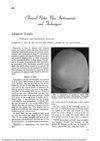
March 1963 in “Archives of dermatology” A woman regrew her hair significantly using a corticosteroid cream with a plastic cover.
September 2020 in “Advances in anatomic pathology” A woman's large nose growth was initially misdiagnosed, but later confirmed to be giant rhinophyma after full removal and examination.
 1 citations
,
April 2019 in “JAAD case reports”
1 citations
,
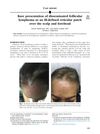
April 2019 in “JAAD case reports” A woman with lymphoma had a rare skin rash on her scalp and forehead, which was hard to diagnose but responded well to treatment.

Women with acne and hair loss, even if they have regular periods, often have polycystic ovary syndrome.
2 citations
,
February 1945 in “Archives of Dermatology and Syphilology” Alopecia in the woman was likely caused by vitamin A deficiency, not a fungal infection.
5 citations
,
October 2019 in “JAAD Case Reports” These hair loss conditions might be part of a spectrum, not separate issues.
5 citations
,
October 2012 in “The Journal of Dermatology” Traumatic panniculitis can cause increased hair growth in affected areas.
 1 citations
,
April 2012 in “Informa Healthcare eBooks”
1 citations
,
April 2012 in “Informa Healthcare eBooks” Some medications for inflammation can cause a condition with scalp rashes and hair loss, often linked to Crohn's disease, and may require treatment changes to prevent permanent hair loss.
10 citations
,
January 2018 in “International journal of trichology” Eruptive vellus hair cysts are rare and often misdiagnosed, requiring biopsy for accurate diagnosis.
4 citations
,
September 2015 in “JAAD case reports” Substance P may play a role in the inflammation seen in keratosis follicularis spinulosa decalvans.
ILC1-like cells can independently cause alopecia areata by affecting hair follicles.
April 2018 in “The journal of investigative dermatology/Journal of investigative dermatology” Certain immune cells, when activated by specific signals, can encourage hair growth.
Non-immune dermal cells dominate, epidermal cells increase after day 9, and certain immune cells persist beyond inflammation in wound-induced hair follicle regeneration.
 January 2026 in “Dermatology Online Journal”
 CCCA can appear as patchy hair loss in younger men, not just the usual pattern.