 6 citations
,
September 2021 in “Experimental Brain Research”
6 citations
,
September 2021 in “Experimental Brain Research” Rats have different touch receptors in their paws that help with movement and handling objects.
4 citations
,
April 2012 in “The journal of investigative dermatology/Journal of investigative dermatology” Krt16-deficient mice help understand skin disorders like PC and FNEPPK.
 1 citations
,
February 2017 in “International journal of anatomy and research”
1 citations
,
February 2017 in “International journal of anatomy and research” Understanding fetal skin development helps diagnose congenital skin diseases.
 September 2022 in “JAAD case reports”
 The man has a genetic skin condition called pachyonychia congenita.
 17 citations
,
January 1997 in “Cell and Tissue Research”
17 citations
,
January 1997 in “Cell and Tissue Research” Scientists developed a method to grow human fetal skin and digits in a lab for 3-4 weeks, which could help study skin features and understand genetic interactions in tissue formation.
17 citations
,
January 2013 in “Journal of Cutaneous Pathology” The onychodermis helps anchor the nail bed and may aid in nail formation.
65 citations
,
July 1984 in “Journal of Investigative Dermatology”  December 2025 in “Cureus”
 Avoiding friction and using topical treatments can significantly improve rough skin caused by repeated rubbing.
 April 2018 in “The journal of investigative dermatology/Journal of investigative dermatology”
 The model can effectively test gene functions and drug responses in human skin.
70 citations
,
December 1968 in “Journal of Investigative Dermatology” 30 citations
,
February 2008 in “Journal of Investigative Dermatology”  April 2018 in “Journal of Investigative Dermatology”
 The conclusion is that a new method combining magnetic tweezers and traction force microscopy may help understand skin cell interactions and diseases.
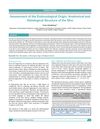 January 2024 in “Archives of pharmacy practice”
 The skin is vital for protection, temperature control, fluid balance, immunity, and sensing, with damage affecting daily life and mental health.
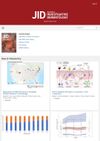 November 2022 in “Journal of Investigative Dermatology”
 Human-induced stem cell-created skin models can help understand skin diseases by studying the skin's layers.

Skin stem cells in hair follicles are important for touch sensation.
 April 2023 in “Journal of Investigative Dermatology”
 The research mapped gene activity in developing mouse skin and found key markers for skin cell types and changes from fetal to early postnatal stages.
November 2025 in “Journal of Investigative Dermatology”  5 citations
,
October 2022 in “Phenomics”
5 citations
,
October 2022 in “Phenomics” Your skin is like an ecosystem, with its own community of microbes and substances that interact and affect its health.
1 citations
,
January 2023 in “PubMed”  43 citations
,
February 2008 in “Journal of cutaneous pathology”
43 citations
,
February 2008 in “Journal of cutaneous pathology” Melanocyte precursors in human fetal skin follow a specific migration pattern and some remain in the skin's deeper layers.
1 citations
,
April 2022 in “Frontiers in Microbiology” Amputation stump skin disease worsens life quality, especially in men during summer, and long prosthesis use increases fungal infection risk.
99 citations
,
July 2005 in “Ultramicroscopy” The research improved understanding of hair and skin properties across different ethnicities and conditions.
 September 2019 in “Journal of Investigative Dermatology”
 Mouse skin fibroblasts vary in function and adaptability based on their environment.
Spiny keratoderma is a rare skin condition with small spines on palms and soles, possibly linked to abnormal hair formation.
6 citations
,
January 2022 in “Database” The data set helps improve predictions of how substances are absorbed through pig skin.
36 citations
,
February 1998 in “Journal of Anatomy” Fibre optic confocal imaging can visualize skin layers, blood vessels, and nerves in live mice.
 May 2026 in “World Journal of Advanced Research and Reviews”
 A rare foot cyst was successfully diagnosed and removed without cancer.
 9 citations
,
July 2019 in “Folia Morphologica”
9 citations
,
July 2019 in “Folia Morphologica” Brandt's hedgehog has thick skin on its back and many glands near its nostrils.
5 citations
,
July 1999 in “Journal of Anatomy” Methylene blue staining effectively highlights detailed nerve structures in rat fur.
January 2024 in “Editora In Vivo eBooks” A dog had a fungal skin infection that can also affect humans.